



The international humanitarian response to Lebanon’s 2026 crisis, examining how aid from France, Qatar, the European Union, and regional powers is sustaining the country while the underlying conflict remains unresolved.
How the world is aiding Lebanon’s survival

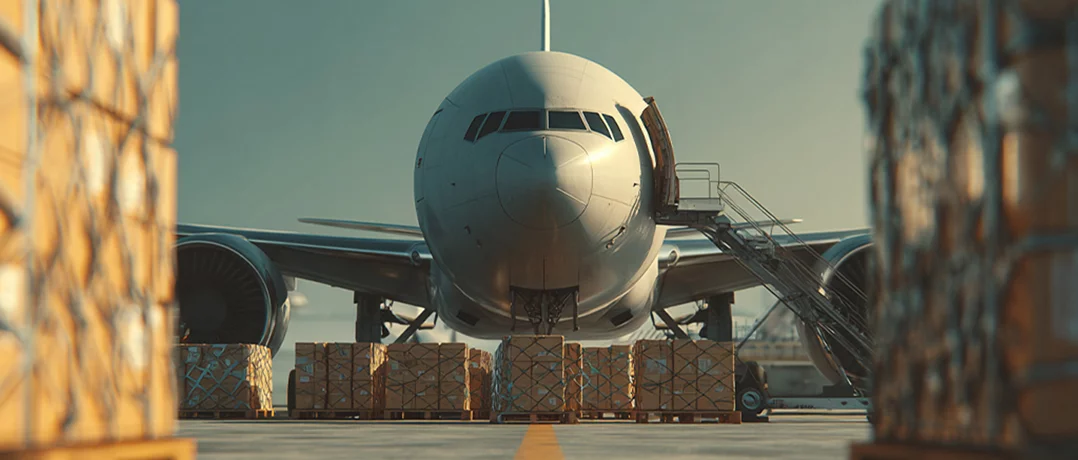
The collapse of the November 2024 ceasefire and the resumption of Israeli military operations in March 2026 have pushed Lebanon into a humanitarian emergency that, even by Lebanon’s brutal historical standards, demands urgent attention. Official shelters are overwhelmed. The UN’s 2026 Lebanon Response Plan puts the bill for an adequate response at $1.62 billion.
France: Weapons and supplies
President Emmanuel Macron announced a strengthening of military cooperation with the Lebanese Armed Forces, including the provision of armored transport vehicles alongside operational and logistical support, a signal that Paris views a functional Lebanese Army as the only credible counterweight to further collapse. On the humanitarian side, France tripled its weekly shipments, sending over 60 metric tonnes of supplies: sanitary and hygiene kits, mattresses, lamps, and a mobile medical post.
France’s dual posture, arming the state while feeding its civilians, reflects a longstanding strategic stake in Lebanon that dates back to the French Mandate and runs through decades of cultural, religious, and commercial ties. France is trying to preserve the Lebanese state as an institution, because without it, what France has invested in Lebanon for a century dissolves.
Qatar: The most committed Arab donor
Qatar has once again demonstrated that it is Lebanon’s most financially committed supporter in the Arab world. Doha pledged $100 million in urgent humanitarian relief, a figure that dwarfs most bilateral contributions, while also committing $434.2 million through the Qatar Fund for Development for longer-term energy and healthcare recovery, a programme designed to support 1.5 million people. Qatar also co-delivered a joint aid flight with France carrying medicines and medical equipment, a symbolic gesture of operational collaboration between Doha and Paris that carries diplomatic weight.
In a statement, the embassy added that in cooperation with its partners Qatar Charity and the Qatar Red Crescent, the fund is delivering emergency relief assistance targeting more than 40,500 displaced families.
The aid includes the distribution of more than 12,000 food baskets, along with essential non-food items such as blankets, mattresses, hygiene supplies, diapers, and basic household necessities. It also includes hygiene kits containing essential personal and household sanitation items.
The European Union: System and scale
The European Union’s response has been both large and institutionally significant. The bloc announced a €100 million aid package and activated the EU Humanitarian Airbridge, deploying 45 metric tonnes of emergency supplies through UNICEF. More notably, the EU drew on its Emergency Preparedness Trust Fund, an activation reportedly done for the first time in the fund’s history, to move food assistance through the World Food Programme to over 90,000 people.
Ireland, whose soldiers have served with UNIFIL in southern Lebanon for decades, added €3 million of its own, €2 million to OCHA’s Lebanon Humanitarian Fund and €1 million to UNHCR for displaced populations.
The Arab neighborhood
Saudi Arabia, Egypt, Jordan, and Turkey have each contributed to the response, though the scale and nature of their aid reflect different calculations. Saudi Arabia pledged medical assistance and deployed field hospitals through the King Salman Humanitarian Aid Center. Egypt sent emergency medical and humanitarian supplies. Jordan delivered aid directly to the Lebanese Army, a peer-to-peer military solidarity that carries political resonance in a region watching whether the Arab state system holds. Turkey provided medical aid and supplies.
What unites these contributions is also what limits them: none of them come with the political leverage necessary to stop the conflict generating the need for aid in the first place. They are responses to a crisis that none of these countries has the power, or perhaps the will, to end.
The United States: Conference tables and contradictions
Washington’s position is the most complicated of any major donor. The United States organized a major support conference for the Lebanese Army and Internal Security Forces in February 2026 and maintains ongoing institutional backing for Lebanon’s security apparatus, recognizing, correctly, that the LAF is the only national institution capable of filling the vacuum that further state collapse would create.
Yet the United States remains the primary arms supplier to Israel, the party conducting the military campaign that has displaced 700,000 Lebanese and killed more than 400 children. No confirmed fresh humanitarian package has been announced for the March 2026 escalation as of publication. The administration has called for de-escalation while continuing to supply the weapons used in the escalation. This contradiction is not a footnote to the aid story. It is the central fact around which all other contributions must be understood.
What the numbers actually mean
The UN’s 2026 Lebanon Response Plan requires $1.62 billion to adequately serve 1.5 million crisis-affected people. UNICEF estimates that more than 4.1 million people, over 70 percent of Lebanon’s total population, were already in need of some form of humanitarian assistance before March’s escalation began.
MSF’s mobile medical teams are working across Beirut, the Bekaa, and Akkar. UNHCR is tracking the movement of refugees, already among the most vulnerable populations on the planet, now displaced again within a country that was already hosting more refugees per capita than anywhere else on earth. IOM is monitoring the particular danger facing Lebanon’s 165,000 migrant workers, largely invisible in the crisis coverage but acutely exposed.
Lebanon’s survival is once again being financed from abroad. Aid flights, food baskets, and medical shipments are keeping the country afloat, but they do little to address the political and military dynamics driving the crisis. France, Qatar, the European Union, and regional states are managing the humanitarian fallout of a conflict they cannot, or will not, stop.
For now, international aid is preventing total collapse. But as long as the war continues and Lebanon’s state remains fragile, the world is not solving Lebanon’s crisis, it is simply paying to contain it.
-
-

-
The Beiruter
-
