



Hrajel blends centuries-old Maronite heritage, mountain traditions, and religious devotion with a major summer festival that brings the village together each August.
Hrajel's unique celebration of Eid el Sayde

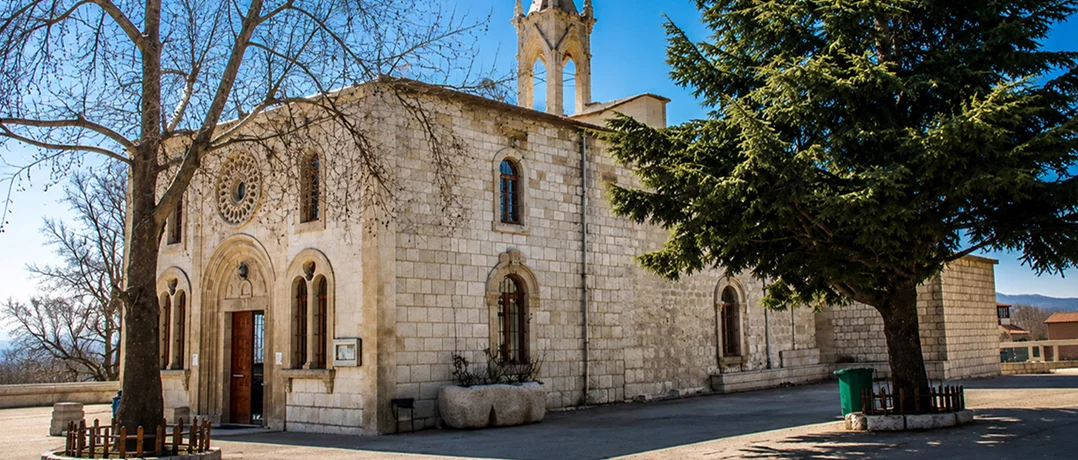
At roughly 1,320 meters above sea level in the Keserwan District of Mount Lebanon, Hrajel is a small town that punches well above its size when it comes to heritage and celebration. Framed by pine forests and cool mountain air, it belongs to a cluster of Keserwan villages, alongside Faraya, Faqra, and Chahtoul, long defined by Maronite Christian settlement, agricultural tradition, and, in recent decades, a growing reputation as a summer destination.
Roots in the mountain
Like much of Keserwan, Hrajel's Christian character traces back to a demographic shift that reshaped Mount Lebanon starting in the 16th century. Following the Ottoman conquest in 1516, the ruling Turkoman Sunni authorities favored Maronite settlement in the region as a counterweight to the area's Shiite communities, and from around 1545 onward, Maronite families migrated south from northern Mount Lebanon into villages like Hrajel. Over generations, farming communities and parish life grew together, with the village church becoming the anchor of both social and spiritual life, a pattern still visible today in the way Hrajel's old stone streets wind around its historic church.
That memory is now actively preserved. The Association for Hrajel Heritage & Development runs "Bayt Al Dayaa", "the house of the village", a heritage museum set directly beside the historic church, gathering artifacts, regional books, and Ottoman-era remnants that tell the story of the community's survival and craftsmanship across generations.
Faith carved in stone
Hrajel's most significant religious landmark is Mar Challita Monastery, a Maronite Catholic monastery dating to the 17th century. The monastery holds particular importance for pilgrims because it houses the relics of Saint Nimatullah Hardini, uncle of the celebrated Saint Charbel, drawing visitors from across Lebanon. Together with the parish church at the heart of the village, Mar Challita anchors Hrajel firmly within the dense network of Marian and monastic sites that define Keserwan's religious landscape, alongside nearby Harissa's Our Lady of Lebanon shrine and Chahtoul's Saydet el Kalaa.
For much of its history, Hrajel's rhythms followed the agricultural calendar typical of Keserwan's mountain villages — apple orchards, seasonal mouneh-making, and the communal work of preparing winter stores like jam, vinegar, and kishk. In more recent decades, its elevation, forests, and proximity to Beirut have made it a favored getaway, drawing day-trippers for hiking trails, home-style cooking, and manousheh fresh from the village's traditional ovens.
Eid Al Saydeh: The village's biggest week
Nowhere does Hrajel's identity come into sharper focus than during the Feast of the Assumption of the Virgin Mary, Eid Al Sayde, on August 15, one of Lebanon's most widely observed religious holidays, marked by Christians and, in a testament to Mary's shared reverence, respected by Muslims as well. Tradition calls for a period of fasting and mourning beginning August 1 and lifting at sundown on August 14, during which weddings and communions pause across the country before communities erupt into celebration on the feast day itself.
In Hrajel, that celebration takes the form of the Hrajel Festival, founded in 1988 and now one of Keserwan's largest summer draws, bringing tens of thousands of visitors to the village each year. The municipality of Hrajel told The Beiruter that the family-friendly festival transforms the village into an open-air stage and marketplace, with more than 150 stands selling traditional food and handmade crafts. Nightly concerts, beginning around 7:30 p.m., bring well-known Lebanese performers to the mountain town, while a range of activities keeps the festival active beyond the evening performances.
The program extends well beyond the festival's main concerts. Children have dedicated activities, while cultural programming includes lectures on summer-related topics and agricultural activities that connect visitors to the village's rural character. Development initiatives and community activities are also organized throughout the week, alongside events such as egg competitions that add a distinctly local, family-oriented touch. The village also hosts a Christmas festival later in the year, as well as screenings under the banner of Screen Mondiale and a marathon, reflecting Hrajel's broader effort to keep its public life active throughout the seasons.
The festival's character shifts noticeably as it approaches its close. The first six nights lean into music and festivity; the final two, August 14 and 15, turn toward reflection, with traditional masses, choral singing and candlelit gatherings held in honor of the Virgin Mary. As in much of Lebanon on this holiday, village kitchens turn to hreeseh, the slow-cooked wheat and meat broth considered the feast's defining dish, as families and returning relatives fill the streets and church square together. By then, Eid Al Saydeh has become more than a religious observance in Hrajel, it is the week when the village's cultural, agricultural and communal life converges, drawing residents and visitors back into the same shared space.
A village worth watching
Between its Ottoman-era roots, its monastery housing a saint's relics, a heritage museum safeguarding local memory, and a festival that has grown from a modest village gathering into a regional summer institution, Hrajel offers a compact but vivid picture of how Mount Lebanon's Christian villages carry faith, agriculture, and community identity forward together, never more visibly than during the mid-August week when the whole village turns out for the Virgin Mary.
-
-

-
The Beiruter
-
