



Lebanon submits unprecedented UN complaint against Iran, accusing sovereignty violations, IRGC interference, and escalation amid regional conflict and institutional paralysis.
In a first, Lebanon takes Iran to the Security Council
In a first, Lebanon takes Iran to the Security Council
By The Beiruter | May 14, 2026

Reading time: 4 min
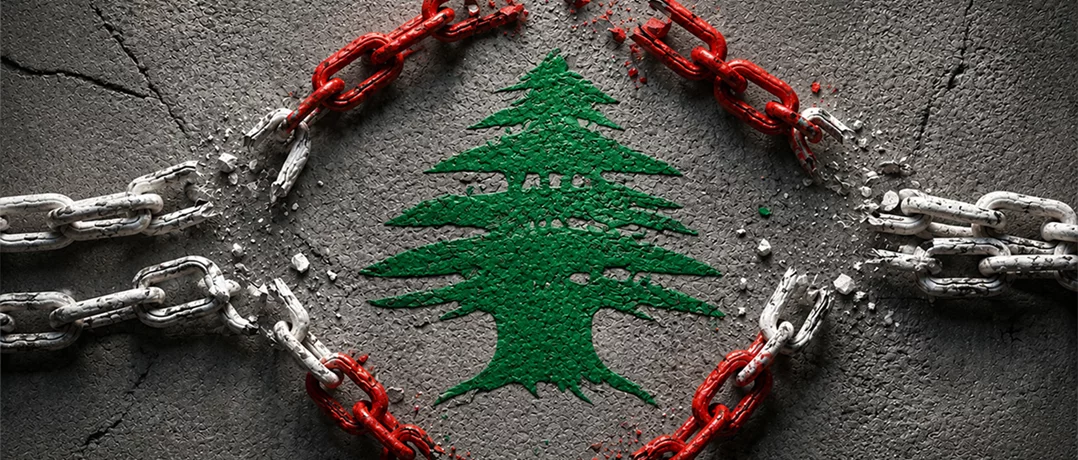
In a diplomatic development without precedent in modern Lebanese-Iranian relations, Lebanon has formally submitted a complaint against Iran to the United Nations (UN), accusing Tehran of violating international diplomatic conventions, interfering in Lebanese sovereignty, and dragging the country into a destructive war against the will of its constitutional institutions.
The complaint, officially registered with both the United Nations Security Council (UNSC) and the United Nations General Assembly (UNGA) under document number S/2026/343, signals a broader attempt by the Lebanese state to redefine its foreign policy and reassert sovereign authority after years of political paralysis and regional conflict.
A historic diplomatic escalation
The complaint was submitted on 21 April 2026 through Lebanon’s permanent representative to the United Nations, Ambassador Ahmad Arafa, in identical letters addressed to UN Secretary-General António Guterres and the president of the Security Council.
In the document, Lebanon accuses Iranian institutions, including the Islamic Revolutionary Guard Corps (IRGC), of carrying out unlawful acts in direct defiance of Lebanese government decisions. Beirut argues that Iran’s actions contributed to involving Lebanon in a devastating military confrontation with Israel, leading to massive human and economic losses.
According to the complaint, the conflict resulted in thousands of deaths and injuries, the displacement of more than 1 million Lebanese citizens, widespread destruction across villages and towns, and the continued occupation of portions of Lebanese territory by Israeli forces.
The significance of the complaint extends beyond its legal content. Diplomatically, it represents the first time Lebanon has formally accused Iran before the international community of undermining Lebanese sovereignty and violating international law.
Challenging Iran’s diplomatic narrative
One of the complaint’s central components involves disputing Iran’s account regarding the deaths of several Iranian officials killed during an Israeli airstrike on Beirut’s Ramada Hotel in March 2026.
Iran had previously informed the UN that the individuals targeted were accredited diplomats whose relocation had allegedly been coordinated with the Lebanese Ministry of Foreign Affairs and Emigrants (MOFA). However, the Lebanese complaint categorically denies that any such coordination occurred.
Beirut cited an official memorandum sent by the Iranian embassy on 16 March acknowledging that embassy officials had failed to notify Lebanese authorities about the movement of the individuals prior to the strike. Lebanese officials argued that this directly contradicted the version presented by Iran’s UN mission in New York.
The complaint also accused that 2 of the deceased individuals, identified as Ahmad Rasouli and Amir Moradi, were not officially registered as diplomats with the Lebanese Foreign Ministry, constituting a violation of Article 10 of the 1961 Vienna Convention on Diplomatic Relations, which obliges diplomatic missions to formally notify host governments of diplomatic appointments and personnel status.
Lebanon further stated that repeated requests for updated diplomatic personnel lists from the Iranian embassy went unanswered.
Allegations of military activity under diplomatic cover
Perhaps the most politically explosive aspect of the complaint concerns allegations that some of the Iranian personnel killed in Beirut were members of the IRGC rather than conventional diplomats.
Lebanese authorities referenced Iranian media reports and circulated photographs allegedly showing the individuals in military uniforms bearing IRGC insignia and ranks. According to Beirut, such activities constitute a violation of Article 41 of the aforementioned Vienna Convention, which requires diplomats to respect the laws of the host country and refrain from interference in domestic affairs.
Without prejudice to their privileges and immunities, it is the duty of all persons enjoying such privileges and immunities to respect the laws and regulations of the receiving State. They also have a duty not to interfere in the internal affairs of that State.
Article 41(1)
The complaint also accused Iran of using diplomatic facilities for purposes incompatible with normal diplomatic functions, particularly in relation to military coordination and support activities linked to Hezbollah operations.
These accusations underscore growing concern within Lebanese state institutions regarding what officials describe as the militarization of diplomatic representation and the erosion of Lebanon’s sovereign decision-making process.
Lebanon between Israeli and Iranian interference
The complaint emerges within the broader context of Lebanon’s increasingly complex diplomatic strategy. Since the breakout of hostilities between Hezbollah and Israel, Beirut has submitted multiple complaints to the UN documenting Israeli violations of Lebanese sovereignty, attacks on civilians, destruction of infrastructure, and territorial incursions.
At the same time, Lebanese authorities are now simultaneously accusing Iran of contributing to the same conflict through support for Hezbollah and direct operational involvement.
This dual-track diplomatic approach places Lebanon in the unprecedented position of formally challenging both Israel and Iran before international institutions. Lebanese officials argue that the country has become a battleground for external powers while its own institutions struggle to regain authority over security and military decisions.
The complaint specifically referenced statements by the IRGC announcing coordinated military operations with Hezbollah launched from Lebanese territory shortly after the Lebanese government attempted to prohibit unauthorized military activity.
According to Beirut, these actions directly undermined Lebanese state authority and exposed the country to catastrophic retaliation.
Legal and political implications
While few observers expect the Security Council to adopt binding measures against either Iran or Israel due to geopolitical divisions and the veto power of permanent members, called the P5 countries (United States, Russia, China, the United Kingdom, and France), the complaint is viewed as strategically important.
First, it establishes a permanent international record documenting violations against Lebanon.
Second, it reinforces the narrative that Hezbollah operates as part of a broader Iranian regional strategy rather than solely as a Lebanese movement.
Third, the complaints may strengthen Lebanon’s future position in negotiations related to reconstruction aid, border disputes, and potential compensation claims for war damages (which could potentially be demanded from Tehran and Tel Aviv).
The documentation process could thus be framed as a long-term legal and diplomatic strategy aimed at securing accountability for both direct military destruction caused by Israel and Iran.
The move also reflects a deeper struggle over the future identity of the Lebanese state itself: whether national institutions can reclaim authority over war, peace, and foreign policy after years of external influence and internal fragmentation.
To conclude, although the complaint may not immediately produce binding international action, it carries substantial symbolic, legal, and political weight.
-
-

-
The Beiruter
-
