



As part of Beirut Art Days, Badguèr Cultural Center celebrated Lebanon's Armenian heritage through art, crafts, music, and community, honoring memory while embracing creativity and cultural renewal.
Inside Badguèr's celebration of Armenian heritage
Inside Badguèr's celebration of Armenian heritage
By Patricia Khoder | July 01, 2026

Reading time: 4 min
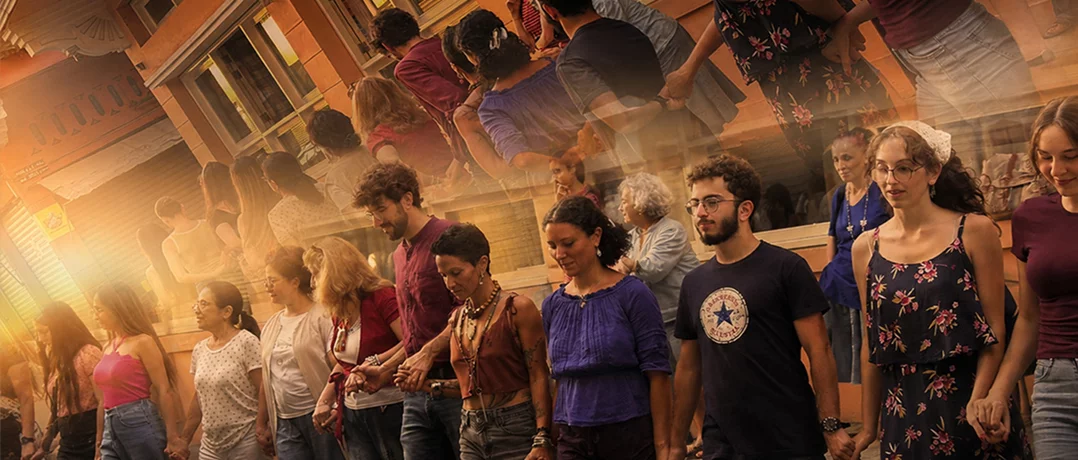
As part of Beirut Art Days, the Badguèr Cultural Center and Museum opened its doors to visitors for a vibrant celebration of the art, culture and traditions of Lebanon's Armenian community. The program featured, for four days, craft workshops, embroidery, painting, music performances, poetry recitals, dance classes and recycling initiatives.
More than two decades ago, Arpi Mangassarian founded Badguèr Armenian for "image" as a museum and workshop dedicated to preserving Armenian arts and crafts. The space also includes a restaurant serving traditional homemade Armenian cuisine.
Located in Bourj Hammoud, the neighborhood north of Beirut that became home to thousands of Armenians following the 1915 Armenian Genocide, the three-story cultural center hosts activities throughout the year. During Beirut Art Days, it offered a tribute to Armenian culture and Lebanon's long tradition of welcoming and integrating displaced communities.
Like many descendants of survivors of the Armenian Genocide who rebuilt their lives in Lebanon, Mangassarian said: "Lebanon transformed all of us," she said. "It gave us so much and embraced us. This is a land of opportunities and of love."
"The Armenian people are alive and vibrant," she adds. "I have always been surrounded by people who move forward, who work, think, create and love. I received so much love from my parents, Noubar and Marie, from my grandparents and from my entire family. Even though they are no longer here, I want that love to continue. I also want to pass it on, and that is exactly what we do here at Badguèr through our activities and our presence."
Throughout the four-day festival, the center buzzed with visitors, artists and craftsmen, transforming the venue into a hive of creativity.
Architect, painter and sculptor Taline Ekizian worked on-site, developing an artwork inspired by the biblical story of Jonah, who was swallowed by a whale and emerged three days later. "It is a story about holding on to hope, no matter what," the artist says.
Designer Lisa Garo Gulgulian showcased a family legacy spanning three generations. A shoe designer whose handcrafted footwear is produced in Bourj Hammoud's workshops, she inherited the trade from both her father, a specialist in restoring leather goods, particularly handbags and shoes, and her grandfather, a cobbler who owned a small shop in downtown Beirut.
"Thanks to Badguèr, I was able to work in a shoe-making workshop where I refined and modernized the skills I had inherited," she says, displaying handmade pumps and sandals created in her atelier.
Visitors also took part in workshops on Armenian kilim weaving, bead flower making, embroidery, painting, dance and recycling.
"Our carpets are filled with symbols and have never been placed on the floor," Mangassarian explains. "Legend says that the symbols woven into them are the source of our strength and prosperity, lions and tigers represent strength, while grapes and pomegranates symbolize prosperity. It is as if the souls of our ancestors live within them. That is why we hang them on our walls."
The embroidery workshops highlighted traditional stitching techniques unique to Armenian cities such as Marash and Ayntab, communities from which Armenians were forced to flee during the genocide.
But Badguèr is not only dedicated to preserving the past.
"We are firmly rooted in the present," Mangassarian says. "We work closely with the municipality of Bourj Hammoud, which will soon launch a major waste sorting and recycling project. During Beirut Art Days, we organized three days of recycling workshops for all age groups, from children to adults."
The festival also featured concerts and dance workshops.
"We concluded the celebrations by dancing in the streets," she says. "Not just any dance, but the Dance of the Princes, performed with our backs straight and shoulders touching, drawing strength from the princes who came before us." This event gathered, in the streets of Bourj Hammoud, descendants of Armenian genocide survivors, Lebanese participants and many Europeans living in Lebanon.
Once a marshland at the beginning of the 20th century, Bourj Hammoud was transformed by Armenian refugees into one of Lebanon's most dynamic and creative neighborhoods. They built modest homes and small workshops around churches they erected with their own hands, creating a new life far from the lands they had been forced to leave behind.
-
-
-
Patricia KhoderJournalistFocusing on culture and entertainment.
-
