



A $332,000 budget, a team that once worked partly without pay and ambitions to overhaul Lebanon's bureaucracy: The Beiruter reports from the country's unconventional technology and AI ministry.
Inside Lebanon’s startup ministry


Walking into the Ministry of Technology and Artificial Intelligence (MITAI), one could be forgiven for thinking they had entered an early-stage startup. It’s small, surprisingly so, and occupies a modest space in Beirut Digital District, just five minutes from downtown Beirut. The entire operation is housed in a space containing a single meeting room, three small offices, a room for taking calls and 11 computers arranged in three clusters across a shared working area. Were it not for the large Lebanese and MITAI flags flanking two seats at the center of the open workspace, the office would look entirely at home among the workspaces of Silicon Valley. The startup atmosphere is no coincidence. It is precisely the point. “We want to disrupt the way things are being done,” Minister of State for Technology and Artificial Intelligence Kamal Shehadi told The Beiruter. Established in February 2025 under the administration of President Joseph Aoun and Prime Minister Nawaf Salam, MITAI was tasked with advancing Lebanon's digital transformation and developing its technology sector. To see how this unconventional government office functions in practice, and what its small team has managed to achieve so far, The Beiruter spent an afternoon at the Ministry, interviewing Minister Shehadi and several members of the team. Several aspects of the ministry’s operations are unusual by the standards of any government institution. Approximately 24 people contribute to MITAI's operations, but not all work full-time.When their working hours are combined, the total is roughly equivalent to 20 people working full-time. Ministerial advisers are subject to a monthly compensation ceiling of $1,000, while other consultants receive what Shehadi described as “symbolic compensation” for their services. During 2025, twelve of the members who originally joined his team did not even get paid. And the annual operating budget? Just $332,000. If that seems like a tiny sum, it is. Even Lebanon's Ministry of Youth and Sports, among the country's least-funded ministries, received approximately $1.7 million in total appropriations under the 2026 national budget, more than five times MITAI's operating budget. MITAI's operating budget for 2027 is expected to rise to $400,000, an increase of 20.5%. MITAI's modest resources are accompanied by an equally peculiar institutional arrangement: Despite its name, it is not technically a ministry. Not yet, at least. MITAI formally remains a ministerial office, although a parliamentary subcommittee completed its initial review of legislation establishing it as a full ministry in October 2026. The ministry may still be awaiting its official recognition, but its agenda is already expansive. According to Shehadi, a $10 million European Union grant is in the pipeline to finance the digitization of public services, with particular emphasis on reducing opportunities for corruption. The funding, still unsigned as of November, would be managed not by MITAI but by an EU-selected consortium including Expertise France and Estonia's e-Governance Academy. In a country that has endured two wars in two years, one of which is ongoing, and continues to grapple with the economic crisis that began in 2019, digital transformation might seem an unlikely priority. But Shehadi is firm in his conviction that Lebanon cannot afford to postpone its technological modernization. “The country can not survive unless we transform the economy and the government at the same time,” he said. Digitizing government procedures can reduce opportunities for corruption and strengthen accountability within public institutions. More immediately, the emphasis on digitization seeks to remove unnecessary frictions citizens encounter when accessing public services. “If you want digital transactions, you need to make systems interoperable,” Shehadi said, referring to the ability of different government systems to communicate and exchange information. MITAI has already begun laying some of the groundwork. In 2026, it worked with the Ministry of Interior to prepare tender documents and technical specifications for a national digital ID that would allow citizens to verify their identities electronically when accessing public services. In late October, the cabinet also approved a decree prepared by MITAI and the Ministry of Justice to facilitate the use of electronic signatures and official digital documents across public administrations. MITAI has similarly worked with the Justice Ministry on draft data protection legislation and coordinated with other ministries on a proposed cybersecurity law. Beyond digital government, MITAI has pursued special technology economic zones intended to attract technology companies through tax and customs exemptions. Under legislation enacted in May 2025, the zones require implementing decrees to become operational. By November 2026, MITAI had secured approval for the first, working with the ministries of Industry, Economy and Finance. Among MITAI's most developed initiatives is NUMŪ, Arabic for “growth,” a national program intended to expand access to artificial intelligence training and encourage its adoption. “NUMŪ seeks to position Lebanon among the region's leading adopters of AI by 2036, building the country's AI talent pipeline while encouraging technology adoption across society, institutions and the economy.” Nour Fayad, who leads NUMŪ, told The Beiruter. The comparison is apt for a platform that acts as an intermediary between technology companies and prospective learners. Rather than developing courses itself, NUMŪ offers free training and certification opportunities from Microsoft, Oracle, SAP, Amazon Web Services and Huawei. Its online platform currently offers six types of certification, with more than 1,000 people having completed training. By 2036, it aims to engage more than 500,000 people, issue 100,000 certifications, and encourage AI adoption across 500 institutions. But digital training risks excluding those without reliable access to computers or the internet. To address this gap, NUMŪ has partnered with NGO DOT Lebanon and local municipalities to deliver in-person AI training in Arabic, including in Nabatieh. The initiative has delivered approximately 3,600 hours of Arabic-language AI training. “People in Lebanon love learning in communities. There's something important about that collective experience,” Fayad said. Through partnerships with 15 Lebanese universities, NUMŪ is bringing students and researchers together to develop AI applications. Four prototypes include a Saint Joseph University dashboard, an American University of Beirut platform for the Ministry of Economy and Trade, USEK’s smart irrigation system and the Lebanese American University’s energy management project. Not all of MITAI's initiatives involve developing technology or drafting legislation. Some depend instead on persuading the private sector to put its money to work. Launched in May 2026, the Lebanese Angel Investor Network (LAIN) seeks to connect Lebanese-founded startups with private investors, particularly among the diaspora. Initiated by MITAI and managed by venture capital firm BY Venture Partners, the fund will invest in Lebanese entrepreneurs operating both at home and abroad. “We're not asking Lebanese people, particularly those in the diaspora, to invest in the country simply to support it,” Jana El-Husseini, who oversees LAIN at MITAI, told The Beiruter. “We're presenting them with an investment opportunity from which they can expect returns.” The fund aims to raise $5 million, with an initial fundraising close of approximately $1.7 million to $2.5 million targeted for the end of 2026. More than 40 prospective investors were undergoing onboarding as of November. Shehadi has considerably bigger ambitions for what he calls a “fund of funds,” potentially worth $150 million to $250 million, to finance later-stage technology companies with a significant presence in Lebanon. Unlike LAIN, the initiative remains in development, with Shehadi seeking an international financial institution or sovereign wealth fund willing to provide 10% to 20% of the capital as an anchor investor. “What the ecosystem was missing was someone who could put the pieces of the puzzle together,” El-Husseini said. MITAI's efforts to connect Lebanon's technology sector are accompanied by a rather different undertaking: making the labyrinth of Lebanese public administration intelligible to those who must navigate it. Sabil, an AI-powered platform developed in-house by MITAI's team without paid external development, has catalogued approximately 3,000 administrative procedures across 61 public institutions. Rather than sending citizens from one government office to another in search of answers, Sabil is designed to explain the documents, fees and steps required for a given procedure, in Arabic, French or English. It can even suggest which bureaucratic steps ministries might eliminate and identify potential contradictions, overlaps and gaps in draft legislation. Sabil is expected to launch publicly in early 2027. In October 2026, MITAI held a three-day demonstration at the Grand Serail with representatives from government ministries to gather feedback and begin validating the platform's information. Yet MITAI is attempting to modernize a public administration where paper records, multiple signatures and lengthy procedures remain commonplace. These bureaucratic practices have long created opportunities for corruption, while political interference and resistance to reform have frustrated previous efforts at modernization. “We have to overcome the obstacle of inertia, or what you might call weak motivation,” Shehadi said. For all its technological ambitions, MITAI's most difficult work may have little to do with technology itself.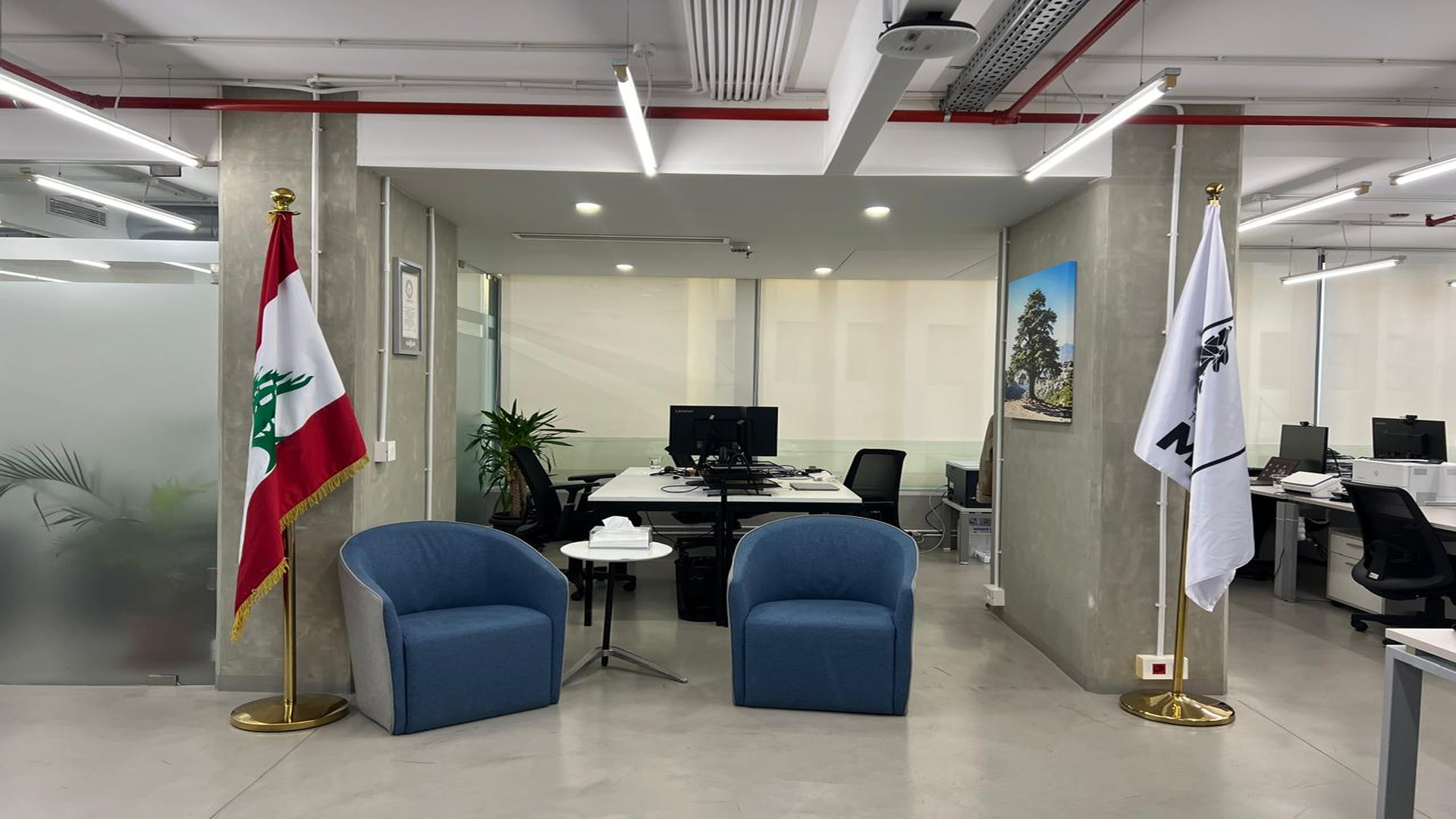 Lebanon's Ministry of Technology and Artificial Intelligence (MITAI) at Beirut Digital District. Photo: The Beiruter.
We are a startup ministry in a startup republic, but in a very ancient nation.
The case for a digital republic
The next republic must be digital, and if it’s not, we’re not likely to have a republic.
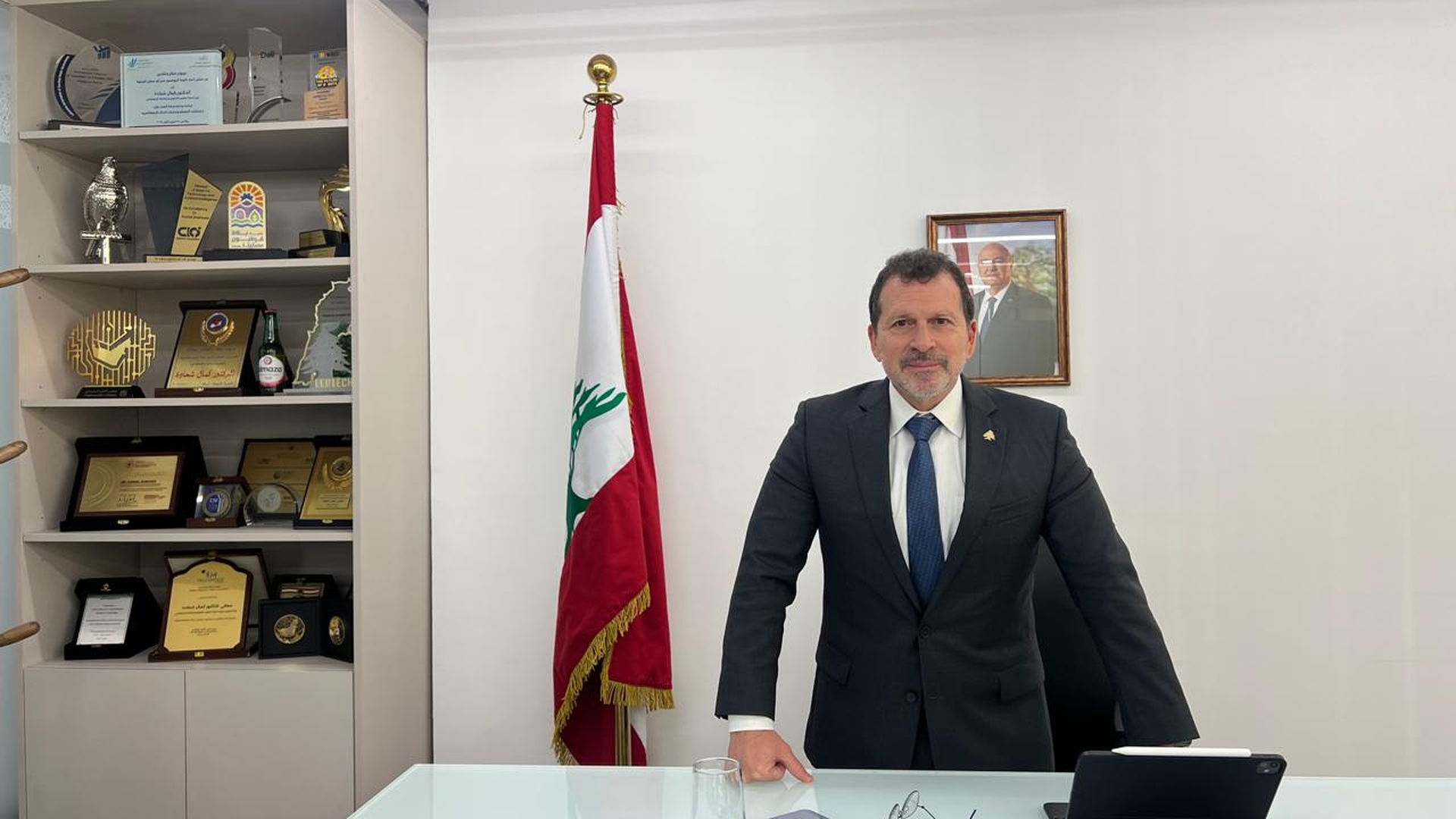 Minister of State for Technology and Artificial Intelligence Kamal Shehadi at his office in Beirut Digital District. Photo: The Beiruter.
It's about building the language and digital rails so that government institutions can speak to each other and transact.
Training Lebanon for an AI economy
Think of NUMŪ as the Airbnb of AI trainings.
 NUMŪ's AI Academy, which offers AI training developed in partnership with Microsoft Source: MITAI/NUMŪ.
Connecting capital, cutting through bureaucracy
MITAI is an enabler that can create opportunities by connecting people and bringing different parts of the ecosystem together.
Those would be our two challenges: inertia and corruption.
-
-

-
Katharine SorensenReporterSpecializing in global affairs, technology and economics, with a focus on on-the-ground investigative reporting.
-
