

Report alleges Israel secretly built desert base in Iraq supporting operations against Iran, sparking sovereignty concerns and regional controversy debate.
Inside the alleged Israeli base in Iraq

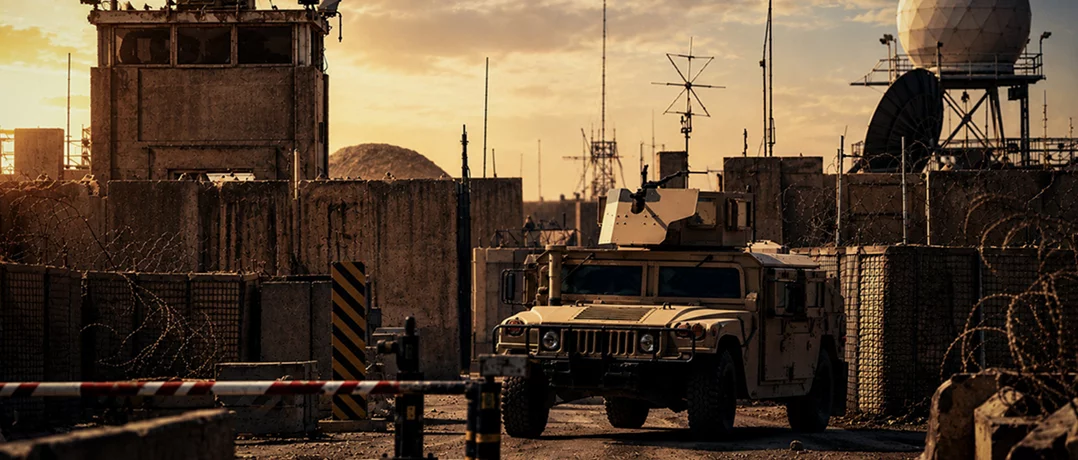
A report has ignited intense debate across the Middle East after revealing that Israel allegedly established a clandestine military base deep inside Iraq’s western desert to support its military campaign against Iran. According to the report, the facility served as a logistical and operational hub for Israeli special forces and air force units during the recent regional war.
Although neither Israel nor the United States (U.S.) has officially confirmed the existence of the installation, the allegations have triggered serious concerns in Iraq regarding national sovereignty, intelligence failures, and the possibility that Iraqi territory has become an undeclared arena for regional confrontation.
The alleged secret installation
According to the aforementioned, Israel constructed the secret outpost shortly before the outbreak of the recent war against Iran. The base was reportedly established with the knowledge of the U.S. and was positioned in a remote desert zone west of Najaf, far from major urban centers and traditional Iraqi military monitoring points.
The installation allegedly hosted Israeli special forces units and functioned as an advanced logistical center for the Israeli Air Force (IAF). Search-and-rescue teams were also reportedly stationed there to assist any Israeli pilots shot down during operations over Iranian territory.
Military analysts note that such forward operating positions are commonly used in long-range air campaigns. Iraq’s vast western desert, characterized by sparse population density and limited state presence, has historically been utilized by foreign militaries because of its strategic geography and difficult terrain.
Reports in Israeli media later suggested that satellite imagery revealed traces of a temporary airstrip approximately 1.5 kilometers long built inside a desert valley. Defensive fortifications and indications of organized troop deployment were also reportedly visible before the site later disappeared, possibly due to flooding or deliberate dismantling.
The alleged operation may have remained hidden had it not been for an Iraqi shepherd who reportedly observed unusual helicopter activity and military movements in the desert in early March. Local authorities received reports about suspicious activity, prompting Iraqi security forces to dispatch reconnaissance units to investigate.
According to the same report, Israeli forces intervened before Iraqi troops could reach the site, using airstrikes and heavy fire to force the Iraqi units to withdraw. Iraqi narratives surrounding the incident claim that one soldier was killed and two others were wounded during the confrontation.
However, Iraqi security sources have provided contradictory statements. Some denied the existence of any permanent Israeli military presence, arguing that the area was deserted and lacked any sustained foreign deployment. Others suggested that unidentified foreign forces had indeed conducted airborne operations in the area during the conflict, though they speculated the activity may have been American rather than Israeli.
The uncertainty surrounding the incident has only intensified speculation and public concern.
Iraq’s sovereignty under pressure
The allegations have revived long-standing Iraqi fears that the country is increasingly vulnerable to external military operations carried out without Baghdad’s approval or oversight. Iraq has long struggled to maintain neutrality amid escalating tensions between Iran, Israel, and the U.S.
Security experts in Iraq described the alleged base as a potentially dangerous breach of national sovereignty. They warned that the presence of any undeclared foreign military installation on Iraqi soil would constitute a serious national security threat and expose the country to regional escalation.
The Iraqi government reportedly submitted a complaint to the United Nations (UN) following the March incident, attributing the attack on Iraqi troops to foreign forces. Initial suspicions pointed toward the U.S., though American officials later denied involvement.
The controversy also exposed broader questions about Iraq’s surveillance capabilities and its ability to monitor remote desert territories. Critics argue that if a foreign military force was indeed able to establish a covert operational center inside Iraq, it would indicate major weaknesses in border security, intelligence coordination, and aerial monitoring systems.
For many Iraqis, the issue extends beyond the specific allegations themselves. It touches on a larger concern that Iraq risks becoming an open battlefield for regional powers pursuing their own strategic agendas.
Israel’s expanding regional strategy
If the reports are accurate, the operation would reflect Israel’s increasingly aggressive regional military doctrine aimed at countering Iranian influence across the Middle East. Over recent years, Israel has expanded covert intelligence and military activities beyond Syria and Lebanon, targeting Iranian networks, weapons transfers, and allied armed groups throughout the region.
A forward operating base inside Iraq would have offered Israel significant operational advantages. It would shorten flight distances to Iranian targets, improve emergency response capabilities, and provide rapid deployment options for rescue or special operations missions.
During the military campaign against Iran, Israeli aircraft reportedly conducted thousands of strikes against Iranian military infrastructure. Maintaining logistical depth closer to the battlefield would have been strategically valuable, especially in the event of aircraft losses or emergency extractions.
Former Israeli Air Force commander Tomer Bar had previously hinted at the existence of highly secretive missions carried out “behind enemy lines,” though he did not directly reference Iraq.
As investigations continue and official silence persists, the alleged Iraqi desert base may become one of the most controversial examples of the hidden dimensions of contemporary Middle Eastern warfare.
-
-

-
The Beiruter
-
