

Through the experiences of animal rescuers in Lebanon, this article reveals the hidden realities behind rescue work, from abuse and emergency veterinary bills to overcrowded shelters, difficult medical decisions and animals that may never find a home.
Inside the fight to save Lebanon’s abused animals
Inside the fight to save Lebanon’s abused animals
By Lynn El Khalil | August 14, 2026

Reading time: 6 min
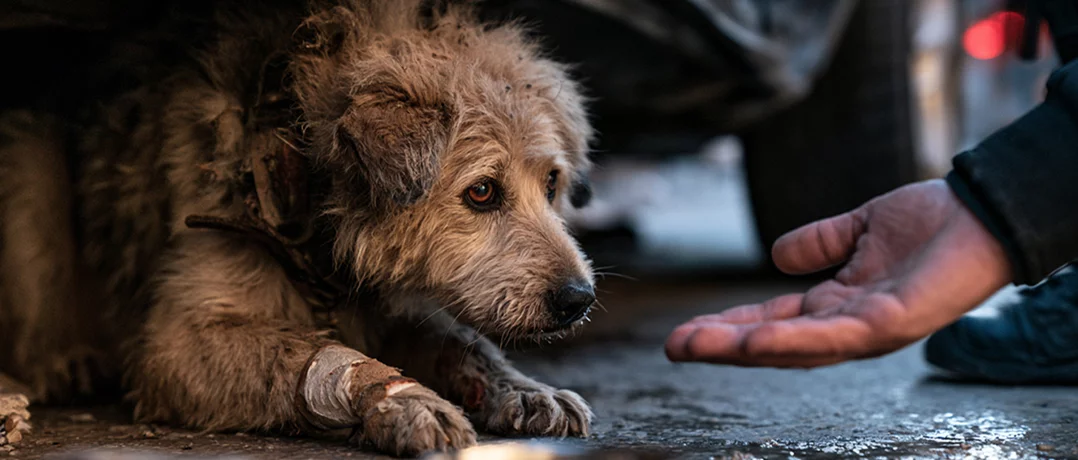
A poisoned dog, an abandoned cat, an animal hit by a car and left injured on the side of the road. Across Lebanon, cases of animal abuse and neglect regularly appear online, often followed by the same urgent appeals: someone needs to pick the animal up, someone needs to take it to a veterinarian, someone needs to pay for its treatment. More often than not, that responsibility falls on rescuers. For Sandra, who runs Paws Crossed LB, rescuing an animal is rarely a matter of simply taking it off the street. Many of the animals she receives are already emergencies, requiring immediate veterinary treatment and long-term care. Some eventually find homes. Others remain with her for the rest of their lives. What follows is a side of animal rescue that the public rarely sees: veterinary bills, unpredictable donations, limited shelter space, animals that cannot be adopted and, sometimes, the reality that an animal cannot be saved.
Abuse does not always look the same
Animal abuse can be highly visible, but neglect is often quieter. Manar, an independent rescuer in Saida said poisoning and shooting are among the most common forms of abuse she encounters. She also regularly sees neglect, including dogs left tied up without adequate attention or care. Sometimes rescuers discover these animals themselves. Other times, members of the public contact them and ask them to intervene.But once a rescuer agrees to take an animal, the responsibility quickly becomes much larger.
Sandra’s first priority is veterinary care, particularly because many of her cases arrive in critical condition. That treatment has to happen whether or not enough money has been raised to pay for it. Sandra relies heavily on fundraising, but donations are unpredictable. She explained that even the point of the month can affect whether people are able to contribute. “If people don’t donate at the end of the month,” she said, rescuers can suddenly find themselves without enough money to cover an emergency. The problem is that an injured animal cannot wait for a fundraising campaign to perform well. For independent rescuers, this means agreeing to help an animal can also mean accepting financial responsibility without knowing where the money will come from.Manar described a similar dependence on donations for her rescue work.
Finding a vet you trust
Getting an animal through the doors of a veterinary clinic does not necessarily end the uncertainty. Sandra recalled one particularly difficult case involving an animal she said had been misdiagnosed. According to her, the animal had a parasite, but by the time she realised the initial diagnosis had been wrong, the parasite had progressed too far. “Unfortunately, he was misdiagnosed,” she said. She also described another situation in which treatment went badly enough that the animal eventually had to be taken somewhere else. For rescuers dealing with animals that may already be critically ill, trust in veterinary care becomes essential. Manar echoed that concern, saying she deliberately pays more to visit veterinarians she trusts rather than choosing treatment based solely on price. “I pay extra to go to a vet [where] they won’t neglect them,” she said. It creates another financial contradiction for rescuers: they depend on donations and need to control costs, but cheaper treatment can feel like a risk they are unwilling to take with an animal’s life.
When nobody adopts them
Perhaps the biggest misconception about animal rescue is that every story ends with adoption. Sandra has her own shelter, measuring roughly 70 square metres, where she keeps animals that have nowhere else to go. She described the space as small, particularly because she cares for a large number of cats. If an adopter never appears, the animal stays. “My pets stay with me until the last moment,” Sandra said. That changes the meaning of rescue entirely. Picking an animal up may take minutes. Treating it could take weeks or months. Caring for it when nobody wants to adopt it can become a commitment lasting the rest of the animal’s life. Every permanent resident also means another space occupied when the next emergency arrives. For rescuers operating with limited room and limited funding, every successful rescue therefore creates another question: where does the animal go next?
The decisions rescuers do not post online
Not every animal Sandra takes in survives. She does not routinely euthanise the animals in her care, but there are circumstances where suffering becomes severe enough that she has to consider it. “It is one of the worst decisions I have to make,” Sandra said. “But sometimes seeing them dying is worse than just making this decision.” Sometimes the emotional difficulty comes from the fact that an animal does not necessarily look like it is dying. Sandra described caring for cats that can appear healthy while she knows they may only have weeks or even days left. Death has become an unavoidable part of the work. Sandra said she has found more than 100 animals dead, while many others have died while in her care. These moments rarely appear in the simplified version of animal rescue presented online. There may be no successful adoption photograph at the end, only a rescuer who tried to save an animal and could not.
Does abuse have to go viral?
Another problem emerges before an animal even reaches someone like Sandra: getting somebody to intervene. Manar said that, based on what she has witnessed, cases of animal abuse appear more likely to receive official attention when they become widely shared online. “I feel like they do something when the situation goes viral,” she said. Without that attention, she is less confident that an ordinary complaint will result in intervention. She said authorities are more likely to show up when a case has generated enough public outrage. It creates a troubling imbalance. Two animals can experience equally serious abuse, but the one whose photograph reaches thousands of people may have a much better chance of attracting help. Social media then becomes more than a tool for awareness or fundraising. For rescuers, it can become one of the few ways to generate enough pressure for someone to act.
What happens after everyone stops sharing
Animal abuse attracts attention because it is immediate. A photograph of an injured dog can circulate within hours, accompanied by hundreds of comments demanding action. But the rescue itself may only be the first few minutes of a story that lasts years. Once the posts disappear from people’s feeds, rescuers like Sandra are still taking animals to veterinary appointments, paying bills, fundraising, cleaning shelters, feeding animals and trying to find homes for those healthy enough to be adopted. Some will never be adopted and some will not survive. And the next emergency can arrive before the previous bill has even been paid. Sandra’s experience with Paws Crossed LB shows that Lebanon’s animal welfare problem is not simply about whether someone is willing to rescue an abused animal. It is about who takes responsibility for everything that comes afterwards. For many of the animals she encounters, there is no larger system waiting to catch them. There is simply a rescuer willing to do it.
