

Fashion overconsumption is rarely about clothes, it is often an emotional and psychological search for identity, comfort, and fulfillment.
Inside the psychology of wardrobe dissatisfaction
Luxury fashion - Fashion psychology - Unconscious in fashion - Social media fashion - Lebanese fashion culture - Lebanese fashion - Beirut fashion - Fashion styling
Inside the psychology of wardrobe dissatisfaction
By The Beiruter | August 08, 2026

Reading time 4 mins
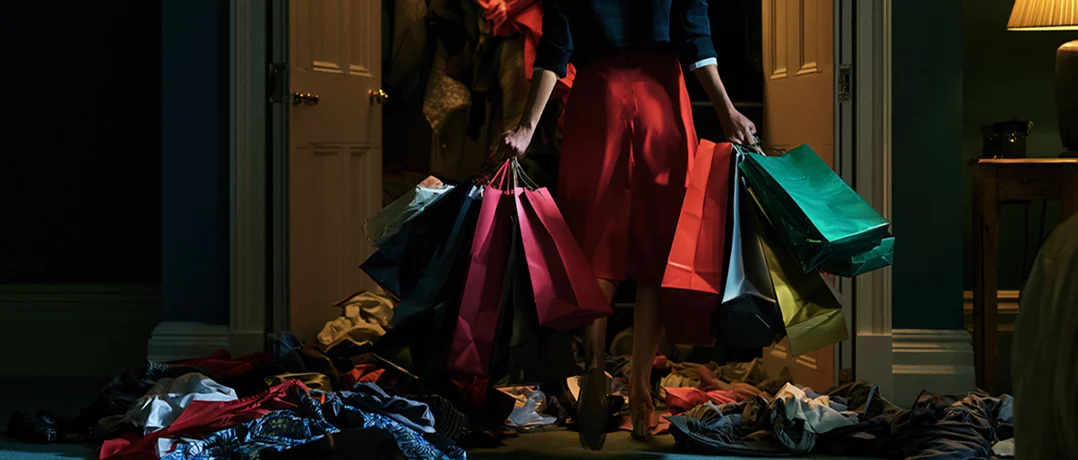
There is a peculiar contradiction at the heart of modern fashion culture, closets have never been fuller, and yet the lament "I have nothing to wear" has never been more common. This is a paradox of psychology. Overconsumption in fashion, the compulsive accumulation of clothing that goes largely unworn, has less to do with need than with identity, emotion, and the persistent gap between who we are and who we believe we should become. To understand this phenomenon, The Beiruter spoke with two very different voices, a veteran fashion stylist who has spent years untangling clients from the trap of trend-chasing, and a young woman who came to recognize her own shopping habit as something closer to a coping mechanism than a hobby.
The stylist's view: Character over clone
For stylist Hadia Senno, the emptiness people feel while staring into a full wardrobe is rarely about the clothes themselves. "It's a psychological thing," she explained. "Every time I wear something new, I feel different." That feeling, she argued, is precisely what drives so many people to buy far more than they need, not the garment, but the sensation the garment briefly promises.
Senno drew a sharp line between two types of consumers, those who buy for meaning, and those she calls "fashion victims", people who purchase primarily to broadcast status. "They don't know what they buy," she said. "They buy just to show the world what they have." In her view, this behavior explains why so many trend-driven purchases are abandoned almost as soon as the season changes. "The next season, they've barely worn it, they've barely seen people wearing it anymore, and they come out saying, I have nothing to wear."
Her prescription is deceptively simple, build a wardrobe around timeless, adaptable pieces rather than seasonal noise. She points to what she calls the "five Rs", refuse, reduce, reuse, repurpose, and recycle, as a framework for breaking the buy-and-discard cycle. Around a handful of essentials, a well-cut blazer, a strong pair of trousers, a crisp white shirt, a versatile skirt, the enduring little black dress, Senno insists an entire wardrobe of "looks" can be built without ever needing to purchase something new. "All you need to change is a top," she said of a good pair of trousers, describing how a single pair of jeans can swing from dressed-down to dressed-up with nothing more than a change of shoes or accessories.
‘Shopaholics never get enough of buying. They start buying whether they need something or not." She likens the compulsion to disordered eating, a hunger that persists past the point of satisfaction, driven not by appetite but by an inability to stop. For Senno, the antidote is not deprivation but distinction, cultivating a personal style, or what she calls one's "DNA," rather than surrendering to what the fashion industry is, in her words, constantly selling fantasy.
Confessions of a shopaholic
"Maya," 27, describes wardrobe dissatisfaction from within. What began as an enjoyment of fashion slowly became something else entirely, purchases she'd forget making until packages arrived, a private rationale ready for every impulse. "I work hard, I deserve this," she recalled telling herself. "It's on sale, so technically I'm saving money."
The emotional architecture of a shopping episode, she said, followed a predictable arc. "There was this urgency. I had to buy it immediately because I was scared it would sell out or I'd regret not getting it." The rush came at checkout, "Yes, I'm doing something for myself", but rarely survived the item's arrival. "Sometimes I'd open the package and think, why did I buy this?"
Concealment became routine. "If something cost $200, I'd say it was $80," she admitted, describing how she hid packages and downplayed spending to her family and partner. The turning point arrived after a single six-hundred-dollar night of online shopping left her, the next morning, surrounded by bags and feeling nothing at all. "I don't think I actually have a shopping problem," she remembered realizing. "I think I have a problem that I'm treating with shopping."
In therapy, a simple question reframed everything, what do you feel immediately before you buy something? Underneath the impulse, she found, was almost always an emotion she hadn't named, boredom, loneliness, stress, insecurity. Her therapist described the pattern as compulsive buying behavior, not a love of shopping taken too far, but a coping mechanism with its own cycle of tension, relief, and shame. "Shame can send me right back into shopping," she said. "I'd feel bad about what I did, then shop because I felt bad."
Social media, she believes, accelerates the cycle by manufacturing permanent inadequacy. "I was shopping for a version of myself that I thought I was supposed to become," she said, a fantasy self-assembled, purchase by purchase, that could never actually be bought. Recovery, for Maya, has meant awareness, pausing to ask whether she wants the item or "the feeling I think this will give me," and sitting with discomfort instead of outrunning it. "Now I have to actually ask myself why I'm sad or stressed or insecure," she said. "That's much harder than clicking add to cart."
The emotional closet
Between the stylist's professional framework and the consumer's personal reckoning, a shared truth emerges, overconsumption in fashion is rarely about clothing at all. It is about identity anxiety, emotional avoidance, and an industry expertly engineered to exploit both. The wardrobe, in this light, becomes a mirror, not of what we own, but of what we are still trying to feel.
-
-

-
The Beiruter
-
