



Fresh U.S.–Iran talks in Muscat reopened diplomacy as Washington briefs Benjamin Netanyahu and clashes with Tehran led by Abbas Araghchi over expanding negotiations beyond nuclear issues to proxies like Hezbollah.
Iran and U.S.talks in Oman: A ‘good start’ amid deep distrust
Iran and U.S.talks in Oman: A ‘good start’ amid deep distrust
By Omar Harkous | February 07, 2026

Reading time: 5 min
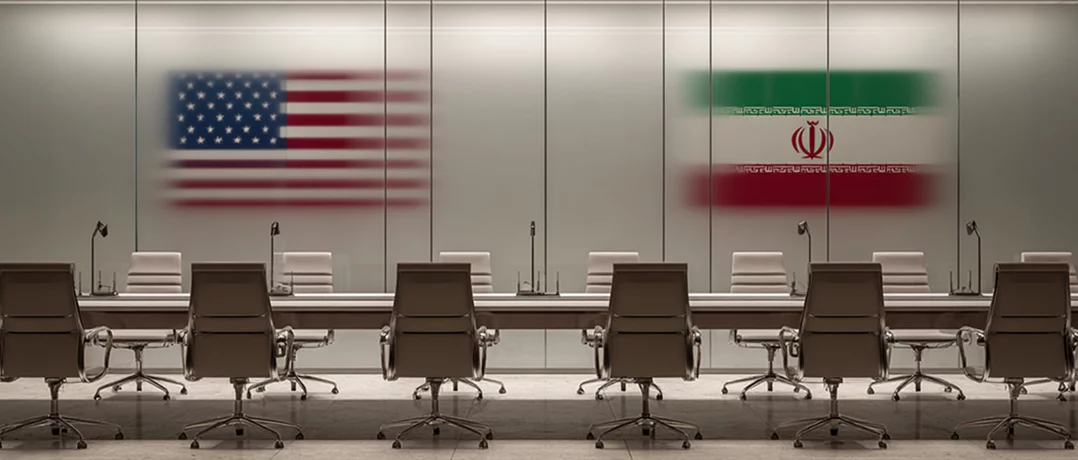
The first round of negotiations in Muscat has concluded, with follow-up sessions set to take place in the coming days. Meanwhile, the U.S. envoy is expected to visit Israel to brief Benjamin Netanyahu on the latest talks with the Iranians. Amid unprecedented tensions, the first round of negotiations between the United States and Iran was held in the Omani capital, Muscat, at what appears to be the peak of an escalation trajectory that began with the war in Gaza, Hezbollah’s involvement from Lebanon, and Houthi missile launches from Yemen that shut down key maritime passages. This escalation continued through the so-called “Twelve-Day War” targeting nuclear sites in June 2025, and culminated in the internal unrest Iran witnessed earlier this year.
Despite the opening of a window for dialogue, the gap between the two sides remains wide. Washington, driven by a “maximum pressure” strategy, is seeking a comprehensive agreement that restricts Iran’s nuclear and missile programs, curbs the influence of its regional proxies, and halts internal repression. Tehran, meanwhile, is entrenched behind what it calls a “nuclear deterrence wall,” attempting to limit discussions to sanctions relief in exchange for limited nuclear freezes, while rejecting any interference with its missile deterrence system or its network of regional allies.
Ahead of the talks, disputes emerged over both format and substance. Istanbul had initially been slated to host the round, but Tehran, working with Qatari mediators, pushed for moving the talks to Muscat, fearing the table could turn into a “regional trial” of its behavior. The move also reduced direct Western presence, given Turkey’s NATO membership.
An Arab source in Jerusalem suggests that regional or Arab participation, if it occurs, will come at later stages within a broad political framework. The source expects the core talks to remain bilateral and closed at the outset. Israel, the source adds, will not be directly represented at the negotiating table, but will closely follow developments through its own channels, and will later be briefed on the discussions via U.S. envoys Steve Witkoff and Jared Kushner.
“Nuclear Only” or a Comprehensive Deal?
The negotiation agenda remains the primary obstacle. Iranian Foreign Minister Abbas Araghchi insists on limiting talks to the nuclear file and sanctions relief, while the administration of U.S. President Donald Trump maintains that any agreement must also address ballistic missiles, support for armed groups, Iran’s regional conduct, and the repression of civilians inside Iran.
The Arab source in Jerusalem confirms that talks will effectively begin with the nuclear file, as it is the only entry point both sides can agree on. However, the U.S. objective, coordinated with Israel, is to later expand discussions to other issues. Iran, by contrast, aims to prolong negotiations within the nuclear framework, granting itself domestic leeway to explain developments and extend talks for as long as possible. Regional states do not wish to see continued tensions stemming from Iranian interventions via its proxies, yet they also recognize that any attack on Iran could inflict severe damage across the region, for multiple reasons.
Technically, the nuclear risk remains despite the military strikes of June 2025. Iran still possesses around 400 kilograms of uranium enriched to 60 percent, an amount theoretically sufficient to produce nine nuclear warheads if enrichment reaches 90 percent. Moscow has once again proposed transferring this stockpile to Russian territory. Tehran does not oppose the idea outright, but prefers lowering enrichment levels domestically through regional cooperation. Meanwhile, research centers report a U.S. request to place the stockpile under Washington’s supervision, a proposal favored by Trump but dismissed by Iran’s leadership. As talks began, several regional states pushed to initially confine negotiations to the nuclear file, fearing that including ballistic missiles and Iran’s support for regional allies would immediately deadlock talks and derail progress.
Proxies: a deterrence card in decline
Amid shifting regional dynamics, a parallel battle is unfolding over Iran’s proxy network. While Washington and Tel Aviv seek to sever ties between Tehran and its allies, Iran views this network as a forward line of defense against unexpected attacks.
Each front, however, faces its own crises. In Iraq, political forces are mired in quota-based governance disputes and calls to insulate the country from conflict, with the exception of small factions led by Kataib Hezbollah. In Lebanon, Hezbollah is under intense military pressure, as Israel focuses on targeting its leadership, military sites, and infrastructure to prevent capability rebuilding. Meanwhile, Houthi escalation in the Red Sea has driven up global shipping costs, sending a clear message that any strike on Iran could threaten vital maritime routes.
The Iranian view: dialogue or warning
Against this backdrop, a source in Tehran expects the Muscat talks to fall short of a final outcome, arguing that they reflect a mutual recognition that war is not a preferred option at present neither for Tehran nor for Washington. The source describes the process as a blend of dialogue and pressure, anticipating further U.S. economic escalation aimed at influencing Iran’s domestic situation.
The Iranian source warns that continued pressure “could push Tehran to issue a warning, and perhaps consider a preemptive strike against U.S. interests in the region, viewed as easier targets than Israel and more predictable in terms of response.” As is evident, economic and psychological warfare pose a greater threat to the regime than direct military confrontation, as they impact Iranian society from within.
Victory or escalation
According to the Arab source in Jerusalem, the negotiation track offers Donald Trump an opportunity to construct a political narrative that he attempted diplomacy with the participation of regional allies such as Turkey and Arab states, allowing him to justify any future escalation if talks fail. In this context, the current round may continue, accompanied by consultations with Israel and regional participants to assess the trajectory and possibly decide whether the U.S. delegation remains in Muscat or moves to another venue.
For Iran, three core conditions have been set: no negotiations under threat, limiting talks to the nuclear file, and rejecting any conditions that infringe on Iranian sovereignty.
Based on current indicators, three main scenarios emerge. First: negotiations collapse and the “death of diplomacy” is declared, potentially opening the door to crushing sanctions and new military strikes, followed by Iranian responses through strait closures or proxy escalation.
Second: a temporary and fragile agreement mediated by Oman and Russia, involving a freeze on high-level enrichment in exchange for limited sanctions relief and postponement of the most sensitive issues.
Third: a grand bargain imposed by Washington, requiring Iran to abandon its nuclear and missile programs in exchange for guarantees of regime survival, a scenario that currently appears unlikely.
Negotiations of the last chance
Ultimately, the Muscat talks resemble “last chance” negotiations before the possibility of military escalation. While delegations sit behind closed doors, warships at sea and missiles on their launchpads remain the most present actors in the language of negotiation. Tehran has announced the deployment of one of its most advanced long-range ballistic missiles, the Khorramshahr-4, at a major underground Revolutionary Guard missile complex. Armed forces readiness has been raised to the highest level, particularly in air, land, border, and naval domains.
For now, Moscow’s offer to transfer part of Iran’s nuclear stockpile to Russia could represent a tactical concession reflecting a sense of real danger. Its success, however, depends on whether Trump settles for a “quick nuclear victory” or pushes for a broader deal encompassing ballistic missiles an issue Iran refuses to discuss, including missile numbers and range, considering them a cornerstone of its defense doctrine. The militia file, also rejected by Iran’s negotiators in Muscat under threat of withdrawal and obstruction of diplomatic efforts, remains equally contentious. In this context, an Iranian diplomat told Reuters that any “presence of U.S. Central Command or regional military officials in the meetings could jeopardize the talks.”
