

Iran has designated EU militaries as terrorist groups after the bloc listed the IRGC, escalating diplomatic tensions amid protests, human rights accusations, and rising military posturing in the Gulf.
Iran designates EU armies as “terrorist”

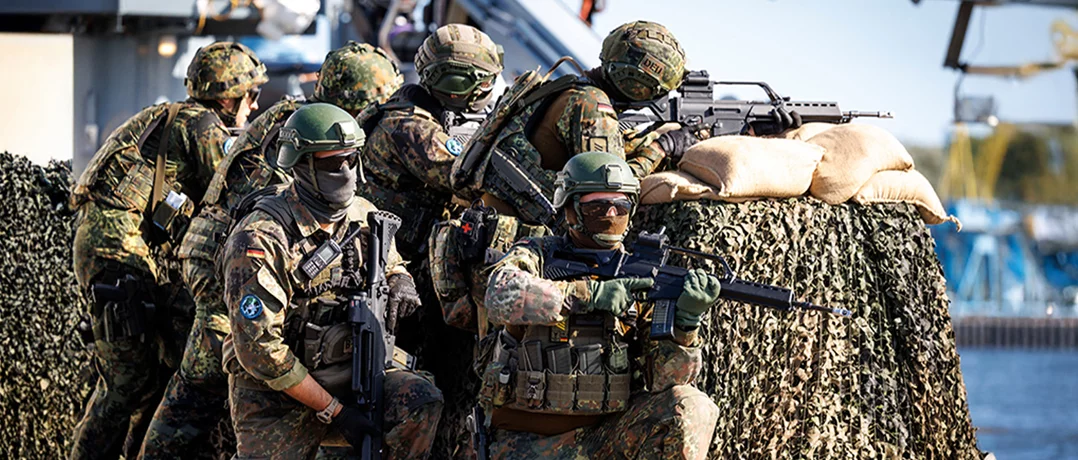
Iran has officially designated all European Union (EU) militaries as “terrorist groups” in response to the EU’s recent decision to classify the Islamic Revolutionary Guard Corps (IRGC) as a terrorist organization.
The move marks a significant escalation in the diplomatic tensions between Tehran, Europe, and the United States (US) over the IRGC’s domestic crackdown on protests and its broader regional influence.
Reciprocal measures and political messaging
The announcement was made by Iranian Parliament Speaker Mohammad Bagher Ghalibaf, a former IRGC commander, who cited Article 7 of Iran’s law on countermeasures following foreign terror designations. Ghalibaf criticized the EU for “shooting itself in the foot” and acting in “blind obedience to the Americans,” asserting that the decision disregarded the interests of European citizens. The retaliatory designation mirrors earlier US measures, as Washington was the first country to list the IRGC as a terrorist organization in 2019.
The EU’s decision, announced by foreign policy chief Kaja Kallas, followed the IRGC’s violent suppression of mass protests that began on 28 December 2026, its biggest and most intense since 1979, initially over economic grievances but rapidly escalating into a broader challenge to government authority. Human rights organizations report over 6,000 deaths and 41,000 arrests during the unrest, while Iranian authorities acknowledged over 3,100 fatalities, including civilians and security personnel. During the height of the protests, the government imposed nationwide internet and mobile restrictions to curb communication and organization among demonstrators.
The role of the IRGC
The IRGC, established after the 1979 Iranian Revolution, operates alongside Iran’s regular armed forces under the direct command of Supreme Leader Ayatollah Ali Khamenei. It plays a central role in Iran’s domestic security, defense strategy, foreign operations, and regional influence. Its responsibilities include maintaining internal control, conducting military operations abroad, and projecting Tehran’s power across the Middle East.
The EU’s designation underscores its pivotal role in repressing internal dissent, while Iran’s response reflects the Guard’s symbolic and strategic importance to the regime.
Regional and global implications
While Iran’s designation of EU militaries is largely symbolic, it represents a notable intensification of political rhetoric. Tehran’s announcement coincides with heightened military alertness, including live-fire exercises in the Strait of Hormuz, a critical chokepoint for global oil trade. Supreme Leader Khamenei warned that any US or foreign attack could escalate into a regional conflict. “We are not the initiators and do not want to attack any country, but the Iranian nation will strike a strong blow against anyone who attacks and harasses them,” he stated, highlighting Iran’s posture of deterrence.
The announcement also comes amid rising tensions with Washington, with President Donald Trump threatening military action and increasing naval presence in the Gulf. Despite these threats, both sides have indicated that diplomatic channels and negotiations are ongoing, highlighting a cautious balance between confrontation and dialogue.
Domestic reaction and international criticism
Domestically, Iran’s government has leveraged the EU decision to consolidate political support. Parliamentarians demonstrated by wearing IRGC uniforms and chanting slogans such as “Death to America” and “Death to Israel.”
The move signals Tehran’s intent to frame the European designation as a foreign attack on Iran’s sovereignty, rallying domestic support while deflecting criticism over human rights violations, including incidents like the 2022 death of Kurdish woman Mahsa Amini, which had sparked nationwide protests under the slogan “Woman, Life, Freedom.”
Meanwhile, European leaders have strongly condemned Tehran’s move. Germany’s Foreign Minister Johann Wadephul described Iran’s declaration as “baseless” and “propagandistic,” stressing that Europe will not be intimidated by rhetorical retaliation. He highlighted the IRGC’s role in violent repression and human rights abuses, reiterating European support for freedom and human rights within Iran.
In conclusion, Iran’s designation of EU militaries as terrorist groups underscores the deepening political and diplomatic tensions in the Middle East. While largely symbolic, the action signals Tehran’s willingness to retaliate against sanctions and international criticism, even as internal dissent and global scrutiny intensify. The move also highlights the IRGC’s central role in Iran’s domestic and regional strategy, and the continuing challenge for Western powers to address human rights violations without escalating conflict. With military posturing and diplomatic maneuvering continuing, the standoff between Iran, Europe, and the US remains a critical focal point in regional and international security dynamics.
-
-

-
The Beiruter
-
