

As inflation surges and repression intensifies, Iran faces its most serious wave of unrest since the post-Mahsa Amini protests.
Iran protests witness significant escalation

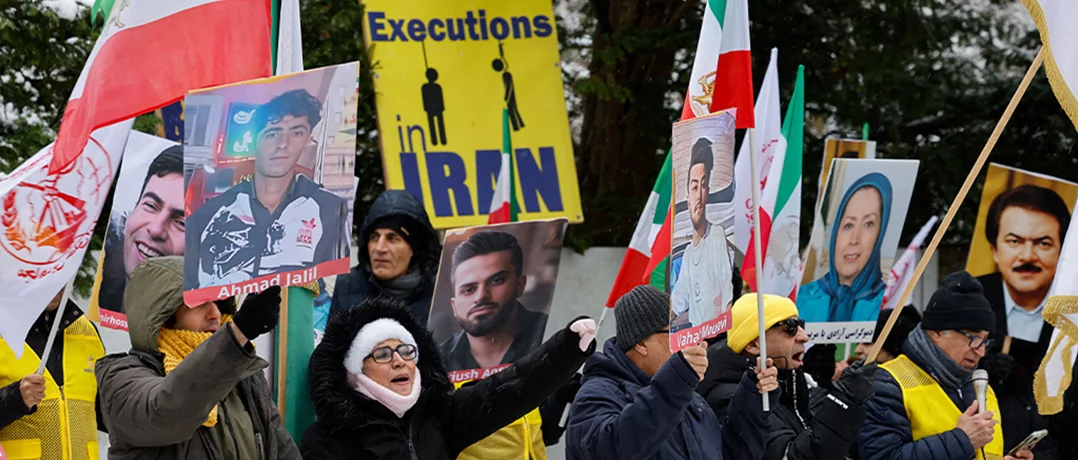
Iran has recently entered another period of sustained domestic unrest as protests driven by economic hardship and political frustration spread across the country, even intensifying.
According to various human rights groups, dozens have been killed and more than a thousand detained since demonstrations erupted in late December 2025. While Iranian authorities acknowledge public grievances, they have simultaneously moved to suppress the protests, framing them as a security threat rather than a social crisis.
The unfolding events reflect deeper structural challenges facing the Islamic Republic at a time of economic collapse, regional tensions and internal legitimacy concerns.
Economic roots of the protests
Iran has experienced repeated protest cycles over the past decade (including the significant socio-political Green Movement that emerged following the disputed 2009 presidential election), often met with force rather than reform, contributing to a persistent crisis of trust between the population and the ruling system.
Today’s events are the most serious episode of unrest since the nationwide protests of 2021-2022, which followed the death of Mahsa Amini in police custody. While the current demonstrations are primarily driven by economic collapse rather than social policy, the underlying theme remains unchanged: a growing gap between state authority and public expectations.
The current wave of protests was initially triggered by worsening economic conditions. Rapid inflation, the sharp depreciation of the Iranian rial (the country’s currency) and declining purchasing power have placed severe pressure on ordinary citizens, particularly in urban centers and economically marginalized provinces. Protests began in Tehran’s commercial districts, including the historic Grand Bazaar, long considered a major area reflecting political sentiment in Iran.
As the currency reached record lows against the US dollar, anger spilled into the streets. Shopkeepers, workers, students and pensioners voiced frustration over living costs and unemployment, with economic slogans quickly evolving into broader political demands. The scale and geographic spread of the protests (reported in dozens of cities across most provinces) suggest widespread dissatisfaction rather than isolated unrest.
Government response and use of force
Iranian authorities have responded with a dual approach of limited engagement and firm repression. President Masoud Pezeshkian publicly acknowledged economic grievances and pledged reforms aimed at stabilizing the currency and banking system. At the same time, security forces were deployed to disperse demonstrations, reportedly using crowd-control measures and mass arrests.
Human rights organizations, including Iran Human Rights and Human Rights Watch (HRW), revealed that at least 29 protesters have been killed, including minors, while more than 1,200 people have been detained. Torture and enforced disappearance have also been reported. The government, on the other hand, has not released official figures. Senior officials, including Supreme Leader Ayatollah Ali Khamenei, have drawn a distinction between “protesters” and what they describe as “rioters,” warning that harsh punishment awaits those accused of destabilizing the state. He thus asserted that “there is no use in talking to rioters; rioters must be put in their place.”
Reports of raids on medical facilities and aggressive policing in western provinces have further intensified domestic and international criticism, with rights groups accusing authorities of violating basic legal and humanitarian norms. The latter adds to Tehran’s violations of the right to peaceful assembly and public dissent, which are considered fundamental human rights enshrined in Article 21 of the 1967 International Covenant on Civil and Political Rights (ICCPR).
Political narratives and foreign accusations
As in previous protest movements, Iranian leaders have blamed foreign powers for fomenting unrest, thus resorting to conspiracy theories. Khamenei and other officials have alleged that the United States (US) and Israel are exploiting economic discontent to weaken the Islamic Republic from within, which would advance, in turn, their strategic aims and political agenda in the region; although no evidence has been publicly provided to support these claims.
Meanwhile, US President Donald Trump issued warnings against the violent suppression of peaceful protesters, threatening to come to their aid in Iran if security forces fired on them, thus raising tensions between Washington and Tehran. Iranian officials responded by accusing the US of interference and threatening retaliation should foreign intervention occur. Its Defense Council Secretariat has even issued a recent statement in 6 January 2026 in which it discusses Iran’s right to take preemptive defensive action as part of the security equation, and not being limited to reacting after an incident occurs. It stated that “within the framework of legitimate defense, the Islamic Republic of Iran does not confine itself solely to post-attack responses and considers concrete indicators of threat as part of its security calculus. The escalation of threatening and interventionist rhetoric, which goes beyond mere verbal positioning, may be construed as hostile conduct.”
Exclusive interview with a prominent Iranian political expert
In order to better understand the dynamics and significance of Iran’s protests, The Beiruter reached out to a prominent Ahwazi writer and political expert Youssef Azizi. The latter recalled the 2009 Green Movement, when the masses accused the Iranian authorities of rigging the presidential elections. Instead of siding with the protesters, Azizi said that Obama chose to communicate with Khamenei. He claimed that unlike previous uprisings, the current movement is unfolding under significantly harsher economic conditions, marked by an unprecedented collapse of Iran’s national currency and widespread public hardship. Mass arrests and overcrowded prisons further reflect the regime’s reliance on repression rather than reform. Today, Azizi believed that these accumulated pressures have reached a point that could potentially prove decisive.
A key distinction, according to Azizi, is the external context. Iran’s regional proxies, which once strengthened Tehran’s position, have been weakened, while international pressure (particularly explicit warnings from the United States) has increased. This limits the regime’s room to maneuver compared to earlier protest cycles.
Internally, the government has so far relied on police and internal security forces, with the possibility of escalating to the Basij or the Iranian Revolutionary Guard Corps (IRGC) if protests intensify, as seen in past crises. However, Azizi argued that a turning point could emerge if demonstrations evolve into nationwide strikes, especially in the oil and transportation sectors, which are vital to the state’s survival.
Azizi also highlighted the cautious stance of some non-Persian communities, who fear marginalization in a post-crisis scenario. He concludes that broader participation by secular, democratic forces could reassure these groups and ultimately determine whether the uprising develops into a transformative revolution.
In conclusion, the ongoing protests underscore the depth of Iran’s economic and political challenges. While the government insists it can restore stability through reforms and enforcement, the scale and persistence of public anger suggest that short-term measures may not be sufficient. As inflation rises and repression continues, Iran faces a critical question: whether it can address the roots of dissent, or whether the cycle of unrest and crackdown will once again define its domestic trajectory.
-
-

-
The Beiruter
-
