

How does the Iranian system remake itself if the head of power is shaken?
Iran’s next political order

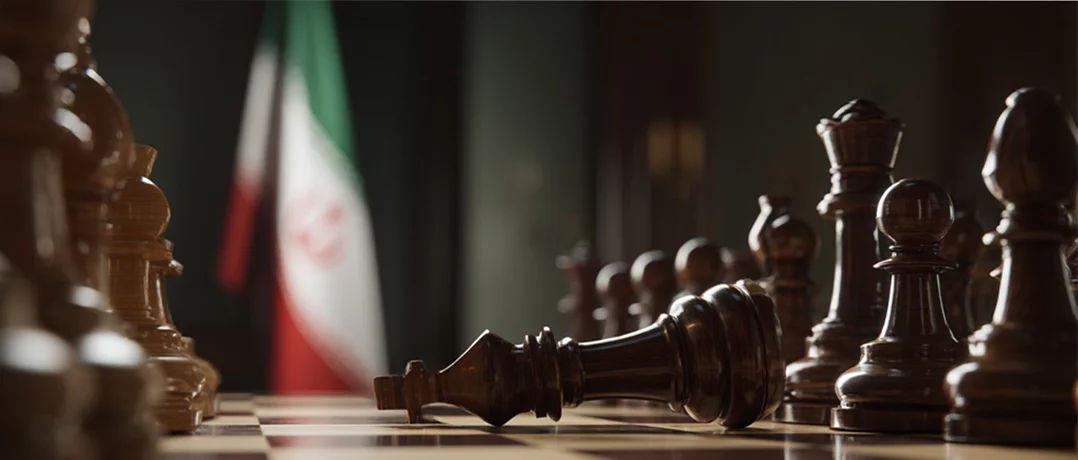
What would power in Iran look like after the war? Would the Islamic Republic carry on much as it is, shift into a new political form, or even fragment along ethnic lines? These are big questions, and not just for politicians or generals, but for ordinary Iranians, including a younger generation that has known no other system.
If the current order survives, it could handle the transition in several ways.
In highly personalised regimes, the death or removal of a leader often creates a sudden vacuum. That vacuum can quickly turn into a power struggle. Iran, however, has never functioned as a simple one-man system. Since Ayatollah Ruhollah Khomeini came to power in 1979, authority has been built as a layered structure: religious legitimacy intertwined with constitutional rules and powerful security institutions. Formal state bodies overlap with informal networks of influence.
So the more precise question is not merely who replaces the Supreme Leader, but how the system behaves if its apex falters.
History offers a telling example. When Khomeini died in 1989, Iran had just emerged from a devastating war with Iraq that cost hundreds of thousands of young lives. Yet the country did not collapse into chaos. The Assembly of Experts moved swiftly. Political and religious elites rebalanced power behind closed doors. The transition was less a rupture than a reshaping of internal arrangements.
Today, the context is far more complex. The conflict is no longer limited to air strikes; it has extended into the political and security architecture itself. Regional confrontation remains constant, and tensions with the United States and Israel exert sustained pressure. Economic strain deepens. Social protests continue despite repression. In such conditions, “post-Supreme Leader” becomes a question about the resilience of the state itself, not simply the identity of the office-holder.
An orderly transition: Continuity first
According to sources in Tehran, the most likely scenario would involve the loss of the central leader while institutional coordination remains intact. Iran’s constitution provides a mechanism: the Assembly of Experts appoints a successor, and if necessary, a temporary leadership council can be formed.
But legal texts alone do not explain the system’s durability. Over four decades, a dense network has formed: the judiciary, the Guardian Council, senior clerical bodies, and above all, the Islamic Revolutionary Guard Corps (IRGC). The Guards have evolved from an ideological military force into a political and economic powerhouse that spans institutions.
This network was designed to absorb shocks. Individual figures matter, but they are not the whole story.
In such a transition, the names discussed would likely represent a balance of figures rather than charismatic strongmen. Individuals such as Sadeq Larijani or Gholam-Hossein Mohseni Ejei are often mentioned, alongside conservative clerics like Mohammad Mehdi Mirbagheri. The name of Ali Khomeini also surfaces symbolically, as a link to the founding legacy. Yet any real authority would depend less on personal initiative and more on institutional backing.
Under this scenario, the aim would not be to reinvent the system, but to stabilise it. Power would be redistributed within existing boundaries. Strategic red lines would remain intact.
A double shock: Toward greater militarisation
A more sensitive scenario assumes that the Supreme Leader is shaken while key coordinating figures in the judiciary or security apparatus are weakened or targeted as well. In theory, this could cause confusion among elites.
Yet the IRGC does not operate as a single, easily disabled centre. It functions through layered command structures, regional leaderships, intelligence branches, and extensive economic influence. Removing the top does not necessarily paralyse the base.
In such circumstances, the Guards would likely emerge as the principal stabilising force, either by backing a temporary leadership council or by accelerating the establishment of a clear chain of command.
The outcome would not be state collapse, but a sharper turn towards overt securitisation. Religious considerations may recede in the face of crisis management logic. Security institutions would assume even greater prominence in decision-making. The transition would be organised, but more visibly militarised.
Tactical moderation: Survival, not transformation
A third possibility lies at the intersection of internal and external pressure: leadership instability, severe economic crisis, and escalating regional confrontation.
In that case, the system might adopt what could be called tactical moderation. Figures associated with less confrontational rhetoric, such as Hassan Rouhani or Hassan Khomeini, might reappear to ease internal tensions and reopen diplomatic channels.
However, a moderate tone would not necessarily signal a major ideological change. Core elements, including nuclear capability as a strategic deterrent and the IRGC’s regional role through allied militias, would likely remain. Foreign policy fundamentals would endure.
What might shift is style: negotiation methods, diplomatic language, perhaps limited economic openings. This would be an adaptation to pressure, not a wholesale revision of doctrine.
Is collapse likely?
Despite widespread speculation about a dramatic disintegration of the state, the more probable outcome is not a sudden collapse. Rather, it is a reproduction of authority in one of two forms: an orderly transition that reinforces continuity, or a more militarised transition that deepens the state's security character.
Since assuming office in 1989, Ali Khamenei has entrenched revolutionary ideology and strengthened the IRGC’s role across the state apparatus. Any tremor at the top will test not merely succession, but the system’s capacity to regulate tempo and prevent vacuum from turning into disorder.
Beyond the supreme leader
Several broader possibilities remain. One is appointing a strong successor who continues the confrontation and mirrors his predecessor’s model.
Another is governance failure amid sustained strikes and pressure, which could reignite street mobilisation and destabilise the regime.
A third would involve a major leadership recalibration, bending before the storm, in a manner loosely comparable to Japan’s strategic shift after the Second World War, and moving towards partnership with Washington and broader international engagement, as some argue Venezuela’s leadership has sought to do in recent years.
In all scenarios, what we are likely to witness is not the invention of an entirely new order, but the reconfiguration of the existing one. Continuity through structured transition, or continuity through securitised consolidation.
Moderation, if it comes, would most likely serve as a tactical instrument of survival rather than a structural transformation, unless the international community is willing to bear the high cost of forcing greater change.
The coming days will reveal which path, if any, begins to take shape.
