



In an interview with The Beiruter, Dr. Ghalib Al-Daami examined evolving Iraq-Lebanon relations, highlighting energy cooperation, institutional ties, economic challenges, and regional transformations.
Iraq-Lebanon relations in a changing Middle East
Iraq-Lebanon relations in a changing Middle East
By The Beiruter | August 07, 2026

Reading time: 6 min
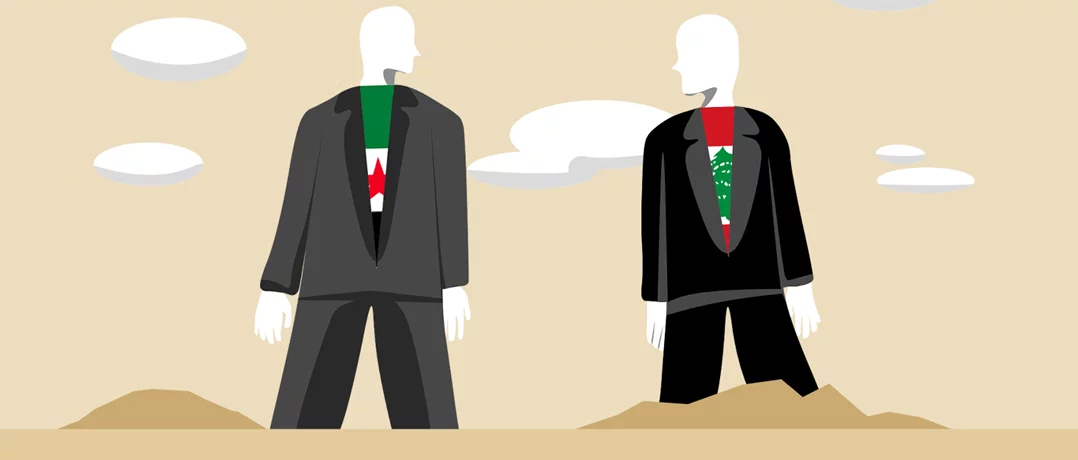
Relations between Iraq and Lebanon have long been characterized by political, cultural, and economic ties that reflect the broader dynamics of the Arab world. Despite differences in geography and political systems, the two countries have maintained diplomatic relations since 1943 and have shared common positions on several regional issues. In recent, however, bilateral relations have undergone significant transformations, shaped by Iraq’s post-2003 political restructuring, Lebanon’s internal political divisions, regional conflicts, and shifting geopolitical realities.
In an interview with The Beiruter, Dr. Ghalib Al-Daami, Professor of Media Studies at Al-Mustansiriya University, explained that contemporary Iraqi-Lebanese relations remain a mixture of opportunities and structural challenges.
From state-to-party relations toward state-to-state engagement
According to Dr. Al-Daami, the most important transformation in Iraqi-Lebanese relations began after the 2003 political changes in Iraq.
Following the fall of Saddam Hussein’s regime, Iraq’s new political system became heavily influenced by sectarian power-sharing arrangements. During this period, relations with Lebanon were often shaped less by formal diplomatic channels and more by connections between the Iraqi government and influential political actors within Lebanon.
Dr. Al-Daami argued that, for many years, bilateral relations resembled a relationship between the Iraqi state and a powerful Lebanese political party rather than one conducted primarily between two sovereign governments. The influence exercised by non-state actors over parts of Lebanon’s political landscape contributed to this dynamic, creating an unconventional framework for bilateral engagement.
However, this pattern gradually began to change during the governments of former Prime Minister (PM) Mustafa Al-Kadhimi and current PM Mohammed Shia’ Al-Sudani. Iraq increasingly shifted its engagement toward direct cooperation with Lebanese state institutions, reflecting a broader effort to strengthen official diplomatic relations.
This evolution has been demonstrated through commercial agreements, energy cooperation, humanitarian assistance, and direct government-to-government communication.
Energy cooperation remains the cornerstone
Among all sectors of bilateral cooperation, energy remains the most significant.
Iraq has played a vital role in helping Lebanon mitigate its prolonged electricity crisis through fuel supply agreements first launched in 2021 and repeatedly renewed, including the latest 6-month extension in March 2025. Under the arrangement, Iraq supplies heavy fuel oil that Lebanon exchanges for fuel compatible with its power plants, while Lebanon provides services, including healthcare for Iraqi citizens.
Nevertheless, Dr. Al-Daami believed that the most strategic long-term opportunity lies elsewhere. He identified the proposed Basra-Banias oil pipeline as the single most important project capable of transforming Iraqi-Lebanese relations. If completed, the pipeline would transport Iraqi oil to Mediterranean markets, creating new economic opportunities not only for Iraq and Syria but also indirectly for Lebanon through increased regional connectivity and commercial activity.
For Dr. Al-Daami, such infrastructure projects represent the type of practical economic cooperation capable of creating lasting partnerships beyond political rhetoric.
Economic cooperation faces structural constraints
Despite repeated declarations by both governments supporting closer bilateral cooperation, Dr. Al-Daami remained cautious about expectations.
He noted that both Iraq and Lebanon continue to face serious economic challenges that limit their ability to provide meaningful assistance to one another. Iraq itself struggles with domestic energy shortages and infrastructure deficiencies, while Lebanon continues to grapple with one of the worst financial crises in its modern history.
Consequently, although trade and investment opportunities certainly exist, economic cooperation remains constrained by the internal difficulties facing both countries.
At the business level, however, Dr. Al-Daami stated that important links continue to develop. Approximately 900 Lebanese companies currently operate in Iraq, with a significant concentration in Baghdad and the Kurdistan Region. Lebanese expertise in banking, construction, healthcare, education, consulting, hospitality, and services continues to find opportunities within the Iraqi market.
Tourism offers immediate potential
Beyond energy, Dr. Al-Daami viewed tourism as the sector with the greatest short-term potential.
For decades, Lebanon has been a preferred destination for Iraqi tourists seeking leisure, medical treatment, education, and entertainment. Iraqi visitors have traditionally represented one of Lebanon’s highest-spending tourist groups, making them particularly valuable for the country’s tourism industry.
However, regional instability and recent security developments have altered travel patterns. According to Dr. Al-Daami, many Iraqi tourists are increasingly choosing alternative destinations, including Iraq’s Kurdistan Region, Azerbaijan, and several Southeast Asian countries, where costs are often lower and perceptions of stability stronger.
He argued that restoring confidence in Lebanon’s security environment will be essential if Beirut hopes to regain its position as a leading destination for Iraqi visitors.
State institutions as the foundation for stronger relations
One of Dr. Al-Daami’s central arguments is that durable bilateral relations depend on the strength of state institutions.
He believed relations naturally become more effective when conducted between governments rather than through political parties or armed groups. In this context, he suggested that the reduced military role of Hezbollah in southern Lebanon and the growing deployment of the Lebanese Army could gradually encourage more conventional state-to-state relations.
Nevertheless, he cautioned that both Lebanon and Iraq continue to experience significant influence from non-state actors. As long as parallel centers of power remain influential in either country, bilateral relations are likely to remain fragmented and less institutionalized than they could otherwise become.
Conversely, stronger governments, improved governance, and greater territorial authority in both countries would provide a far more stable foundation for political, economic, and security cooperation.
The “new Middle East” and future prospects
Looking ahead, Dr. Al-Daami believed Iraq and Lebanon could significantly deepen their partnership if both countries successfully adapt to the changing regional environment often described as the “new Middle East.”
Greater openness to international investment, stronger public institutions, improved political stability, and expanded regional economic integration could all contribute to more robust bilateral relations.
He also believed that increased stability in both countries would encourage greater private-sector cooperation, allowing Lebanese and Iraqi investors and business leaders to establish stronger commercial partnerships capable of generating long-term economic growth.
Historical background
Although today’s relationship is shaped largely by post-2003 developments, Iraqi-Lebanese ties extend way back. Diplomatic relations were established in 1943, shortly after Lebanon’s independence, and both countries have traditionally supported the Palestinian cause while refusing to recognize Israel.
During the 1970s and 1980s, Iraq maintained close relations with several Lebanese political figures, including former Presidents Bachir and Amine Gemayel. Relations experienced setbacks during the mid-1990s following the assassination of an Iraqi dissident in Beirut, allegedly by Iraqi agents, but diplomatic relations continued through embassies in both capitals.
Following Iraq’s reintegration into the Arab diplomatic sphere after 2003, high-level visits resumed, including PM Fouad Siniora’s visit to Baghdad in 2008 and ongoing discussions over energy cooperation. More recently, bilateral ties have expanded through defense cooperation, visa-free travel agreements introduced in 2023, and continued collaboration in trade, tourism, and energy.
Thus, Iraq and Lebanon possess a relationship built upon years of diplomatic engagement, shared regional interests, and complementary economic opportunities. While political complexities and domestic instability continue to limit the pace of cooperation, both governments have increasingly demonstrated a willingness to strengthen official state-to-state relations. Should conditions improve, Iraqi-Lebanese relations could evolve from a partnership shaped largely by regional politics into one driven by sustainable economic and institutional cooperation.
-
-

-
The Beiruter
-
