



Iraq bets on businessman Ali al-Zaidi as prime minister-designate to navigate sectarian divisions, foreign pressures, economic crises, and fragile political stability ahead today.
Iraq’s political gamble on Zaidi

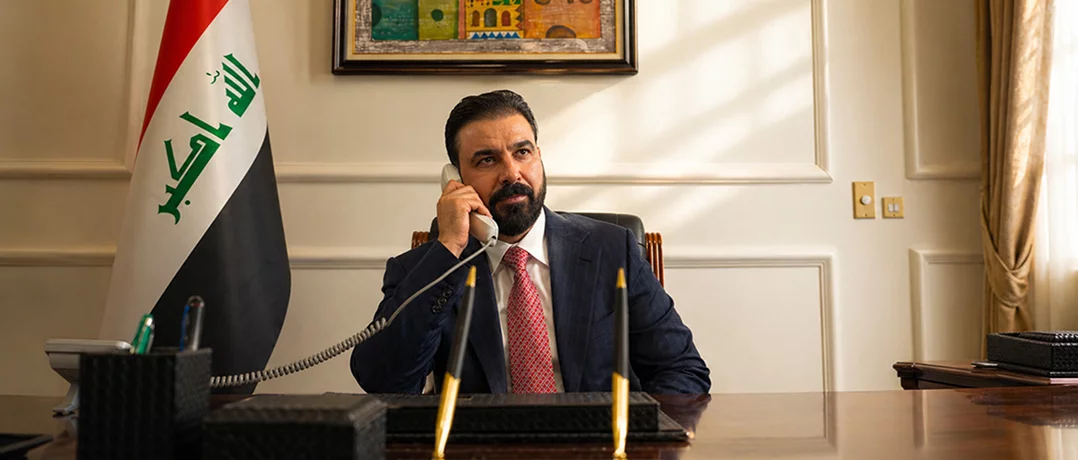
Iraq has once again entered a critical political transition, this time with the unexpected nomination of businessman Ali Faleh Kazem al-Zaidi as prime minister-designate. The decision by newly elected President Nizar Amedi to appoint Zaidi reflects more than a routine leadership change; it underscores the deep political tensions shaping Iraq’s fragile post-2003 order.
After months of deadlock and intense bargaining among Iraq’s dominant Shiite factions, Zaidi emerged as a compromise figure capable of temporarily satisfying competing domestic and international interests. At 40 years old, Zaidi would become Iraq’s youngest prime minister since 2003 if he successfully forms a government within merely 30 days.
A compromise born out of pressure
Zaidi’s nomination followed weeks of intense negotiations inside the Coordination Framework, the Shiite alliance that dominates Iraq’s parliament. Initially, the bloc strongly supported former Prime Minister Nouri al-Maliki for another term. However, Maliki’s close relationship with Iran triggered firm opposition from the United States (U.S.).
U.S. President Donald Trump reportedly warned Iraqi leaders that Washington would suspend support for Baghdad if Maliki returned to office. Such a move would have carried enormous consequences for Iraq, whose economy, security sector, and financial system remain deeply tied to American support and international institutions influenced by Washington.
Faced with the prospect of political isolation and economic pressure, the Coordination Framework eventually abandoned Maliki’s candidacy and searched for an alternative figure who could preserve Shiite political unity without provoking the U.S. Zaidi emerged as the consensus candidate.
His nomination therefore reflects Iraq’s continuing struggle to maintain a delicate balance between Tehran and Washington. Since the 2003 U.S.-led invasion that toppled Saddam Hussein, Iraq has remained caught between the influence of both powers. Tehran maintains extensive ties with Shiite political parties and armed groups, while Washington continues to wield influence through military cooperation, financial oversight, and diplomatic leverage.
Zaidi’s rise is less a sign of political renewal than evidence of Iraq’s persistent dependence on external calculations.
The rise of an unfamiliar figure
Yet his nomination also represents a significant political gamble. Zaidi is not a seasoned politician, military leader, or long-time government official. Instead, he remains largely unknown to the broader Iraqi public.
Born in Baghdad in 1986, he studied law before building a vast business empire spanning banking, food supply, construction, media, education, agriculture, and oil services. In short, he comes from the world of banking, business, media, and investment.
He owns or controls numerous companies, including Al-Oweis Group and Al-Janoob Islamic Bank. His commercial network reportedly includes contracts with Iraqi ministries to supply food rations and military provisions, as well as investments in higher education and media institutions such as Dijlah TV and Al-Shaab University.
However, his business background is accompanied by controversy. Al-Janoob Islamic Bank was subjected to U.S. sanctions and restrictions related to anti-money laundering concerns, forcing the institution to lose access to dollar transactions through Iraq’s financial system. Although Zaidi later stepped down from his leadership role at the bank, the episode continues to raise questions about transparency and governance.
Still, some Iraqi political factions view Zaidi’s financial and media resources as assets. Political observers argue that his economic background, influence, business connections, and ownership of a television network could help Iraq confront mounting financial and governance challenges as well as strengthen his ability to negotiate with political parties shape public opinion. Meanwhile, critics question whether a political newcomer can survive the country’s complex sectarian system, resist pressure from armed factions, and balance the competing demands of Washington and Tehran.
The challenge of forming a government
Forming a cabinet in Iraq is rarely straightforward. The country’s political system is built on sectarian and ethnic power-sharing arrangements that distribute senior positions among Shiites, Sunnis, and Kurds. Every cabinet post typically becomes the subject of lengthy negotiations involving political parties, tribal interests, and armed factions.
Zaidi now faces the difficult task of securing parliamentary support while satisfying competing demands from the Coordination Framework, Kurdish parties, Sunni blocs, and influential militia groups. Iraq’s constitution requires him to present a cabinet within 30 days and secure at least 167 parliamentary votes for approval.
The challenge is made even harder by the broader regional environment. Iraq has recently been affected by escalating tensions linked to the U.S.-Israeli conflict with Iran. Tehran-backed armed groups launched attacks on American interests during the regional confrontation, while Iraq itself became part of the wider geopolitical struggle.
As a result, Zaidi will inherit enormous security and diplomatic pressures. Washington continues to demand tighter control over Iran-backed militias operating inside Iraq, many of which are formally integrated into the Popular Mobilization Forces (PMF) but operate with significant independence from the state. At the same time, any attempt to directly confront these groups could destabilize the fragile political coalition that brought Zaidi to power.
Economic pressures and public expectations
Beyond politics and security, Iraq faces severe economic vulnerabilities. Although the country possesses vast oil wealth, it remains heavily dependent on crude exports, which account for roughly 90% of government revenues. Disruptions in the Strait of Hormuz and regional instability have exposed the dangers of this dependence.
Public frustration also remains high over corruption, unemployment, poor public services, and failing infrastructure. Many Iraqis continue to distrust political elites after years of unmet promises and systemic dysfunction.
Zaidi’s supporters believe his business experience may help him pursue economic reforms and attract investment. However, critics warn that Iraq’s structural problems cannot be solved through technocratic management alone. The country’s corruption networks are deeply embedded within both political institutions and economic sectors.
His close association with political and business elites may further complicate efforts to present himself as a reformist outsider.
Hence, Zaidi seems to be facing a broader crisis of a state still struggling to reconcile internal divisions, foreign influence, armed factions, and economic fragility more than 2 decades after the fall of Saddam Hussein. Whether he succeeds or fails may determine not only the future of the next Iraqi government, but also the direction of Iraq’s fragile political order itself.
-
-

-
The Beiruter
-
