

As English and French become increasingly dominant in young people's daily
lives, educators explain why many Lebanese students are drifting away from
Modern Standard Arabic and what can be done to reconnect them with it.
Is Arabic losing its place among Lebanon's youth?
Is Arabic losing its place among Lebanon's youth?
By Yara Saliba | August 07, 2026

Reading time: 5 min
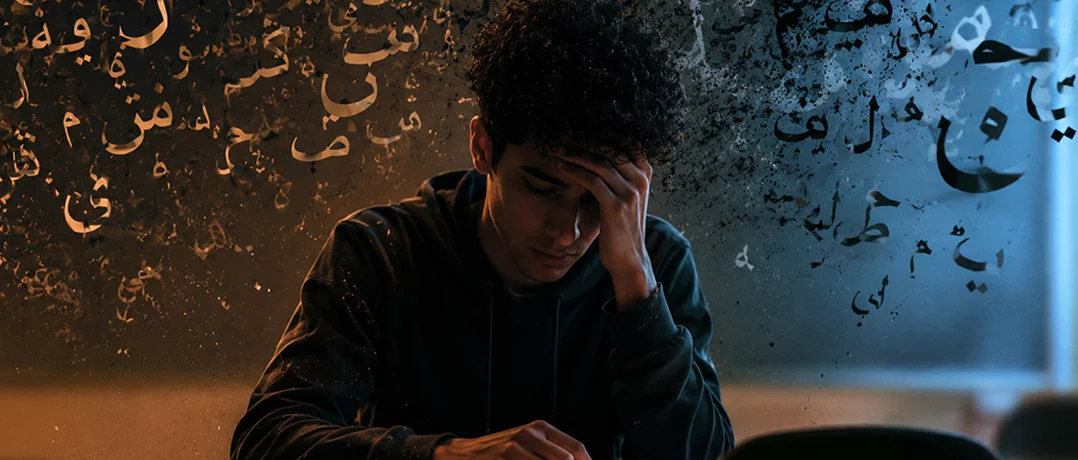
For many Lebanese teenagers, switching between Lebanese Arabic, English and French has become second nature. A conversation can begin in Lebanese dialect, shift into English and end with a French expression, reflecting Lebanon's multilingual identity. Yet amid this linguistic diversity, one language appears to be gradually losing its place in young people's daily lives: Modern Standard Arabic (MSA).
Although Lebanese dialect remains widely spoken, many educators say students are finding it increasingly difficult to read, write and express themselves confidently in formal Arabic. To better understand this growing disconnect, The Beiruter spoke with Christianne Medawar Chayeb, an Arabic language coordinator and teacher, and Professor May Hobeika Haddad, Director of the Centre for Research in Arabic Terminology, Translation Studies and Languages (CERTTAL) at Saint Joseph University of Beirut.
Modern classrooms, traditional challenges
For Christianne Medawar Chayeb, the shift has become increasingly visible over the years. Compared with students she taught 10 or 20 years ago, today's learners often perceive Modern Standard Arabic (MSA) as difficult and disconnected from their daily lives. Part of the reason, she says, is that students rarely encounter formal Arabic beyond the classroom. At home and with friends, they speak Lebanese dialect, while much of the content they consume online is in English. New technological terms also tend to emerge first in English, encouraging young people to adopt foreign vocabulary before Arabic alternatives become widely used.
Chayeb believes the challenge lies less with the language itself than with the way it is taught. While some schools have adopted more interactive approaches, others still rely heavily on memorization and rote learning. "Today's generation doesn't enjoy memorizing the way previous generations did," she says. "This is the scrolling generation. Students are no longer interested in memorizing things that do not connect with them." Instead, she argues, students respond better to lessons that relate to their interests and everyday experiences, making Arabic feel more practical and engaging.
She also believes many school textbooks no longer reflect the reality young people live in. Modernizing curricula and introducing topics that resonate with students' lives, she says, would make Arabic more meaningful and encourage greater participation in the classroom. Rather than treating the language as a subject to memorize, she believes it should be taught as a living means of communication that evolves alongside society.
Why parents matter
Parents, she adds, also play a crucial role in shaping children's relationship with Arabic. Many families prioritize English or French from an early age because they see them as more valuable for education and future careers. As a result, Arabic often receives less attention at home. Children may be encouraged to speak foreign languages, spend less time reading Arabic books and even leave Arabic homework until after other subjects, unintentionally sending the message that Arabic is less important.
To reverse this trend, Chayeb believes children should receive equal encouragement to use Arabic both inside and outside the classroom. Reading Arabic books, participating in cultural activities and giving the language the same attention as other subjects can strengthen students' confidence and reinforce their connection to their mother tongue.
Beyond vocabulary
Having taught Arabic for more than 35 years, Professor May Hobeika Haddad says the difficulties she observes at university are rooted long before students enter higher education. "What we see at university is the result of school education," she says. "By the time students arrive, those foundations have already been built."
Despite growing concerns about the future of Modern Standard Arabic (MSA), El Haddad rejects the idea that the language is disappearing simply because it is evolving. "We are not losing Modern Standard Arabic because the language is evolving," she explains. "Every language borrows words and develops new terminology. Arabic has done the same throughout its history. The problem is not vocabulary." Instead, she argues, students are struggling with Arabic as a complete linguistic system. "Language is much more than a collection of words," she says. "It is grammar, syntax, style and structure."
Multilingualism is not the enemy
Professor El Haddad also dismisses the idea that multilingualism is responsible for the decline. Lebanon, she notes, has long been a multilingual country. "Previous generations spoke French and Arabic fluently without seeing the two languages as competing." Instead, she attributes today's challenges to globalization, the growing influence of English through social media and the widespread perception that foreign languages offer greater educational and professional opportunities. Yet she emphasizes that Arabic remains globally significant. "Arabic is one of the official languages of the United Nations," she says. "It is also one of the languages many foreigners actively choose to study."
Another feature of modern communication is code-switching, or moving between several languages within the same conversation. Professor El Haddad believes this is often a natural cognitive process rather than a threat to Arabic. "If someone has learned Arabic well, reads books and newspapers in Arabic and understands the language deeply, then mixing languages in everyday conversation isn't necessarily a problem." The real concern, she says, is that many students never acquire that strong foundation in MSA.
Keeping Arabic alive
Professor El Haddad believes that Lebanese dialect should not be viewed as an obstacle but as a bridge to Modern Standard Arabic, helping students move naturally between the spoken and written forms of the language. She further suggests drawing inspiration from the methods used to teach Arabic to non-native speakers, recognizing that MSA is not the language people use in everyday conversation.
Preserving Modern Standard Arabic is not about choosing it over English or French, but about ensuring it remains a living part of young people's lives in a multilingual country. Strengthening the connection between Lebanese dialect and formal Arabic, encouraging reading and cultural engagement, and modernizing the way the language is taught can help students see Arabic not simply as a school subject, but as an essential part of their identity, heritage and future.
-
-
-
Yara SalibaWriter
-
