Britain’s shrinking military capabilities and growing political divisions over defence spending are reshaping its global role, with significant implications for NATO, the Middle East, and its alliance with the United States.


Britain’s shrinking military capabilities and growing political divisions over defence spending are reshaping its global role, with significant implications for NATO, the Middle East, and its alliance with the United States.

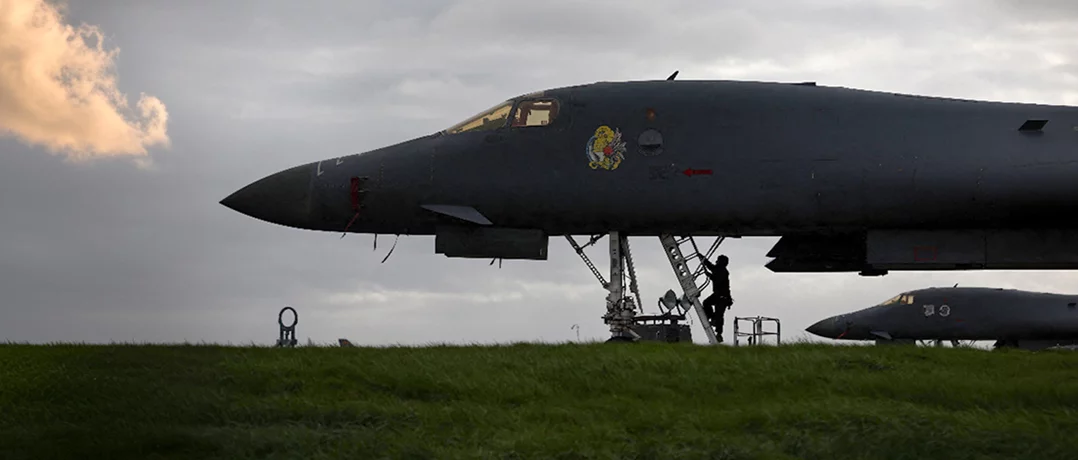
Military spending is fast becoming the most toxic political issue in Britain, already claiming the scalps of two government ministers – and the Prime Minister himself. With its weak showing in the recent Iran conflict, the UK is set for a bitter internal row over the future of its army, navy, and air force. This will have a direct impact on the Middle East.
When the United States struck Iran in February 2026, one traditional ally of Washington DC was found wanting. The United Kingdom had just a single ship in the region – HMS Middleton, a mine hunter – and no large warships. Years of defence spending cuts revealed a military capability that is severely reduced.
Britain was once the major military force in the region. In the first half of the 20th century, it controlled much of the Levant through mandates and treaties. Then it became an important security partner, especially in the Gulf, before participating in the Iraq war.
But how times have changed. The end of the Cold War promised a ‘peace dividend’ and Britons wanted their government to improve services and living standards at home. Yet armed forces chiefs repeatedly warned that the ability of the country to defend itself was being severely weakened.
When a British base in Cyprus was hit by a drone early in the Iran conflict (March 2026), it took an embarrassing three weeks to deploy a warship to the eastern Mediterranean. The size of the navy has halved since the Cold War, and the army has not been this small since the early 19th century. To put that into numbers, there were 62,000 people in the Royal Navy in 1991 while there are 38,000 today. Three aircraft carriers are now two, while 50 destroyers and frigates have been reduced to 13. Meanwhile the army has gone from 148,000 personnel to 74,000 and the number of tanks has crashed from 1,200 to a mere 150.
The UK government has been promising to publish a Strategic Defence Review for over a year, and it finally appeared on 2 June 2025. Defence spending is to rise from £54bn a year to £80bn by 2029, reaching 2.7% of GDP. But its publication detonated a political time bomb. The Defence Secretary, John Healey, resigned on 11 June claiming that the Treasury was not committed to Britain’s defence. He was followed by the Armed Forces Minister Al Cairns. This triggered a domino-style collapse that toppled the Prime Minister Keir Starmer on 22 June.
Emily Winterbotham is an expert in international security and global governance at the London School of Economics. She fears the review may not go far enough:
“The failure to commit to spending 3% of GDP by the end of the decade — settling instead at 2.7% — has already had political consequences, including ministerial resignations, while the fact that the 10-year plan is only funded for four years (£298 billion) leaves significant uncertainty over delivery.”
It’s hard for the UK to tell the rest of the world, especially the Trump administration in the United States, that this review is a “game changer”. But London has a big problem. Committing to the American war with Iran was rejected in UK opinion polls and Britain is unwilling to make the sacrifices at home that would increase its power abroad.
The public believes that increases in defence spending can only mean cuts in welfare and other domestic services. Winterbotham says that politicians need to de-couple these two issues and make the British public more aware of the size of the defence challenge. Only in this way can the armed forces be rebuilt.
Rachel Ellehuus is Director-General of the Royal United Services Institute (RUSI), one of the world’s oldest defence thinktanks. She points out that the UK is still a major player within NATO but there is huge room for improvement.
“There have been some positive announcements about increased defence spending but it does not bring the UK to 3% as quickly as some of our other allies and does not get us to 3.5%, on a credible path, in this parliament, or on the timeline that was possibly hoped for from such a significant core NATO ally.”
NATO partners want “more and faster” from the UK, as do friendly countries in the Middle East. But the sound of foot dragging is very evident. In 2025, the UK – alongside other NATO members – told Donald Trump they were committed to investing 5% of GDP annually on defence and security. A year later, only the Baltic states and Poland look serious.
There is political change underway in Britain with a new Prime Minister about to be appointed. The UK has traditionally been NATO’s European pillar and the most steadfast ally of the United States. But that has been called into question. The choice now is whether to accept a narrative of long-term imperial decline and retreat from global responsibilities or to reclaim lost ground. Expect some stormy debates in Westminster in the months ahead.