

Iranian involvement in Lebanon fuels controversy, with military, financial, and political influence challenging national sovereignty.
Is Iranian non-interference sincere?

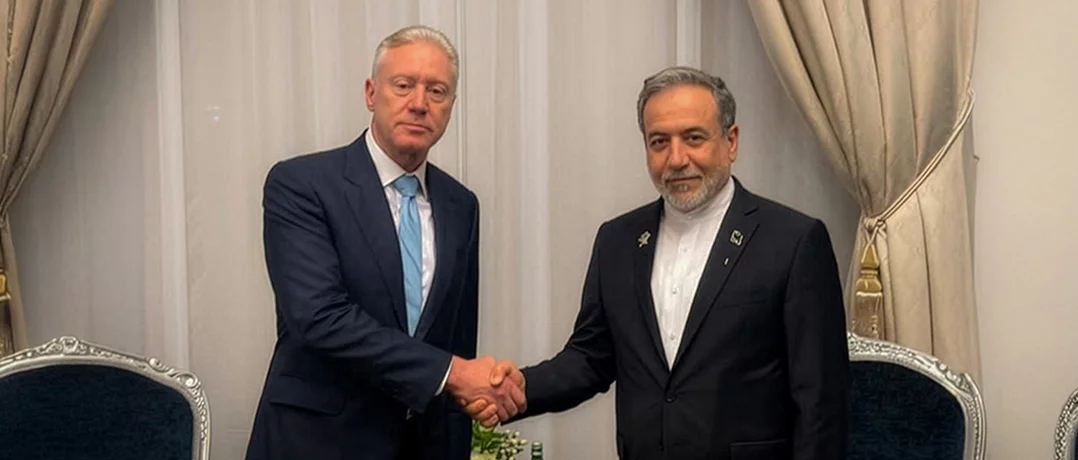
During an interview with the Lebanese FM on the “Sar El Waet” TV show, on 20 November 2025, Raggi invited his Iranian counterpart to enter into negotiations regarding critical and contentious matters in a third country, as he accused Tehran of persisting in its interference in local Lebanese affairs.
His call ushered an immediate response from Araghchi, who posted on the X platform that “we do not interfere in Lebanon’s internal affairs; however, we welcome any dialogue aimed at strengthening bilateral relations between Iran and Lebanon, and there is no need for a third country.”
For his part, Raggi later questioned the sincerity of his counterpart’s claims, saying that “I genuinely wanted to believe what you said that Iran does not interfere in Lebanon’s internal affairs, until your Supreme Leader’s advisor Ali Akbar Welayati came out today to guide us on what is truly important in Lebanon and warned us of the consequences of disarming Hezbollah.” He thus affirmed that “what is more important to us than water and bread is our sovereignty, our freedom, and the independence of our internal decision-making, free from ideological slogans and transborder regional agendas that have devastated our country and continue to drag us further into ruin.”
From here, sources at the Lebanese Ministry of Foreign Affairs and Emigrants (MOFA) confirmed that “no communication has taken place between the Iranian and Lebanese sides, except for the exchanges on the X platform. The minister later replied to Araqchi after the advisor to the Iranian Supreme Leader’s statements revealed a contradiction to Araqchi’s claim that there was no interference in Lebanese affairs.” However, the sources confirmed that there are no taboos, as “the Foreign Minister is ready, if mandated by the government, to engage in negotiations (as the FM previously stated live on air).” The communication between the two sides “may occur later during conferences abroad.”
Iranian interference in Lebanon: A myth or a factual reality?
To claim that Iran has never, and is not today, interfered in Lebanese affairs sounds completely absurd.
Since the 1979 Iranian Revolution and the establishment of Ayatollah Ali Khomeini’s Islamic Republic, the country had embarked on an ambitious project across the region. Its agenda, aimed at exporting its revolution abroad, has included mainly the Shiite community. From here, Lebanon became an integral part of its overall vision in the Middle East. After understanding this rationale, it becomes much easier and clearer as to why and how Tehran would seek to establish a foothold in the Lebanese scene.
The military and economic aspects of Iranian aid to Hezbollah, an Iranian-backed non-state actor in Lebanon, seems quite apparent. Iranian Revolutionary Guard Corps (IRGC) had began training the group in the Bekaa since the 1980s, while also providing essential arms and equipment (from basic artillery to ballistic missiles and drones). Iranian leaders have indeed been heavily present in Lebanon, which was evident in several occasions: the presence of Iran’s senior advisers, Major General Abbas Nilforoushan, during the Israeli strike that assassinated the late Hezbollah Secretary-General Sayyed Hassan Nasrallah, the Iranian Ambassador to Lebanon, Mojtaba Amani, carrying a Hezbollah-linked pager device (which led to his injury) and most recently the discovery that the targeted Hezbollah senior commander Haytham Tabtabai had Iranian origins.
Economic and financial aid was also prevalent, as several Western countries and even national authorities (from the Lebanese Central Bank to airport security) sought to curb Iranian cashflow into the country. Among the controversial and illegal financial issues is the al-Qard al-Hassan dilemma, a Hezbollah-linked financial institution founded in 1983. The military, economic and financial assistance that Iran provides to Hezbollah have contributed to the creation of a parallel state in Lebanon, bypassing the legitimate government and authorities (especially with regards to critical and vital matters, such as the decision to go to war and even combatting illicit funding).
Apart from the aforementioned aid, the Iranians have long interfered in Lebanese affairs through their provocative rhetoric. During the recent armed conflict in 2024, Parliament Speaker Mohammad Bagher Ghalibaf stated his country’s readiness to negotiate for the implementation of United Nations Security Council (UNSC) Resolution 1701 (2006) with France, while at other times he claimed that Iran and its Supreme leader are an essential pillar of the Lebanese people. Later, the advisor of Iran’s Supreme Leader, Ali Akbar Velayati, announced his country’s opposition to the Lebanese government’s August 2925 decision to disarm Hezbollah, affirming that “the Islamic Republic of Iran definitely opposes disarming Hezbollah, because it has always helped the Lebanese people and the resistance, and continues to do so.” This stance was also reiterated by Ali Larijani, secretary of Iran’s Supreme National Security Council, who publicly rejected the government’s August 2025 decision as well as any proposal to disarm Hezbollah. These are but some few examples of Iranian vocal infringement in Lebanese local affairs.
As Hezbollah became weaker following the 2024-armed conflict with Israel and the fall of the Assad regime in Syria on 8 December 2024, the group became evermore reliant on Iranian support. Its leadership has been decimated, military capabilities proven to be obsolete and financial abilities under severe pressure (internally and externally). Therefore, if as some claim that Hezbollah had the means for maneuver during the Nasrallah’s term, this “privilege” has ceased to exist.
As a result, the Lebanese FM’s concerns and calls were indeed valid, which requires a sincere and committed revisiting of Lebanese Iranian relations based on mutual respect and non-interference.
During the past days, Lebanese Foreign Minister (FM) Youssef Raggi and his Iranian counterpart, Abbas Araghchi, exchanged media statements. While the former demanded that Tehran halts its interference in Lebanese affairs, the latter categorically rejected such claims.
-
-

-
The Beiruter
-
