



After a year of drought, improved rainfall has brought cautious relief, but experts warn it won’t solve Lebanon’s water crisis without long-term management.
Is Lebanon’s water crisis really over?

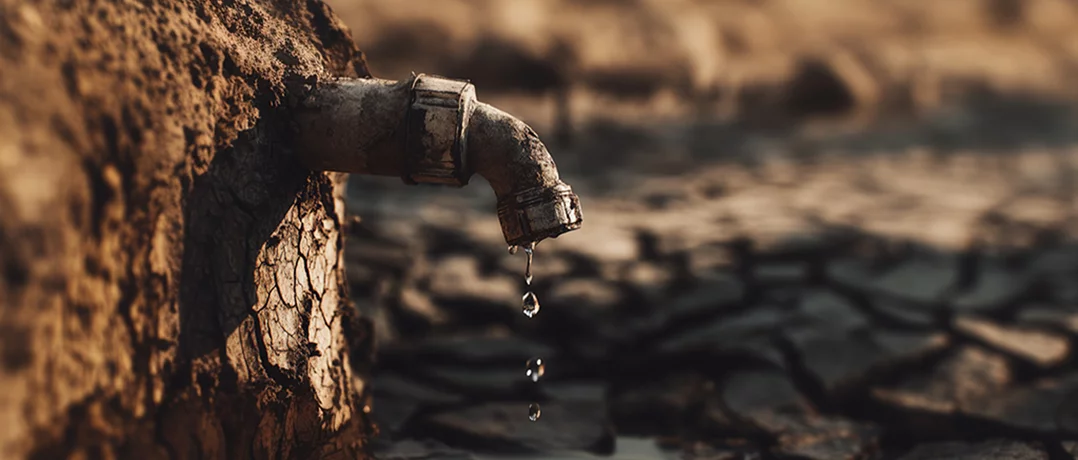
After a brutal year in which water shortages infiltrated daily life and drought silenced Lebanon’s springs and rivers, rain has finally returned, reopening a narrow but fragile window of hope. Last year exposed the country’s deep water vulnerability: rainfall plunged to alarming levels, dams and groundwater reserves dwindled, and water tankers became a permanent fixture outside homes, filling a void left by the absence of any viable alternatives. The question now is whether this season’s improved rainfall signals the beginning of real relief, or whether the relentless churn of tankers remains a warning of deeper, unresolved trouble.
Caught between the promise carried by rain and snow on the highlands and the unease born of past failures, Lebanon once again faces a double test: one imposed by nature, and another by its own ability to transform a seasonal blessing into lasting water security. Doing so would spare the country repeated cycles of thirst, avert the slow drift toward desertification long flagged by experts, and answer a pressing question that can no longer be ignored: are rain and snow enough to solve Lebanon’s water crisis, or is a serious, long-term environmental and water policy the only way forward?
A better year, but not yet a guarantee
According to Dr. Jalal Halwani, water expert and director of the Environmental and Water Sciences Laboratory at the Lebanese University, this year is undoubtedly better than last year and the one before it. Lebanon, he says, has returned to rainfall figures it has been accustomed to over the past decade. Still, he stresses the need to wait until the end of February to confirm the data with scientific accuracy. To genuinely improve the water situation and avoid summer drought and shortages, the number of rainy days must reach at least sixty. Up to January, conditions were encouraging, with rainfall reaching acceptable levels, even if the annual average had not yet been met.
A bulletin issued by the Lebanese Agricultural Research Institute on December 19, 2026, shows that most regions remain below the annual average, though to varying degrees. Rainfall in Qaa reached 78 percent of the average, while Zahlé stood at just 36 percent, Abdeh in Akkar at 49 percent, and Lebaa in Sidon at 47 percent. In contrast, Qlayaat in Keserwan reached 76 percent.
These figures could still shift if the remainder of January and February bring further rainfall and snow accumulation. In that case, Halwani says the water situation could become comfortable, with Lebanon crossing the red line. If March also delivers rain, the outlook would turn excellent, allowing confirmation that sufficient levels have been reached to replenish groundwater reserves and fill surface storage such as dams, mountain ponds, and tanks. Snow accumulation in the mountains is another positive indicator, as it feeds groundwater gradually through melting beginning in March, raising water levels over time.
Why rain alone is not enough
But are rainfall and snow alone, no matter how abundant, enough to solve Lebanon’s water problems? Halwani argues that for Lebanon to truly benefit from this natural blessing and preserve its water wealth, it must adopt wise water management. The country has endured severe droughts and last year reached a stage of water austerity, and similar years could recur. Lebanon’s water crisis, he says, is not solely a matter of precipitation levels, but the result of poor resource management and a lack of understanding of how to use water sustainably.
Too often, Lebanon responds only after a crisis hits, without anticipating problems, addressing their root causes, or investing in lasting solutions. When a rainy year arrives, the country relaxes and gives thanks. When rain is scarce, alarms are raised and prayers multiply, but without serious efforts to tackle the underlying issues or manage water resources in a way that ensures sufficient supply in both wet and dry years.
In practical terms, Lebanon’s water situation improves significantly if the country records around ninety rainy days. It then needs three consecutive years of such rainfall to fully recharge groundwater reservoirs, a recovery that becomes visible through the return of mountain springs that had previously dried up. Last year, many of these springs dried out completely as groundwater levels fell to dangerously low levels. One striking example is the village of Rahbeh in Akkar, once home to more than 300 springs. Today, only five remain flowing, a stark indicator of catastrophic groundwater depletion. With increased rainfall this year, however, groundwater levels have risen again, making it possible to speak of a reserve for difficult times. It has also become feasible to rely on mountain ponds and small dams to store water for irrigation during spring and summer.
Globally, natural methods of harvesting rainfall and recharging groundwater are no longer sufficient on their own. More advanced approaches now exist, Halwani explains, including artificial groundwater recharge, a technique increasingly used by many countries.
Is Lebanon drifting toward desertification?
Does the water scarcity Lebanon experienced in recent seasons point toward a trajectory of increasing desertification driven by climate change? Desertification is a scientific concept based on precise criteria, and it may be inaccurate to describe Lebanon as desertifying outright. Still, numerous scientific reports indicate that the country faces land degradation risks that can be linked to desertification, with severity varying from one region to another.
Among the warning signs are declining vegetation cover in certain areas due to deforestation and overgrazing, soil erosion and increased runoff in mountainous regions caused by fragmented agricultural land and changing farming practices, and the drying up of springs and small water sources linked to reduced rainfall in recent years. Recurrent droughts over past decades have further strained water and soil resources. Rising temperatures associated with global warming are accelerating land degradation and increasing the risk of desertification in some areas, with experts warning that the problem could intensify if climatic and human pressures continue unchecked.
Halwani notes that Lebanon’s geographical, physical, and climatic characteristics set it apart from many countries, particularly neighboring ones. The presence of distinct features such as the western mountain range, the Bekaa Valley, and coastal plains offers a degree of protection from desertification. While Lebanon is affected by climate change, the impact is relatively less severe than in other countries. Yet Lebanon’s small size makes it especially vulnerable to unchecked urban expansion, which steadily erodes vegetation cover and contributes to desertification.
Forest areas in Lebanon are shrinking year after year, while many countries are expanding green spaces and even planting trees in dense urban centers. In Lebanon, the trend has gone the opposite way, toward expanding concrete blocks and paving agricultural roads, effectively pushing the country toward desertification by choice.
Reforestation, land use, and rethinking infrastructure
The solution, experts argue, lies in reviving reforestation efforts in cities, towns, villages, and mountainous regions, and curbing urban sprawl in fertile plains, particularly the Bekaa. Some countries have adopted innovative measures, such as redesigning parking areas so they are no longer sealed with asphalt or concrete, which prevent water infiltration. Instead, compacted soil combined with light metal grids allows rainwater to seep into the ground, preserving agricultural land while turning parking areas into tools for water storage.
Lebanon adopted a national plan to combat desertification in 2003 under the United Nations Convention, outlining causes, impacts, and response mechanisms. Yet the political and security upheavals that followed 2005 left deep scars across all sectors, with the environment among the most neglected. The question now is whether the government of Prime Minister Nawaf Salam, under President Joseph Aoun, can place environmental issues higher on its agenda and design a viable, sustainable water policy capable of confronting future drought and shielding Lebanon from desertification.
-
-

-
The Beiruter
-
