

The fall of the Assad regime is reshaping Syrian-Lebanese relations, raising questions about Syria’s future role and Hezbollah’s position.
Is Syria reasserting its influence in Lebanon?
Is Syria reasserting its influence in Lebanon?
By Josiane Hajj Moussa | June 12, 2026

Reading time: 5 min
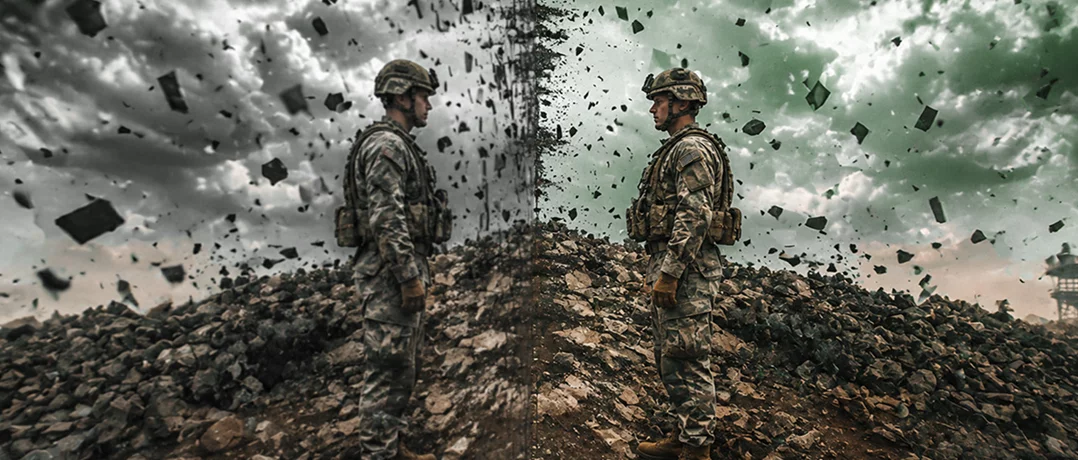
For nearly 3 decades, Syria’s role in Lebanon was defined by military dominance and political control. From the mid-1970s until the withdrawal of Syrian troops in 2005, Damascus exerted significant influence over Lebanese decision-making, shaping governments, security institutions and key political outcomes.
The withdrawal, triggered by mass protests following the assassination of former Prime Minister Rafik Hariri, formally ended Syria’s military presence. Yet its influence endured through its alliance with Hezbollah, which emerged as Lebanon’s most powerful armed actor and a central pillar of the Syrian-Iranian regional axis.
The collapse of the Assad regime in late 2024 fundamentally altered that equation.
Syria’s post-Assad position in Lebanon
Since assuming power, Syrian President Ahmad al-Sharaa has sought to distance his administration from the policies of the previous era, repeatedly insisting that Damascus has no intention of intervening in Lebanon’s internal affairs. At the same time, the fall of the Assad government severed Hezbollah’s primary logistical corridor, the overland route connecting Iran to Lebanon through Syrian territory.
In this context, recent remarks by U.S. President Donald Trump have revived debate over Syria’s potential role in Lebanon’s security landscape; not as an occupying power, but as a possible partner in regional efforts aimed at limiting Hezbollah’s military capabilities.
Speaking recently, Trump called for more “surgical” operations against Hezbollah and suggested that Syria’s new leadership could help facilitate such efforts. He praised President al-Sharaa and pointed to what he described as improving relations between Washington and Damascus.
The comments have fueled speculation about whether Syria could assume a security role linked to efforts to weaken Hezbollah’s military infrastructure. They also come at a time when Iran is widely seen as attempting to preserve Lebanon as one of its remaining strategic bargaining chips in negotiations with Washington, placing Hezbollah’s future at the center of a broader regional equation.
For now, however, no official U.S. proposal has been announced. The Syrian government has not indicated any intention to deploy forces inside Lebanon, and Lebanese authorities have not acknowledged receiving such a proposal. The discussion remains firmly in the realm of political speculation rather than declared policy.
Why now?
The renewed debate reflects three parallel developments: Syria’s new leadership is seeking improved relations with Washington and Western capitals, the U.S. is intensifying pressure on Hezbollah and its military infrastructure, and Iran is attempting to preserve its remaining regional influence following a series of strategic setbacks.
In this context, analysts identify several possible scenarios. The most likely involves enhanced Lebanese-Syrian border cooperation to control crossings, disrupt arms-smuggling networks and expand intelligence-sharing. A second scenario would see Syrian intelligence services playing a greater role in targeting Hezbollah’s supply routes, while a third envisions Syria becoming part of a broader U.S.-backed regional security framework involving multiple regional actors. The least likely and politically most sensitive possibility would be the deployment of Syrian forces inside Lebanon, a prospect few analysts consider realistic given the legacy of Syria’s previous military presence in the country.
The significance of President Donald Trump’s remarks may therefore lie less in the prospect of direct intervention than in what they suggest about Washington’s evolving regional strategy. Increasingly, Syria is being presented not as part of the Hezbollah problem, but as a potential component of a broader regional equation involving Lebanon, Syria, Israel and Iran.
Alia Mansour’s perspective concerning Hezbollah and Syria’s potential role in Lebanon
On whether a Syrian role against Hezbollah inside Lebanon is realistic:
In an exclusive interview with The Beiruter, Alia Mansour, a Syrian political activist, argued that Damascus’s immediate priority is securing Syria’s own borders by preventing Hezbollah fighters from crossing into Syrian territory and disrupting weapons-smuggling routes. She described these objectives as serving both Syrian and Lebanese interests.
Direct military intervention inside Lebanon, however, remains unlikely, she said, noting that President al-Sharaa has repeatedly stated that Syria has neither the intention nor the interest to pursue such a course. The government’s priorities, she added, remain reconstruction, internal security and economic stabilization.
On Lebanese concerns about a return to Syrian tutelage:
Mansour acknowledged that the issue remains deeply divisive within Lebanon. While some voices have advocated a stronger Syrian role in confronting Hezbollah, others reject any form of Syrian involvement.
She argued that comparisons with the era of Syrian tutelage overlook fundamental differences between the former regime and the current leadership. The previous system extended far beyond a military presence, whereas the new administration has consistently highlighted respect for Lebanese sovereignty and non-interference in domestic affairs, she said.
On whether Hezbollah’s disarmament depends on regional arrangements or Lebanese institutions:
Mansour was critical of Hezbollah’s regional activities, citing its involvement in conflicts beyond Lebanon, allegations of Captagon trafficking and support for groups accused of destabilizing several Arab states.
Nevertheless, she maintained that Hezbollah’s weapons ultimately remain a Lebanese issue that must be addressed by Lebanese institutions.
According to Mansour, the regional balance has shifted dramatically. Iran has emerged weakened from recent confrontations, while the fall of the Assad regime severed what she described as Hezbollah’s principal strategic lifeline. Combined with the impact of its war with Israel on its military, security and financial capabilities, these developments have created circumstances that were previously absent.
Disarmament, she argued, is no longer an unattainable objective. The responsibility now rests with Lebanon’s official institutions to strengthen state authority and implement the provisions of the Taif Agreement, particularly those relating to weapons held outside state control.
Nevertheless, the future of Hezbollah’s weapons and Lebanon’s sovereignty is likely to depend less on external actors than on the ability of Lebanese institutions to assert state authority and navigate a rapidly changing regional environment.
-
-
-
Josiane Hajj MoussaReporter
-
