



As Israeli strikes expand north of the Litani River, Lebanon’s fragile ceasefire faces mounting strain, with civilians caught between military escalation, delayed diplomacy, and unresolved disarmament disputes.
Israel escalates, ceasefire undermined

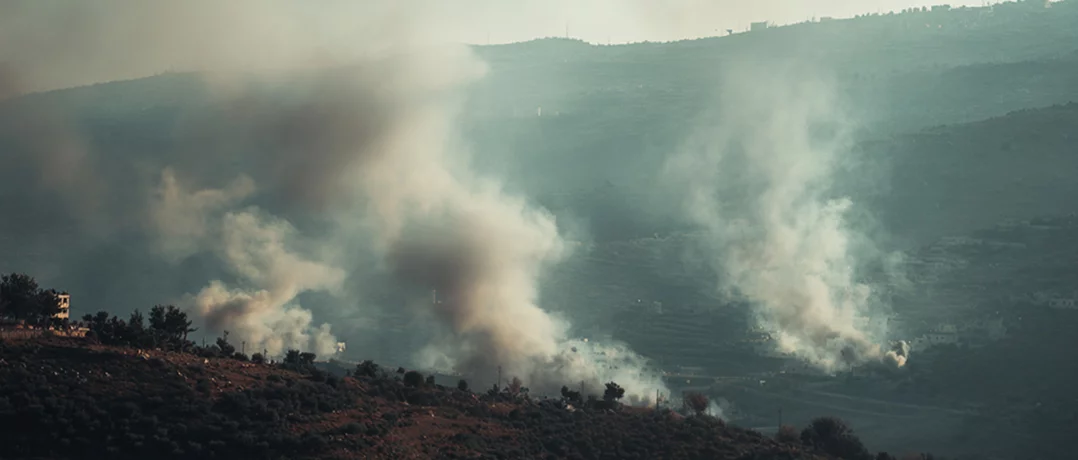
Israel’s latest wave of airstrikes on southern Lebanon has underscored the growing fragility of the November 2024 ceasefire, raising concerns that a fragile truce is giving way to a more dangerous phase of escalation.
The strikes, which Israel claims targeted Hezbollah operatives and infrastructure, came as the Lebanese Armed Forces (LAF) prepares to expand its disarmament plan north of the Litani River and the Military Technical Committee for Lebanon (MTC4L), the “Mechanism” Committee overseeing and monitoring the ceasefire agreement, meetings were postponed. Together, these developments point to a volatile mix of military pressure, political signaling and deep mistrust that continues to threaten stability along the Lebanese-Israeli border.
A new spike in military activity
Yesterday, on 21 January 2026, Israel Defense Forces (IDF) warplanes carried out a series of intense raids on several towns in south Lebanon, including Qanarit and Kfour, following evacuation warnings issued to residents. Earlier in the day, Israeli strikes on vehicles in Zahrani and Bazuriyeh killed 2 people, according to Lebanon’s health ministry. Israel claimed those targeted were Hezbollah operatives, framing the attacks as responses to what it described as repeated violations of the ceasefire.
Some of the strikes hit residential buildings, while journalists covering the raids were injured, highlighting the risks posed to civilians and the media. The Lebanese army condemned the attacks as a blatant violation of Lebanon’s sovereignty and warned that such actions undermine its efforts to implement the disarmament plan agreed upon under heavy international pressure.
Intensifying strikes north of the Litani River
The most notable shift is not merely the continuation of Israeli strikes, but their increasing frequency and geographic scope. Since the start of the year, Israeli raids have expanded north of the Litani River, an area that had seen relatively fewer attacks after the ceasefire took effect.
According to informed sources, Israel is now conducting airstrikes at least twice a week, compared to roughly once weekly during the early months of the fragile truce. Evacuation warnings have also become more frequent and broader, often targeting large buildings or entire neighborhoods for the first time. The use of heavier munitions has caused widespread damage, fueling displacement and deepening anxiety among local communities.
Ceasefire under strain
The November 2024 ceasefire was designed to end more than a year of hostilities, with clear expectations on both sides. Lebanon committed to asserting state authority and disarming Hezbollah south of the Litani, while Israel was expected to scale back military operations and withdraw from Lebanese territory.
While the Lebanese army has announced the completion of the first phase of its disarmament plan in the border zone, it has yet to achieve total monopoly of arms, with Israel dismissing these steps as insufficient. It has continued to carry out strikes, arguing that Hezbollah is attempting to rebuild its capabilities. Lebanon, for its part, maintains that ongoing Israeli attacks complicate, and in some cases directly obstruct, the army’s mission to extend state control.
Political pressure and strategic messaging
The escalation also carries a strong political dimension. Israeli actions appear timed to coincide with Lebanon’s transition to the second phase of the disarmament plan, which would extend north of the Litani toward the Awali River. The strikes could be seen as a form of pressure on the state, signaling that Israel intends to shape the security environment through force rather than diplomacy.
At the same time, Hezbollah has intensified its political rhetoric, rejecting calls to surrender its weapons and portraying disarmament as a concession to Israeli and American demands. This standoff leaves southern communities caught between Israeli military pressure and Hezbollah’s determination to preserve its armed structure.
Civilian toll and rising anxiety
Since the ceasefire, more than 350 people have reportedly been killed by Israeli fire in Lebanon, according to health ministry figures cited by international monitors. The renewed airstrikes, coupled with repeated evacuation orders, have driven fresh displacement and heightened fears of a wider confrontation.
For residents of southern towns, the truce increasingly feels nominal. While neither side has declared a return to full-scale war, the steady drumbeat of strikes has eroded confidence that the ceasefire can hold amid mutual violations: Hezbollah intransigence regarding retaining its weapons as well as ongoing Israeli occupation and strikes on Lebanese soil.
In conclusion, Israel’s latest strikes in south Lebanon mark a clear intensification of military pressure at a moment when the Lebanese state is attempting to reassert authority and contain armed actors. The widening scope of the attacks, particularly north of the Litani River, signals a shift that risks collapsing an already fragile ceasefire. Without renewed diplomatic engagement and stronger guarantees on both security and sovereignty, the current trajectory points less toward de-escalation and more toward a prolonged, unstable confrontation with Lebanon’s sovereignty and population once again paying the highest price.
-
-

-
The Beiruter
-
