

Military and strategic experts Brigadier General Naji Malaeb and Colonel Nidal Abou Zeid discussed Israel’s newly established multilayered zones in southern Lebanon, highlighting their significance and implications.
Israel redraws Southern Lebanon

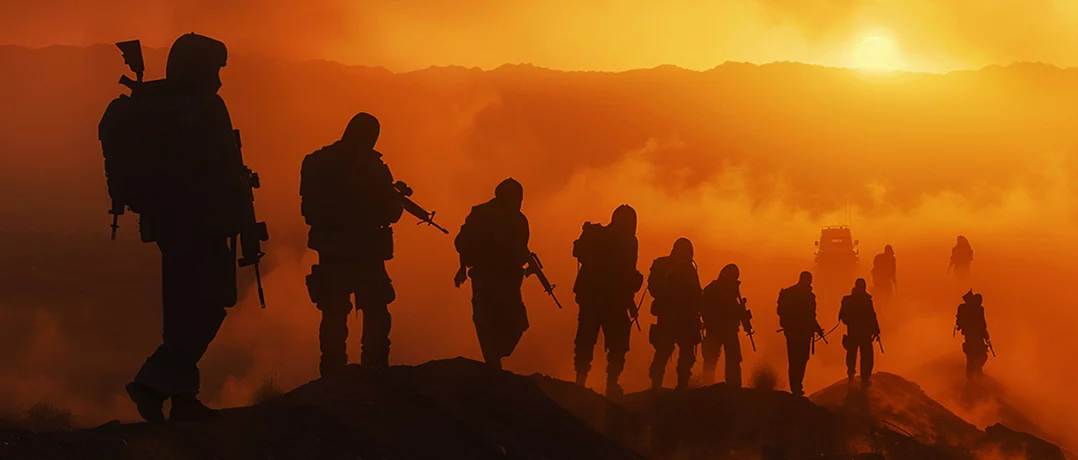
Nearly 26 years after the withdrawal of the Israel Defense Forces (IDF) from the security zone in southern Lebanon in 2000, an event commemorated annually as “Liberation Day,” the region once again finds itself confronting a new form of occupation following the outbreak of war between Hezbollah and Israel on 2 March 2026.
For the first time in over 2 decades, the Israeli army has announced the establishment of what it describes as a “forward defense line” operating inside southern Lebanon, commonly referred to as the “Yellow Line.” This development raises fundamental questions about the nature of this deployment, its strategic implications, and its consequences for Lebanon and the wider region; issues that were examined by the military and strategic experts Brigadier General Naji Malaeb and Colonel Nidal Abou Zeid in an exclusive interview with The Beiruter.
A multi-layered division of the South
The “Yellow Line” represents a new phase in Israel’s military doctrine regarding its northern front. According to Colonel Nidal Abou Zeid to The Beiurter, it is not merely a media label but part of a comprehensive system that divides southern Lebanon into 3 distinct layers:
The “Red Line,” located closest to the border, corresponding to the 5 zones where Israeli forces had maintained a presence following the initial ceasefire of November 2024.
The “Yellow Line,” which constitutes the main deployment zone and extends across what is known as the “second line of villages.”
A third zone stretching from the “Yellow Line” up to the Litani River.
This layered division reflects a shift from traditional defensive positioning to a more dynamic military concept involving “areas of interest” (the Red Line) and “areas of influence” (the Yellow Line). Through this structure, Abou Zeid noted, Israel appears to be seeking the establishment of a multi-tiered security belt that enables greater operational control and preemptive threat management. Notably, this model mirrors similar approaches used in the Gaza Strip, suggesting a standardized operational doctrine applied across different fronts.
Strategic dimensions: Beyond 7 October 2023
According to Abou Zeid, the emergence of the “Yellow Line” cannot be understood in isolation from the broader strategic shifts following the events of 7 October 2023. These attacks prompted Israel to reassess its security architecture, leading to recommendations from military committees emphasizing the need to transfer the battlefield into adversary territory and establish buffer zones.
This vision, Abou Zeid added, extends beyond southern Lebanon, encompassing a broader geographic arc stretching from Ras Naqoura through southern Lebanon to the Golan Heights and southwestern Syria. Within this framework, the “Yellow Line” is not a temporary tactical measure but rather a component of a regional strategy aimed at redefining rules of engagement and imposing a new security reality across neighboring states.
Military assessment: Tactical success or strategic loss?
From a military standpoint, Brigadier General Naji Malaeb asserted to The Beiurter that Hezbollah adopted what is known as “flexible defense” during the recent confrontation; a strategy based on avoiding fixed positions while exhausting advancing forces through mobile ambushes and targeted strikes. This approach, Malaeb, succeeded in inflicting tangible losses on Israeli forces during the initial weeks of fighting.
However, these tactical gains did not prevent Israel from capitalizing on the ceasefire arrangements, particularly provisions allowing it to act against potential threats. Malaeb noted that this enabled Israel to consolidate its presence inside Lebanese territory and establish advanced defensive lines. The result highlights a contradiction between battlefield performance and political outcomes: while Hezbollah demonstrated operational resilience, the legal and diplomatic framework of the ceasefire allowed Israel to impose new realities on the ground.
Are we witnessing a new “security zone”?
Malaeb asserted that current developments inevitably evoke comparisons to the “security belt” that Israel maintained in southern Lebanon between 1985 and 2000. However, key differences distinguish the present situation. Previously, the security zone was administered through local proxy forces and did not involve the widespread destruction seen today.
In contrast, Malaeb believed that current Israeli operations are characterized by high levels of destruction, including the demolition of infrastructure, the erasure of village features, and even renaming some areas in Hebrew, thus suggesting an attempt to impose a long-term transformation of the region. At the same time, Hezbollah’s military capabilities today differ significantly from those of the 1990s, both in terms of weaponry and its capacity to project power deep inside Israel.
Political and diplomatic implications
The implications of the “Yellow Line” extend beyond the military sphere into the political and diplomatic arenas. Malaeb noted that Lebanon now faces mounting challenges on the international stage, particularly amid European positions that have criticized the outbreak of war and attributed responsibility for the escalation to Hezbollah.
Within this context, Malaeb argued that placing Hezbollah’s weapons under the authority of the Lebanese state could serve as a starting point for rearranging the domestic scene and removing the justifications used by Israel to sustain its military presence. However, this proposal remains highly contentious domestically, given its complex political and security ramifications.
Ultimately, the “Yellow Line” reflects a profound transformation in the nature of the conflict in southern Lebanon. The conflict is no longer confined to limited border clashes but has become part of a broader regional equation where military calculations intersect with political ones. The realities now established on the ground pose significant strategic challenges for Lebanon. Indeed, southern Lebanon stands today at a critical crossroads. The consolidation of new military lines and shifting “rules of engagement” suggests the potential emergence of a prolonged occupation in new forms, similar to dynamics observed in other conflict zones such as Syria and Gaza. Alternatively, there remains the possibility of pursuing political settlements capable of restoring Lebanese sovereignty over its occupied territories.
-
-

-
The Beiruter
-
