



Israel’s expanded military authorization in Lebanon, alongside Hezbollah’s renewed attacks and Beirut’s distancing measures, signals a dangerous escalation with major political and security implications.
Israeli invasion and the Lebanese Army retreat

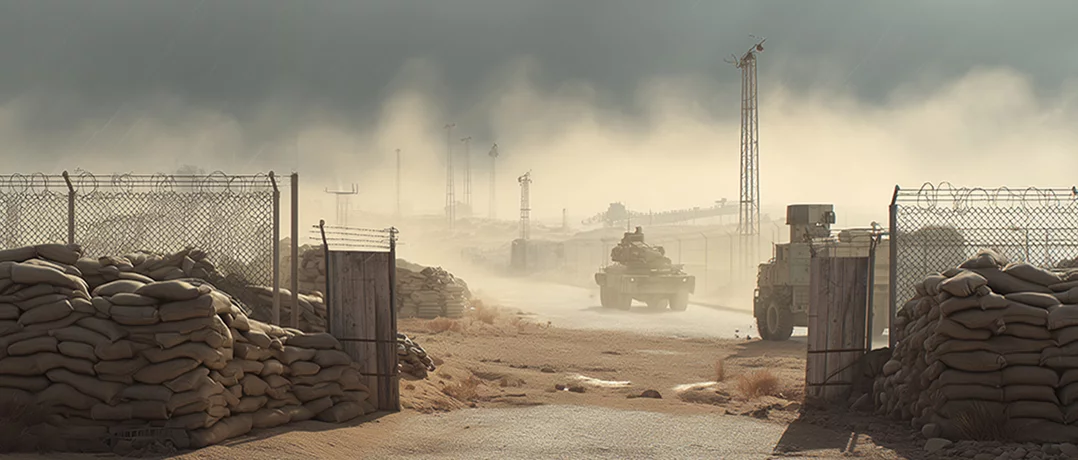
Israel has formally authorized its military to advance and secure additional strategic areas inside Lebanon following a series of attacks by Hezbollah, Defense Minister Israel Katz confirmed.
“Prime Minister Benjamin Netanyahu and I have authorized the Israel Defense Forces (IDF) to advance and take control of additional strategic positions in Lebanon in order to prevent attacks on Israeli border communities,” Katz said in a statement, signaling a significant escalation along the volatile frontier.
The decision follows days of heightened cross-border fire and renewed questions about whether the conflict could shift from contained exchanges to a broader ground confrontation.
Lebanese army retreats amid rising tensions
Following Israel’s announcement of a ground expansion in Lebanon, the Lebanese army withdrew from at least seven forward positions along the northern border. These withdrawals suggest growing pressure on Lebanon’s security apparatus as tensions escalate.
Amid the escalating situation, the United Nations Interim Force in Lebanon (UNIFIL) announced the immediate evacuation of its non-essential foreign staff from the country. The move, intended to ensure the safety of UN personnel, highlights the heightened risks along the border and the broader international concern over the potential for wider conflict in the region.
Why the risk of a ground operation has increased
Several developments have raised the likelihood of expanded Israeli ground action:
- Ceasefire breakdown
Hezbollah’s rocket fire toward northern Israel effectively ruptured the truce, providing Israel with what it considers legal and political grounds to resume offensive operations. The Israeli military has already declared it is operating in “offensive mode,” signaling a shift from containment to actively degrading Hezbollah’s capabilities.
- Regional escalation
The broader regional landscape has shifted dramatically. With Iran directly engaged and U.S.–Israeli strikes reported in Tehran, the Lebanese front is no longer peripheral. Israeli planners may calculate that dismantling Hezbollah’s military infrastructure now could reduce the risk of a multi-front war later.
- Evacuation warnings
Israel issued evacuation warnings to residents in more than 50 villages in southern Lebanon and parts of the Bekaa Valley steps that have historically preceded major ground maneuvers, including the November 2024 incursion.
- Escalating military pressure
Israeli officials have indicated mounting frustration over Hezbollah’s rearmament. In mid-March, Israel’s Northern Command ordered what it described as a “more aggressive approach” toward Hezbollah’s rebuilding efforts. Israeli forces have carried out approximately 1,600 strikes in Lebanon in 2025 alone, targeting senior operatives, weapons depots, and supply routes.
A rapid political shift in Beirut
In Beirut, the government’s response has introduced an unexpected political dimension.
Lebanese authorities have moved to distance the state from Hezbollah’s latest military action, drawing a clear line between official policy and the armed group’s decision to launch rockets. Prime Minister Nawaf Salam condemned the attack as an “irresponsible and suspicious act” that exposes Lebanon to grave risks, while President Joseph Aoun called for restraint and emphasized the primacy of state authority.
In what many observers described as a bold and unprecedented step, the government announced a series of measures:
- An immediate ban on all Hezbollah military and security activities.
- A requirement that Hezbollah surrender its weapons.
- Tasking the Lebanese Army with implementing the second phase of the weapons-containment plan north of the Litani River, using all available means.
- Declaring readiness to resume negotiations with Israel with civilian participation.
These decisions marked a significant shift in how the state frames the “Hezbollah file,” particularly regarding authority over war and peace.
At the same time, a large-scale Israeli invasion does not appear inevitable. The government’s public distancing from Hezbollah reflects an effort to prevent collective national liability for the group’s actions.
Psychological pressure or operational preparation?
Retired Brig. Gen. Naji Malaeb, a Lebanese strategic analyst, said Israel’s messaging appears to combine psychological warfare with operational preparedness.
In an interview with The Beiruter, Malaeb argued that Israeli statements serve a dual purpose: acknowledging the potential costs of a ground operation while signaling readiness to carry it out. He described the rhetoric as “part of a psychological war aimed at intimidating Lebanon internally and conveying that the option of an incursion remains on the table.”
He also noted Hezbollah’s announcement of its response described as “Statement No. 1” which included six rockets and drones. The phrasing, he said, leaves open the possibility of subsequent escalatory steps and raises questions about the group’s preparedness for wider confrontation.
Malaeb characterized Hezbollah’s move as a “dangerous gamble” that could furnish Israel with a pretext to establish a security belt south of the Litani River. Given what he described as strong U.S. backing for Israel, he expressed doubt that an Israeli incursion would face effective international resistance.
Still, he cautioned that a ground campaign would neither be easy nor swift. Israel’s last major operation lasted 66 days, and despite ongoing deployments in Gaza and the West Bank, reserve forces were required. He noted that Israeli doctrine often relies on heavy fire preparation a “scorched earth” approach before advancing to limit troop casualties.
According to Malaeb, Hezbollah’s operational capacity south of the Litani has declined, citing Lebanese Army measures that reportedly resulted in the deaths of 177 operatives and the seizure of approximately 230,000 weapons without entering private homes. While this may weaken Hezbollah’s defensive posture, he said, it does not make a ground invasion simple.
Political calculations at home
Domestically, Malaeb observed that ministers aligned with the so-called “Shia duo” remain in government, allowing cabinet decisions to proceed under the announced mechanism: granting Hezbollah an opportunity to surrender its weapons before further steps are implemented.
He added that the army commander has pledged to confine current operations north of the Litani River, with broader deployment to be reassessed at a later stage.
For now, Hezbollah’s actions project defiance while testing its operational readiness. Israel’s swift and forceful responses underscore its continued reliance on airpower and deterrence even as the prospect of a ground incursion shifts from hypothetical to increasingly plausible.
-
-

-
The Beiruter
-
