



Israeli settlers launched coordinated arson attacks across the West Bank, torching Palestinian homes and farmland during the olive harvest in one of the most violent escalations in years.
Israeli settler violence soars in West Bank

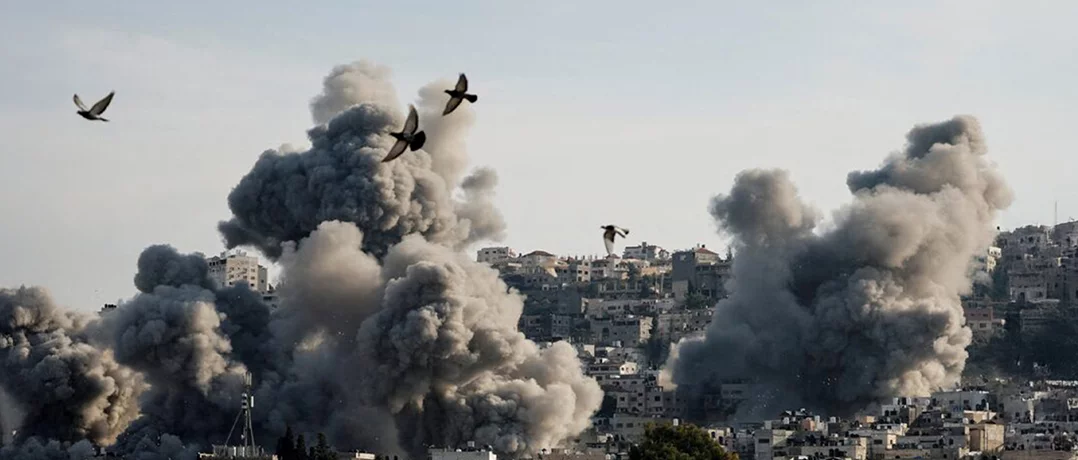
On November 11, 2025, dozens of Israeli settlers launched a series of coordinated arson in the West Bank, targeting a Palestinian warehouse, a Bedouin village, and nearby farmland. The assaults left several Palestinians injured and marked another escalation in a growing wave of settler violence coinciding with the annual olive harvest season.
The attacks occurred amid warnings from international organizations that such incidents have reached unprecedented levels. The United Nations’ humanitarian office recently reported that last month saw the highest number of violent settler assaults since records began nearly two decades ago.
Israel has established around 160 settlements across the West Bank and East Jerusalem since capturing the territories during the 1967 War, also known as the Six-Day War or “Naksa.” These settlements, home to roughly 700,000 Israelis, are considered illegal under international law. About 3.3 million Palestinians live in the same region, often in close proximity to settlements, leading to frequent clashes over land and resources.
A surge in settler violence
Footage from the latest incidents showed dozens of masked settlers descending on a hillside east of Tulkarm. In Beit Lid, a Palestinian warehouse was set ablaze, and several lorries were destroyed. Nearby, tents in the Bedouin village of Deir Sharaf were torched as panicked residents, including women and children, could be heard shouting in distress.
Muayyad Shaaban, head of the Palestinian Authority’s Wall and Settlement Resistance Commission, condemned the attacks, describing them as part of a broader campaign to impose “a climate of intimidation and terror” against Palestinian communities.
On the same day as the arson attacks, hundreds of mourners attended the funeral of 13-year-old Aysam Mualla in Beita, near Nablus. The boy had reportedly been in a coma since inhaling tear gas fired by Israeli troops last month, when villagers were harvesting olives near the settler outpost of Evyatar.
The olive harvest, a critical economic and cultural event for Palestinians, has increasingly become a flashpoint for violence. Israeli and foreign volunteers who assist Palestinian farmers have also been targeted. Over the weekend, videos from Beita circulated on social media showing masked settlers assaulting local residents, volunteer medics, and journalists.
In the nearby village of Burin, settlers reportedly attacked harvesters and even an off-duty IDF reservist assisting them, stealing bags of olives before fleeing. The IDF confirmed that stones were thrown by Israeli civilians and said both Israelis and Palestinians were injured and taken for medical treatment.
Israeli forces and government response
The Israel Defense Forces (IDF) reported that troops were deployed to disperse confrontations using crowd-control measures and detained several Israeli civilians. However, the military said its soldiers were subsequently attacked by other settlers who damaged a military vehicle. Israeli police later confirmed that 4 suspects were arrested in connection with the violence.
Israel’s President Isaac Herzog denounced the assaults as “shocking and serious,” attributing them to “a handful of violent and dangerous individuals.” He added that violence directed at civilians or against IDF personnel “crosses a red line” and must be condemned unequivocally.
Major-General Avi Bluth, head of the IDF Central Command, also criticized the settlers’ actions, warning that such behavior “undermines the stability of the security situation.” He further emphasized that soldiers must intervene to prevent nationalist crimes and not remain passive in the face of such incidents.
Despite these condemnations (which are notable given that top Israeli officials usually remain silent towards most incidents), human rights groups have long argued that settler attacks often go unpunished. According to Israeli rights organization Yesh Din, of 1,701 police investigations into offenses committed by Israelis against Palestinians in the West Bank between 2005 and 2024, nearly 94% ended without indictments. The latest arrests thus represent a rare instance of Israeli authorities taking decisive action.
Meanwhile, Israeli media reported that the Israeli Air Force has established a “target bank” in the West Bank near the border with Jordan, to avoid a repeat of the October 7, 2023, attack scenario. For the first time, training was conducted on a hypothetical scenario of attacking targets in Israeli settlements in the West Bank near the Jordanian border, as part of lessons learned from the October 7 attack.
Tuesday’s attacks highlight a grim reality: settler violence, once sporadic, has become a persistent and organized feature of life in the occupied Palestinian territories. Despite official condemnations, accountability remains elusive, and Palestinian communities continue to face intimidation, including during one of their most vital agricultural seasons. As tensions intensify and settlement expansion continues unchecked, prospects for peace and coexistence appear increasingly remote.
-
-

-
The Beiruter
-
