



A controversial U.S. proposal to replace Iran with Italy at the World Cup raises concerns over fairness, FIFA rules, and growing political interference in sport.
Italy to replace Iran at the World Cup?

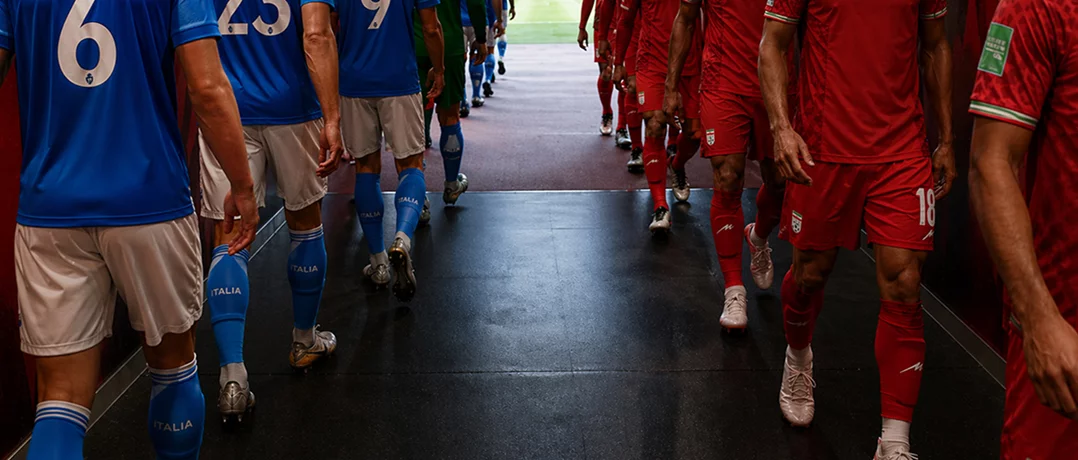
A controversial proposal reportedly advanced by allies of United States (U.S.) President Donald Trump has sparked debate across the footballing world, raising fundamental questions about fairness, governance, and the politicization of sport.
The suggestion, replacing Iran with Italy in the upcoming FIFA World Cup, has been framed by its proponents as a pragmatic or even symbolic gesture. Yet, beneath the surface lies a far more complex and troubling issue: whether global football’s most prestigious competition can remain insulated from geopolitical maneuvering.
The origins of the proposal
According to reports, a senior envoy associated with Trump informally suggested to FIFA President Gianni Infantino that Italy should take Iran’s place in the tournament. The rationale appears to be as much political as sporting. The proposal has been linked to efforts to repair strained ties between Washington and Rome, particularly following disagreements involving Italian Prime Minister (PM) Giorgia Meloni and U.S. rhetoric surrounding the Vatican and broader Middle Eastern tensions.
The envoy, Paolo Zampolli, openly acknowledged his personal motivations, citing both national pride and Italy’s illustrious footballing history, including its 4 World Cup titles. However, his remarks underscore the informal and highly subjective nature of the proposal. Crucially, neither FIFA nor the relevant football federations have indicated any official support for such a scenario.
FIFA regulations and institutional authority
Under FIFA’s World Cup regulations, the governing body does retain discretionary authority to replace a team in exceptional circumstances, such as withdrawal or disqualification. Article 6 allows FIFA to select a replacement at its own discretion. However, this provision is generally understood to apply within the framework of sporting merit and confederation balance, not political preference.
In practice, FIFA has historically prioritized continuity and fairness, often selecting replacement teams based on their performance in the same qualification pathway. This ensures that teams are rewarded according to results achieved on the pitch, rather than external considerations. Any deviation from this principle risks undermining the legitimacy of the competition.
Reactions from Italy and beyond
Interestingly, the proposal has not been warmly received in Italy itself. Political and sporting figures have largely dismissed the idea as inappropriate or even embarrassing. Italian officials have stressed that World Cup participation must be earned on the field, not granted through political intervention. This reaction reflects a broader consensus within the football community that meritocracy remains central to the sport’s credibility.
Moreover, FIFA President Gianni Infantino has previously reaffirmed that Iran is expected to participate in the tournament as planned. His remarks highlight an enduring principle: that sport should remain separate from political disputes wherever possible. While geopolitical realities cannot be entirely ignored, overt interference in tournament composition would set a dangerous precedent.
The broader geopolitical context
The controversy cannot be understood in isolation from the wider geopolitical environment. Ongoing tensions involving Iran, the U.S., and regional actors have inevitably spilled over into the sporting arena. Iran itself reportedly sought adjustments to its match locations (from the U.S. to Mexico) due to security concerns, underscoring the real-world challenges facing international competitions.
Yet, it is precisely in such contexts that institutions like FIFA are expected to uphold neutrality and consistency. Allowing political considerations to dictate participation risks eroding trust in global governance structures; not only in football but in international sport more broadly.
Indeed, Iran secured its place in the World Cup through the Asian Football Confederation’s qualification process, marking its 4th consecutive appearance. Meanwhile, Italy has had a long and promising record in the realm of football, similar to prominent teams such as Brazil and Germany. Therefore, balancing between political maneuvering and legal guidelines becomes a fine line that must ensure that the former does not trump the latter.
-
-

-
The Beiruter
-
