

The former Miss World Australia channels Scheherazade in a Night with the Legends honoring Lebanon, and advocates for empowering women with education.
Jessica Kahawaty: Lebanon is love, beauty and generosity
Jessica Kahawaty: Lebanon is love, beauty and generosity
By Grace Massoud | April 12, 2026

Reading time: 5 min
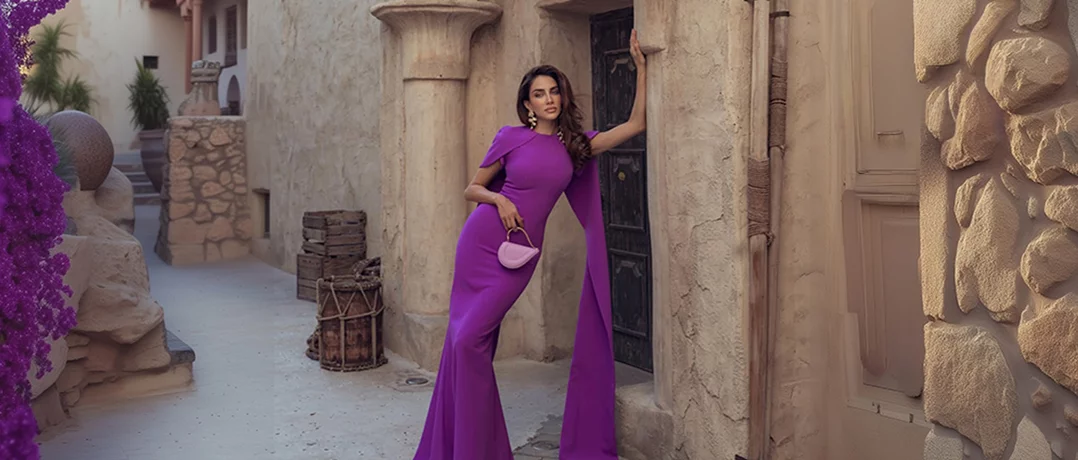
On the 5th of March, 4,000 Arab attendees were united in the Royal Albert Hall in London, England, “A Night with the Legends” concert honoring Lebanon’s culture and resilience. “It felt powerful”, admits Jessica Kahawaty, who was Scheherazade, the ultimate storyteller for the night. “While Lebanon and the region suffer, it reminds us that unity, identity and hope endure beyond any conflict”.
The show represented the real face of the Middle East, one of art and beauty that never disappears, war merely attempts to overshadow it. “Culture, not politics, is rooted in people. Beauty is more natural to us than destruction”, says Jessica.
Jessica was crowned Miss World Australia 2012, and was the second Runner-Up Miss World 2012. Participating in beauty pageants as a teen and young adult presented many challenges. “You must learn diplomacy as you’re with 130 girls for over a month. You’re away from your family and basically playing a game of patience”.
The brainy beauty pursued higher education at the University of Technology Sydney, earning a Bachelor of Laws and a Bachelor of Business Administration in Accounting and Finance with a focus on human rights law. Pretty privilege is a common phenomenon but in Jessica’s opinion, it depends on how you use it. If you use your voice, intelligence, passion and presence when you enter a room, you’ll command respect. If girls solely rely on beauty to get them places, they’ll realise they won’t go very far.
Having called Dubai home for thirteen years, Jessica is the CEO of Mama Rita, the food brand co-founded with her mother, and the creative director of Kahawaty Jewels with her father’s forty years of experience leading the way. “I find myself most in food because it’s democratic, and feeding people brings me so much joy. I love hospitality and hosting people, which I attribute to my Lebanese heritage, so food is my language of love through Mama Rita”.
Beirut, the heartbreak
That evening, she honored women like Fairuz and Umm Kulthum, and parts of her own story resonated with these legends. Their music carries heartache and love in equal measures. “Kifak Inta is one of the most emotional Arabic breakup songs. The bigger the love, the bigger the heartbreak”, says Jessica.
When Fairuz’s Li Beirut, the ultimate ode to a city, was performed, she couldn’t help but cry backstage. She went back out, her tears wiped away, but the audience could see that she was visibly shaken. “It’s Beirut, it’s our homeland, and every year they keep chipping away a part of it”.
The performance was held just ahead of International Women's Day to honor the cultural heritage and artistic expression of women in the Arab world. If there were one actionable step to take today to make a significant improvement in the lives of Lebanese and Arab women, it would be to “invest in girls’ education and economic independence. The country would have hope for a better future if more women were in positions of power”, says Jessica. “Women lead with empathy, one of the most important characteristics in leadership”.
Fearless and unapologetic
The 1950s and 1960s were the peak of Arab culture. Looking back at her golden era 50 years from now, she hopes people say she helped preserve women’s rights to speak up and to be unapologetic. “There’s a lot of fear in our society as to what we can say, fight for, who we could love, how we should be. We come from a very judgmental culture. I want to be remembered as someone who celebrates women’s strengths and inspires courage”.
She aims to have her own foundation for humanitarian work. “I would love to have universal primary education within Lebanon. If you provide children with education, you pave the way for their future”. On a personal level, she wants to have a family. “As women we love to create and build. The highest form of creation in the natural world is a family”.
Unequivocally Lebanese
A prominent part of her public life is her mother, Rita. The most Lebanese trait she passed down to her, serving as armor in the international fashion and humanitarian worlds, was generosity.
At seventeen years old, she was walking around the shops in Kaslik with her friend, when she spotted homeless children. They looked dirty, sad, and exhausted. She went into a burger joint and bought them a burger. When she came back out, they didn’t start eating. “Why aren’t you eating, yalla start”, said Jessica. To which they answered: “3ayb, it’s rude to eat in front of other people who aren’t eating”. In her own terms, these homeless children had more class, savoir-vivre, empathy, and humanity than most adults.
She was moved to tears, and one of them went into the supermarket to buy her a box of tissues with his money. “If that’s not generosity and giving, I don’t know what is. People who have been through the worst understand how to give most”, says a choked-up Jessica.
During these times of war and uncertainty, her advice to young Lebanese women is “to hold on to your identity and people around you”. She reflects on how exhausting it could feel for the spirit to constantly be told this is the last time that we’re fighting for our freedom and peace will be revealed.
“It’s like the leaping frog syndrome. You have a frog in a perfect environment, in his house, in clean waters, slowly you pollute it making it worse for him in small doses. Eventually, the frog gets used to the circumstances. It’s hard as an outsider to see that happening to your own people”, shares Jessica.
Barefaced and unfiltered
When the cameras are off, and the gowns are put away, the unglamorous ritual that makes Jessica feel most like herself is lounging in her sweatpants with family or best friends. “Speaking with no filters on ideas or thoughts that we put on social media. I gain my energy from being with people who feel the most like me”.
Jessica’s motivation to wake up every day is her love for life. Positive and grateful by nature, she believes that “living is the biggest gift we have. And we only have it once!” If she could come to Lebanon, the first thing she would do is have a Lebanese breakfast in the mountains, with some of the freshest eggs. There’s icy weather in the morning, but then the warmth of the sun is about to hit you. You hear nothing from the man-made world, only nature. “That is the purest Lebanon we know”.
-
-
-
Grace MassoudWriter and Head of PRFocusing on general entertainment.
-
