



Accusations and denials deepen political tensions as Lebanon seeks truth about the devastating 2020 port explosion.
Judicial deadlock in Beirut Port blast fuels Israeli accusations
Judicial deadlock in Beirut Port blast fuels Israeli accusations
By The Beiruter | December 03, 2025

Reading time: 3 min
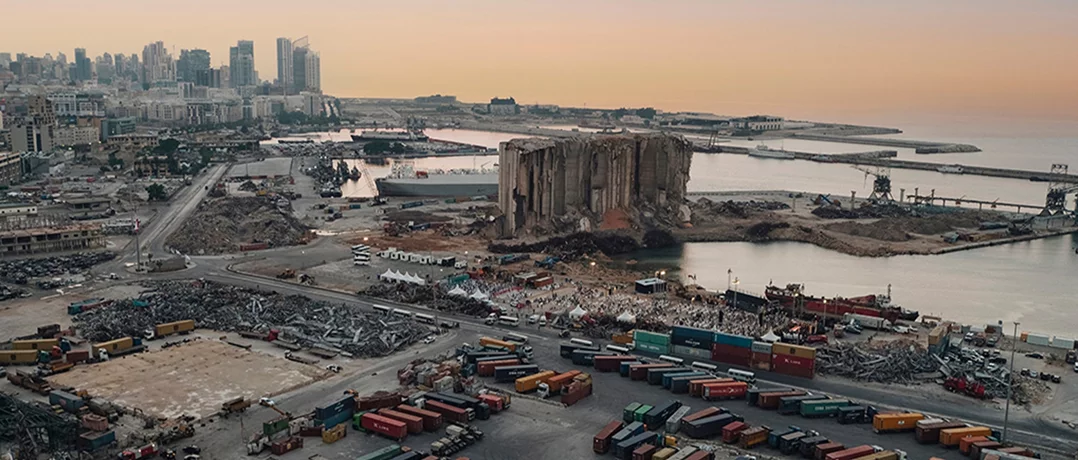
In a recent Israeli army report, serious allegations have once again placed Unit 121 of Hezbollah under scrutiny in connection with the aftermath of the Beirut Port blast of 4 August 2020.
What are the alleged accusations?
According to claims made by the Israeli Defense Army (IDF), the unit allegedly targeted Lebanese individuals who were believed to be in positions to expose Hezbollah’s supposed role in the storage of ammonium nitrate at the port. These accusations, however, remain unproven in court, and Hezbollah has firmly denied any involvement.
The Beirut Port explosion, one of the most devastating non-nuclear blasts in modern history, killed more than 200 people and devastated large areas of the capital. The disaster has since become a symbol of political paralysis and institutional failure in Lebanon. While it is widely accepted that ammonium nitrate stored at the port was the immediate cause, the question of who was responsible for its presence and continued storage remains highly contested as many point the fingers towards Hezbollah who had a significant grip on the country’s port and was heavily engaged in the Syrian civil war (2011-2024).
Among the figures mentioned in recent allegations are:
- Joseph Skaf: who served as Head of the Customs Department at the Port of Beirut. He was thrown from a high place and killed by members of Unit 121 in 2017 after he requested the removal of quantities of ammonium nitrate belonging to Hezbollah from the port, the same substance that later led to the explosion.
- Mounir Abu Rajili: who served as Head of the Anti-Smuggling Unit in the Customs Directorate. He was assassinated by stabbing in December 2020 by members of the unit following information he provided regarding Hezbollah’s link to the port explosion.
- Joe Bejjani: a photographer who was among the first to document the scene of the explosion and was hired by the Lebanese army to assist in the investigation. He was shot while in his car in December 2020 by members of Unit 121, who stole his mobile phone before fleeing the scene of the assassination.
-Lokman Slim: a political activist and journalist who frequently criticized Hezbollah. He was also shot while in his car in February 2021 by members of the unit, shortly after accusing Hezbollah and the Assad regime of responsibility for the explosion.
The allegations’ impact
Supporters of the accusations argue that these individuals were targeted to prevent the disclosure of sensitive information; given Hezbollah’s alleged involvement in previous assassination since 2005 (including the late Prime Minister Rafic Hariri, which the Special Tribunal for Lebanon ruled against the group’s top commanders).
Critics, however, point to the lack of conclusive evidence and warn against turning unresolved cases into established narratives. So far, no Lebanese court has delivered a final verdict linking Hezbollah or Unit 121 to any of these deaths.
Hezbollah has repeatedly rejected the accusations, describing them as politically motivated and part of a broader campaign to discredit the movement. Meanwhile, Lebanon’s judicial investigation into the port explosion remains stalled due to legal challenges, political interference, and institutional divisions.
However, what is more apparent is the consequential impact that the continued obstruction of the judiciary’s work, and the absence of any indictment or ruling in this regard, have had on the country’s accountability, trust and national unity and cohesion. It is this predicament that has allowed for speculations and accusations, including from foreigners, to take hold and proliferate. Should justice have been served, it would have put an end to the aforementioned allegations and enhanced the Lebanese’s confidence in their judicial system and their leaders.
For the families of the victims, closure remains distant. Their calls for an impartial and international investigation have grown louder over time. As Lebanon continues to struggle with economic collapse and political instability, the unresolved truth behind the Beirut Port blast stands as a painful reminder of a nation still trapped between accountability and impunity.
-
-

-
The Beiruter
-
