



Baghdad’s efforts to combat oil smuggling and strengthen federal authority over Kurdistan’s border crossings and oil fields have drawn strong opposition from Kurdish authorities.
Kurdistan's border crossings and oil fields under federal control
Kurdistan's border crossings and oil fields under federal control
By The Beiruter | November 29, 2026

Reading time : 4 min
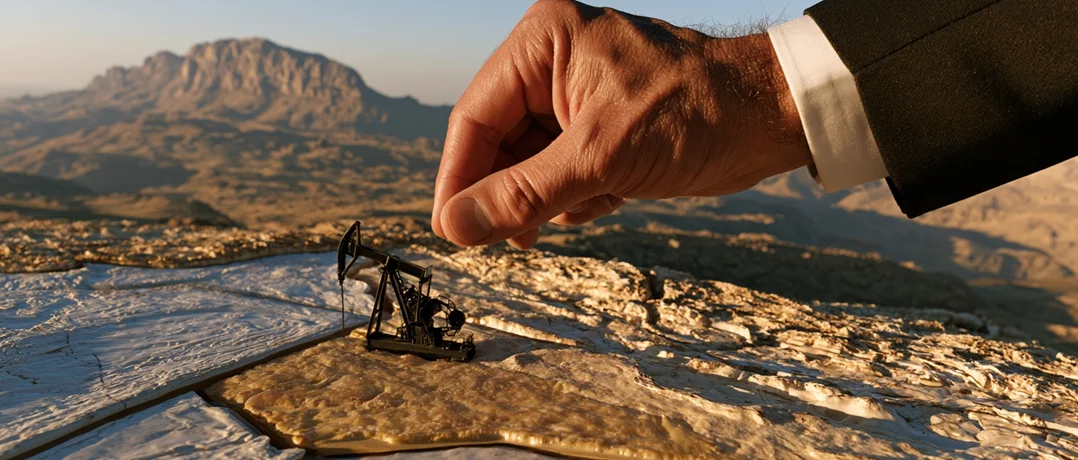
Iraqi Prime Minister Ali al-Zaidi moved on Tuesday, November 24, to bring Kurdistan’s border crossings and several oil fields under federal control as part of a crackdown on oil smuggling, a move likely to strain relations with the autonomous region.
Zaidi, who has pledged to tackle widespread corruption, has also stepped up efforts against the illicit oil trade, arresting officials and challenging an Iran-backed armed group after uncovering smuggling operations in its stronghold near Baghdad.
US President Donald Trump voiced support for Zaidi’s measures on Friday, saying: “We support Iraqi Prime Minister Ali al-Zaidi’s efforts to assert state authority throughout Iraq, stop the smuggling of Iraqi oil, end corruption, and bring all weapons under the exclusive control of the state," Trump wrote in a post on his Truth Social platform.
Zaidi's decision was widely denounced by Kurdish authorities, with the regional government saying it was a "constitutional violation." Iraq's top court said on Wednesday that the federal government can deploy forces to the country's borders in Kurdistan, after the autonomous region denounced Baghdad's decision to take over Kurdish-run crossings and oilfields
Smuggled, blended and exported
Following Zaidi's announcement on Tuesday, the state news agency INA cited what it described as an intelligence document that showed crude oil was being smuggled in tanker trucks from fields in Kirkuk and Sulaymaniyah provinces into Iran.
It was then being blended with Iranian crude and exported to Afghanistan for domestic consumption, according to the document.
The document, which AFP has seen but could not authenticate independently, says Iranian and Iraqi crude are mixed in an effort to help Iran "evade sanctions."
the government's position is that "any smuggling to Iran or elsewhere is prohibited, and the entire international border must be secured."
The United States, with which Zaidi has enjoyed close ties since taking office this year, accuses Iran of using Iraq's economy to evade sanctions.
Control of all border crossings
Earlier this month, Zaidi sent an investigation committee to northern Iraq.
Based on its findings, Zaidi's spokesperson Sabah al-Numan said Tuesday "the Border Ports Commission shall assume control of all border crossings in the Kurdistan Region."
He added that Zaidi directed the oil ministry "to manage all oil fields" that are under Kurdish "security authority" despite lying outside the Kurdistan Region, in the provinces of Diyala, Kirkuk, Salaheddine and Nineveh.
Zaidi also ordered the Kurdistan government not to approve oil exports except through the federal oil ministry.
Kurdish security forces took control of several oil wells and facilities outside the Kurdistan Region's administrative borders following the 2003 U.S.-led invasion of Iraq. The oil fields include the Khurmala field, seized by Kurdistan in 2008. Although located near the Erbil-Kirkuk border, it administratively belongs to Kirkuk province. The government statement did not specify when or how the takeover of the border crossings and oil fields would be implemented.
Unacceptable
Kurdistan Region Prime Minister Masrour Barzani said he was “surprised” by Zaidi’s decisions, describing them as “completely unacceptable.”
Despite their rivalry, the Kurdistan Democratic Party and the Patriotic Union of Kurdistan issued a joint statement urging Baghdad and Erbil to resolve their disputes constitutionally, warning that any violation of the region’s “rights and gains” was a red line.
Tensions between Baghdad and the Kurdish authorities have long centered on oil exports. In 2025, Iraq resumed crude shipments from Kurdistan through the Iraq-Turkey pipeline after a more than two-year suspension over legal and technical disputes. Previously, the region had exported oil independently of federal government oversight.
Barzani stressed the need to protect the Kurdistan Region’s achievements but said dialogue remained open to resolving outstanding issues.
Meanwhile, a former Iraqi oil ministry official told AFP that Kurdistan had also exported large quantities of crude to Turkey by tanker trucks. He alleged that illicit border crossings were being used to smuggle oil, including crude from other parts of Iraq, to neighboring countries. The Kurdistan Region borders Turkey, Syria and Iran.
Dismissal, suspension and removal
On Tuesday, Zaidi also dismissed the head of Iraq’s border crossings authority, suspended the head of the state-owned North Oil Company and removed several security officials in oil-rich Kirkuk, which borders Kurdistan. He further ordered the closure of all “unofficial crossings,” tighter security around oil fields and the deployment of oil ministry personnel at checkpoints leading into the Kurdistan Region’s three provinces.
The measures follow tensions with Tehran-backed Kataeb Hezbollah, which nearly escalated into a confrontation after the government reported oil smuggling in the group’s stronghold of Jurf al-Sakher, south of Baghdad. Government forces later entered the area under a compromise deal that avoided a direct clash.
Iraq, a founding member of OPEC, relies on crude oil sales for around 90% of its state revenues. Exports were severely disrupted during the Middle East war due to the closure of the Strait of Hormuz, Iraq’s main export route, and have only recently begun to recover.
-
-

-
The Beiruter
-
