

Kuwait has sanctioned eight hospitals in Lebanon under United Nations Security Council rules, prompting warnings from the Lebanon Ministry of Public Health about added strain on the health system amid tensions involving Hezbollah.
Kuwait sanctions Lebanese hospitals

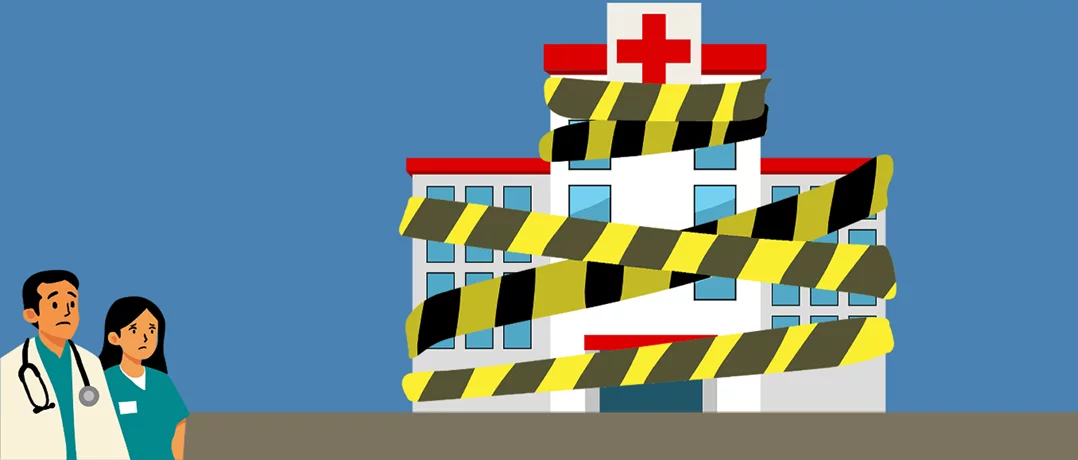
Kuwait’s decision to place 8 Lebanese hospitals on its national sanctions list has sparked political controversy and raised concerns about the intersection between counterterrorism measures and humanitarian infrastructure.
While Kuwait frames the decision as part of its international obligations to combat terrorism and prevent the proliferation of weapons of mass destruction, Lebanese authorities have expressed surprise and apprehension.
The legal framework behind the sanctions
The move, issued by Kuwait’s committee responsible for implementing United Nations Security Council (UNSC) resolutions under Chapter VII, imposes financial and legal restrictions on institutions suspected of links to terrorist activities.
Under Chapter VII of the 1943 United Nations (UN) Charter, member states are authorized to adopt binding measures aimed at preserving international peace and security. Kuwait’s specialized committee holds the authority to designate individuals or institutions suspected of involvement in terrorism or facilitating such activities, either independently or based on requests from foreign or domestic authorities.
The designation activates several financial restrictions outlined in Kuwait’s Ministry of Foreign Affairs Decision No.176 (2025):
- Article 21 mandates the immediate freezing of funds and economic resources owned or controlled by designated institutions.
- Article 22 expands the freeze to assets generated from those funds.
- Article 23 prohibits Kuwaiti nationals and institutions from providing financial or economic support to listed entities.
- Article 24 further requires institutions enforcing these measures to notify authorities within 24 hours and report any attempted transactions involving the sanctioned institutions.
Together, these provisions aim to prevent suspected entities from accessing financial networks linked to Kuwait.
Targeted hospitals and security allegations
The 8 hospitals listed are located in southern Lebanon, the Bekaa Valley, and Beirut’s southern suburbs. They include:
- Al-Rasoul al-Aazam Hospital, Beirut.
- Al-Shifa Hospital, Khaldeh
- Al-Batoul Hospital, Hermel
- Al-Amal Hospital, Baalbeck
- Dar Al-Hikma Hospital, Baalbek
- Saint George Hospital, Hadath
- Salah Ghandour Hospital, Bint Jbeil
- Sheikh Ragheb Harb University Hospital, Nabatieh
Although Kuwait’s official statement did not publicly detail specific accusations, some reports have suggested that certain facilities are connected to organizations affiliated with Hezbollah. Several Gulf states, including Kuwait, designate Hezbollah as a terrorist organization. Over recent years, Kuwait has intensified its counterterrorism policies, including the designation of financial institutions allegedly linked to the group and legal action against suspected networks.
Lebanon’s response and healthcare concerns
Lebanon’s Ministry of Public Health (MoPH) reacted with considerable surprise, stressing that it had not received prior notification or consultation from Kuwaiti authorities. In its statement, the ministry noted that the listed hospitals are registered private institutions providing medical services to patients from various regions and communities.
The Beiruter reached out to the ministry seeking additional information and Lebanon’s official response, but the MoPH said it had nothing further to add beyond its public statement.
Moreover, officials described the facilities as an essential component of Lebanon’s healthcare system, particularly at a time when the sector is struggling with economic collapse, infrastructure deterioration, and increased demand for medical services.
Lebanese authorities fear the sanctions could indirectly disrupt healthcare delivery, particularly in underserved regions where several of the hospitals function as primary medical providers. Any reduction in external funding or cooperation could further strain Lebanon’s already overstretched health sector.
Regional and domestic implications
The decision reflects broader tensions between Gulf states and Hezbollah, which is closely aligned with Iran. Gulf Cooperation Council countries have progressively introduced stricter measures targeting entities suspected of supporting the group. Kuwait’s action may therefore represent part of a wider regional strategy aimed at restricting financial flows to organizations linked to armed non-state actors.
The move also carries diplomatic implications. Historically, Kuwait has maintained relatively positive relations with Lebanon, frequently providing financial assistance and humanitarian support during crises. The absence of prior coordination between the two countries suggests a shift toward more unilateral security measures, potentially affecting bilateral relations.
Furthermore, the designation could discourage international donors, financial institutions, and humanitarian organizations from cooperating with the listed hospitals due to reputational and compliance risks. If other states adopt similar measures, Lebanon’s healthcare crisis could deepen.
In conclusion, Kuwait’s blacklisting of 8 Lebanese hospitals represents a complex intersection of international security obligations, regional geopolitical tensions, and humanitarian considerations. While the decision aligns with global counterterrorism frameworks, it has generated strong reactions in Lebanon, where authorities view the targeted hospitals as vital healthcare providers. The long-term impact of the sanctions will likely depend on diplomatic engagement, greater transparency regarding the allegations, and evolving regional political dynamics.
-
-

-
The Beiruter
-
