



An Iranian strike damaging Chinese-owned property in Kuwait exposes tensions within the China-Iran partnership, challenging Beijing’s regional balancing strategy and strategic interests.
Kuwait strike puts Iran-China alliance to test
Kuwait strike puts Iran-China alliance to test
By The Beiruter | August 05, 2026

Reading time: 4 min
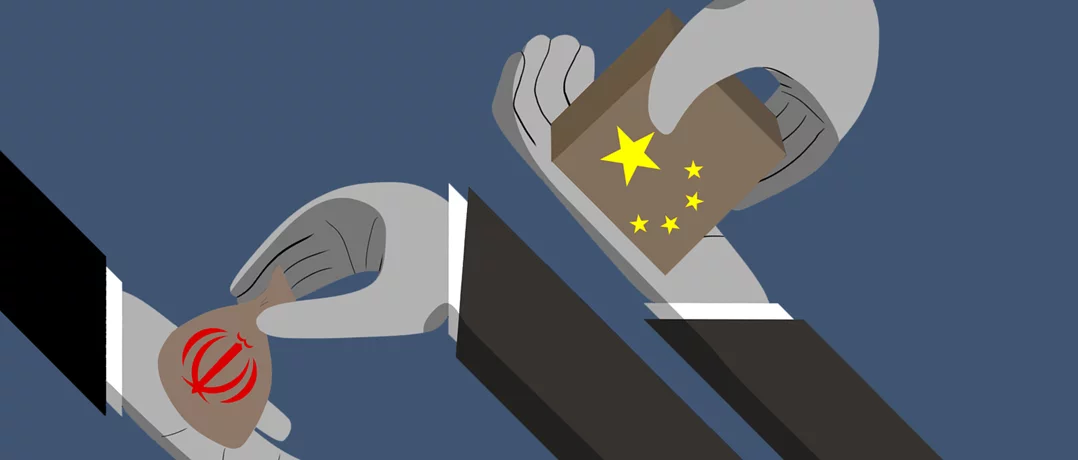
An Iranian strike hit a Chinese firm’s building in northern Kuwait, severely damaging the structure and killing a worker, Kuwait’s military said, hours after Jordan’s air defenses shot down five missiles launched from Iran.
Although China and Iran have cultivated one of the Middle East’s most consequential strategic partnerships. Bound together by shared opposition to Western pressure, expanding economic cooperation, and complementary geopolitical interests, Beijing has become Tehran’s largest trading partner and the principal buyer of Iranian oil. China has consistently defended Iran’s right to pursue peaceful nuclear technology, supported its membership in organizations such as BRICS and the Shanghai Cooperation Organization (SCO), and resisted efforts to further isolate Tehran diplomatically.
Yet aforementioned developments have exposed the limits of this relationship following an Iranian strike that hit a building belonging to a Chinese company in northern Kuwait. While Chinese officials stopped short of condemning Iran by name, their declaration that attacks on civilians and non-military targets are “unacceptable” represents one of the strongest public criticisms China has directed at Tehran in recent years.
A strike that changed the narrative
According to Kuwait’s Defense Ministry, an Iranian missile hit a building a building owned by a Chinese company in northern Kuwait, killing a worker who was later identified by Nepali authorities as one of the company’s employees. This particular strike carried broader diplomatic implications because it directly affected Chinese commercial interests.
Although no Chinese citizens were injured, Beijing reacted swiftly. Chinese Foreign Ministry spokesperson Mao Ning highlighted that attacks against civilians and non-military facilities were unacceptable and urged all parties to exercise restraint, resolve disputes through dialogue, and restore stability in the Gulf. China’s embassy in Kuwait also advised Chinese citizens and businesses to strengthen security precautions.
The statement was carefully worded, avoiding direct accusations while unmistakably expressing Beijing’s dissatisfaction.
An uncomfortable moment for a strategic partnership
The public criticism is particularly significant because China has generally shielded Iran from strong international condemnation.
Over the past decade, Beijing has consistently opposed unilateral sanctions against Tehran and has criticized American and Israeli military actions targeting Iran. Even following recent United States (U.S.) and Israeli strikes, China largely confined its response to calls for respect for sovereignty, adherence to international law, and renewed diplomatic negotiations.
This latest incident differs because Chinese economic interests became collateral damage. China’s relationship with Iran has always been driven less by ideology than by strategic calculation. The two countries signed a 25-year Comprehensive Strategic Partnership in 2021 covering energy, infrastructure, technology, and security cooperation. China purchases over 80% of Iran’s shipped oil, according to data for 2025 from analytics firm Kpler, providing Tehran with tens of billions of dollars in annual revenue despite international sanctions.
However, the partnership has never evolved into a formal military alliance. Beijing has deliberately avoided mutual defense commitments, preferring strategic flexibility while maintaining strong relations with Saudi Arabia, the United Arab Emirates (UAE), Qatar, and other Gulf states.
China’s Gulf balancing strategy under pressure
China today has far greater economic exposure across the Gulf than in Iran alone.
While Iran remains an indispensable energy supplier, China’s trade with Gulf Cooperation Council (GCC) countries significantly exceeds its commercial relationship with Tehran. Saudi Arabia and the UAE have become essential partners in investment, technology, logistics, and infrastructure development under the Belt and Road Initiative.
Beijing has invested years cultivating an image as a neutral economic partner capable of maintaining productive relations with all regional actors. Its successful mediation of the 2023 Saudi-Iran rapprochement enhanced that reputation considerably.
An Iranian strike damaging Chinese-owned property in Kuwait threatens this carefully balanced diplomatic strategy. For China, instability in the Gulf directly affects maritime trade, energy imports, overseas investments, and the safety of thousands of Chinese nationals working throughout the region.
This explains why Beijing has repeatedly highlighted the importance of maintaining freedom of navigation through the Strait of Hormuz. Nearly half of China’s seaborne oil imports pass through this strategic waterway, making uninterrupted shipping a core national interest.
Will the partnership endure?
Despite this unusually public disagreement, the strategic foundations of the partnership remain intact. Iran continues to depend heavily on China for oil exports, international diplomatic support, technology transfers, and access to alternative financial and commercial networks that mitigate Western sanctions. Meanwhile, China continues to view Iran as an important regional partner capable of balancing American influence while contributing to Beijing’s long-term energy security.
Ultimately, China and Iran remain bound by deep economic interdependence and shared geopolitical objectives. As conflict spreads across the Middle East, Beijing’s priority will remain protecting regional stability, safeguarding energy supplies, and preserving its commercial footprint, even if doing so occasionally requires publicly criticizing one of its most important strategic partners.
-
-

-
The Beiruter
-
