

Lebanese Army commander Rodolphe Haikal heads to the United States for high-level talks with CENTCOM and US officials as military aid, the North Litani security plan, and international support for the LAF dominate the agenda.
LAF commander flies to US for high-level security talks
LAF commander flies to US for high-level security talks
By The Beiruter | January 30, 2026

Reading time: 3 min
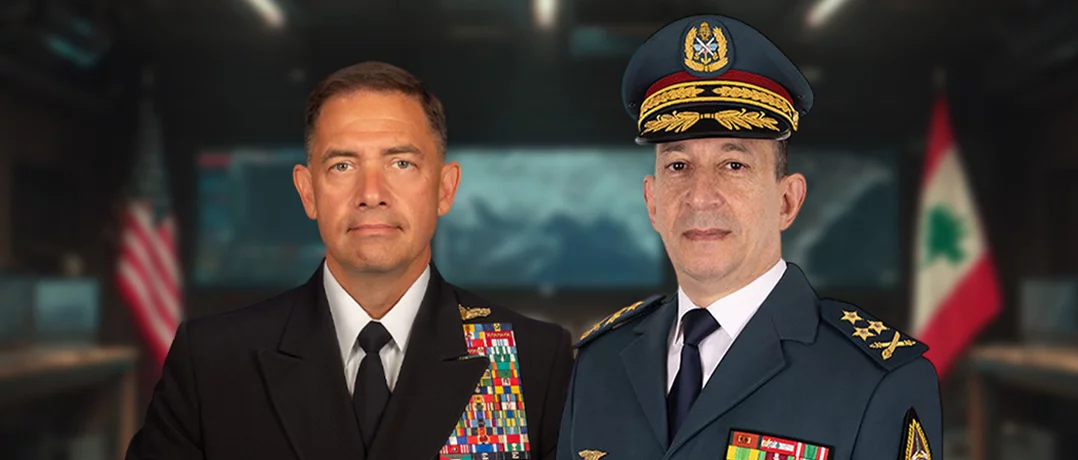
Lebanese Armed Forces (LAF) Commander General Rodolphe Haikal is scheduled to leave Lebanon on Saturday, 31 January, 2026 for an official visit to the United States (US), beginning with a stop at the headquarters of US Central Command (CENTCOM) in Tampa, Florida.
While there, he is expected to meet CENTCOM Commander General Brad Cooper for talks focused on military and security cooperation between Beirut and Washington. Discussions will also address the Military Technical Committee for Lebanon (MTC4L), referred to as the “Mechanism,” that governs operational and logistical collaboration between the two countries.
The Tampa meetings are viewed as a key prelude to Haikal’s subsequent visit to Washington, where he will hold a series of security and diplomatic engagements from 3 to 5 February. His agenda includes consultations with US officials, members of Congress and representatives of the White House, underscoring the political weight attached to the trip.
Aid, readiness and the North Litani plan
The visit comes at a sensitive moment for Lebanon’s security planning. The army leadership has been developing a framework for the second phase of a plan aimed at consolidating state control over arms north of the Litani River. The success of Haikal’s US meetings, and the future of American and international military assistance, is widely seen as linked to the credibility and feasibility of this plan.
In an anticipated report to the Council of Ministers, the army is expected to affirm its readiness to implement operations in the targeted area once it receives the necessary equipment and support. The approach reportedly stresses containment of weapons rather than abrupt disarmament, coupled with a strict commitment to avoiding clashes with local communities. The army is keen to frame the operation as a stabilization effort that protects internal calm while reinforcing state authority.
Early signs of international backing
Parallel to the diplomatic preparations, Lebanon has already begun receiving fresh military assistance. A first batch of vehicles funded through a Qatari grant was formally handed over to the army at a ceremony attended by Qatari and US representatives. The delivery is seen as an early signal of continued international investment in the Lebanese Armed Forces as a pillar of national stability.
Additionally, a conference in support of the LAF and Internal Security Forces (ISF), to be held on 5 March 2026 in Paris, has been announced. This is crucial to bolster the legitimate authorities’ capabilities, essential to remove all pretexts that Hezbollah and its allies raise regarding the readiness of the LAF to defend Lebanon from outside dangers.
Previous visit cancelation to the US
On 17 November 2025, a planned 18 November 2025 visit to Washington by LAF Commander Haikal was abruptly canceled after the US administration froze all meetings in response to a Lebanese Army statement criticizing Israel’s actions along the southern border.
The statement accused Israel of violating Lebanese sovereignty and destabilizing the region, while making no reference to Hezbollah. US officials interpreted this as misaligned with American priorities and a sign of reluctance to confront Hezbollah. Republican Senators Lindsey Graham and Joni Ernst publicly rebuked the Army, warning the stance could undermine bipartisan support and jeopardize US military aid.
As backlash grew, Haikal’s meetings and a reception organized by the Lebanese Embassy were scrapped. The issue has been elevated to Secretary of State Marco Rubio, who proceeded to review his country’s future policy toward Lebanon
In conclusion, Haikal’s trip sends promising signals towards supporting and backing the Lebanese Army. It also highlights how closely Lebanon’s internal security strategy is tied to external partnerships. The coming days are likely to clarify the scale of future support and the army’s operational latitude in the north. For Lebanese decision-makers, the challenge will be translating diplomatic momentum into practical gains on the ground without upsetting a fragile domestic balance. Could the Washington talks influence the scope and timing of the next phase?
-
-

-
The Beiruter
-
