



Europe’s proposed military mission aims to strengthen Lebanon’s Armed Forces, enhancing security capabilities as the country prepares for a post-UNIFIL era.
LAF's operational readiness: Europe's new security bet
LAF's operational readiness: Europe's new security bet
By The Beiruter | September 04, 2026

Reading time: 5 min
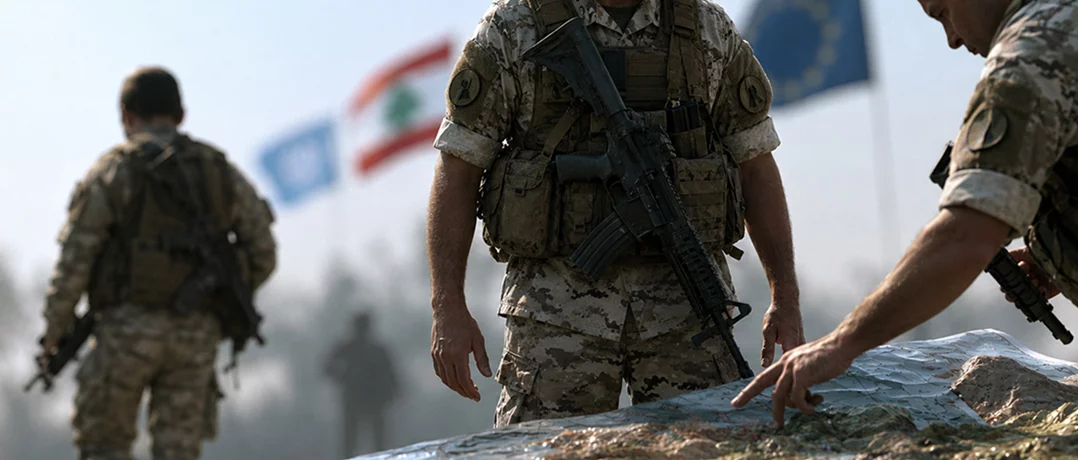
The intention of the European Union (EU) to establish a military advisory and training mission for the Lebanese Armed Forces (LAF) marks a significant evolution in international support for Lebanon’s security institutions. Rather than simply offering additional training, the initiative reflects a broader effort to strengthen the army’s operational readiness at a time when the country is preparing for a possible security transition following the planned withdrawal of the United Nations Interim Force in Lebanon (UNIFIL).
Speaking to The Beiruter, military expert General Johnny Khalaf described the proposed European mission as an important strategic development that demonstrates Europe’s commitment to investing in Lebanon’s long-term security capabilities rather than merely providing periodic aid.
More than training: Enhancing operational readiness
According to Khalaf, the principal value of the mission lies in improving the LAF’s overall readiness, particularly in areas that have become increasingly critical amid evolving regional security challenges.
The importance of the European mission is about raising the LAF’s operational readiness so it can become the cornerstone of Lebanon’s future security.
He explained that the focus extends beyond classroom instruction or tactical exercises. Instead, the mission is expected to strengthen the army’s ability to monitor borders, improve surveillance capabilities, reinforce maritime security, and enhance operational planning through specialized military advice.
European countries have supported the LAF for many years through financial assistance, equipment donations, and training programs. However, Khalaf argued that creating a dedicated European advisory and training mission represents a qualitative step forward because it institutionalizes military cooperation and provides continuous strategic guidance.
He also noted that the timing is particularly significant, as preparations intensify for the period after UNIFIL’s expected departure, making the initiative part of a broader international effort to ensure that Lebanon’s national institutions are increasingly capable of assuming greater security responsibilities.
The Lebanese Army can shoulder greater responsibility
One of the central questions surrounding Lebanon’s future security architecture is whether the LAF possess the capacity to assume wider responsibilities across the country, including border security and maritime protection.
Khalaf believes the answer is yes.
In his view, the army already has the institutional professionalism and operational experience required to carry out these missions. What it has lacked, however, is sufficient logistical, technical, and human support to fully perform these expanding responsibilities.
He stressed that modern warfare has changed dramatically over recent years, requiring militaries to possess capabilities that extend well beyond traditional infantry operations. Advanced surveillance systems, radar networks, unmanned aerial systems, secure communications, command-and-control platforms, and specialized naval assets have become essential components of effective border management and national defense.
Providing these capabilities, Khalaf argued, would significantly strengthen the LAF’s ability to operate independently and respond to future security challenges.
Building confidence through the pilot zones
Khalaf also linked the proposed European mission to the ongoing discussions surrounding the so-called “pilot zones” in southern Lebanon.
These designated areas are intended to serve as an initial test of the LAF’s ability to assume security responsibilities following Israeli withdrawals. According to Khalaf, enhanced European support could substantially improve the army’s performance within these zones while simultaneously increasing domestic, regional, and international confidence in its capabilities.
Success in these initial deployments, he explained, would create the conditions for a gradual expansion of the army’s presence into additional areas.
The pilot zones therefore represent more than a localized security arrangement. They constitute a practical evaluation of the LAF ability to manage larger security responsibilities under changing regional circumstances.
Political obstacles remain
Despite his optimism regarding the army’s capabilities, Khalaf acknowledged that significant political obstacles continue to complicate implementation.
On one side, Israel continues to express doubts regarding the LAF’s ability to effectively secure areas from which Israeli forces would withdraw. These concerns relate not only to the army’s equipment and operational capacity but also to the scope of its deployment.
On the other side, Hezbollah has yet to fully endorse the broader framework governing the expansion of the army’s deployment, creating another major challenge for implementing future security arrangements.
These competing political positions leave the LAF operating within a highly sensitive environment where military preparedness alone cannot determine outcomes.
Nevertheless, Khalaf stressed that the army’s mission should be evaluated independently of these political disagreements. If provided with sufficient logistical, financial, technical, and personnel support, he believed the institution can successfully fulfill the responsibilities assigned to it.
Diplomacy and military support must advance together
Khalaf highlighted that military assistance cannot be viewed in isolation from the ongoing diplomatic process.
Negotiations concerning southern Lebanon have continued despite persistent tensions, and he believed diplomatic efforts remain an essential component of any sustainable security arrangement. Military assistance, political dialogue, and international engagement should therefore reinforce one another rather than function as separate tracks.
He also noted that Lebanon’s leadership has repeatedly asserted that negotiated arrangements remain preferable to renewed military confrontation, making diplomatic progress an indispensable element alongside efforts to strengthen the army.
As the President has repeatedly said, reaching an agreement with Israel is preferable to going to war.
The EU mission and Kaja Kallas’s vision
The EU formally announced that it is working to launch a new military advisory and training mission for the LAF in the coming months. Speaking after a meeting of EU defense ministers in Ireland, EU High Representative for Foreign Affairs and Security Policy Kaja Kallas said the mission would provide advice and training in border security and maritime security while helping strengthen Lebanon's own security institutions.
Kallas stressed that the initiative is not intended to replace UNIFIL but rather to invest in Lebanon’s ability to provide its own security. She said planning for the mission is progressing well, with more than 10 EU member states expressing willingness to contribute personnel and resources, while the EU hopes to formally approve the mission in October.
The proposed mission comes as international discussions continue over the future security framework in southern Lebanon following the UN Security Council’s decision to end UNIFIL’s mandate on 31 December 2026. Although several proposals remain under discussion, including multinational arrangements involving European countries, the EU has consistently presented its planned mission as one designed to strengthen Lebanese state institutions rather than substitute existing peacekeeping mechanisms.
-
-

-
The Beiruter
-
