

At a moment of heightened regional tension, France is tying support for the Lebanese Armed Forces to strict conditions on disarmament, financial transparency, and political clarity ahead of a key donor conference in Paris.
Le Drian in Beirut: Supporting the army is a priority
Le Drian in Beirut: Supporting the army is a priority
By The Beiruter | January 14, 2026

Reading time: 5 min
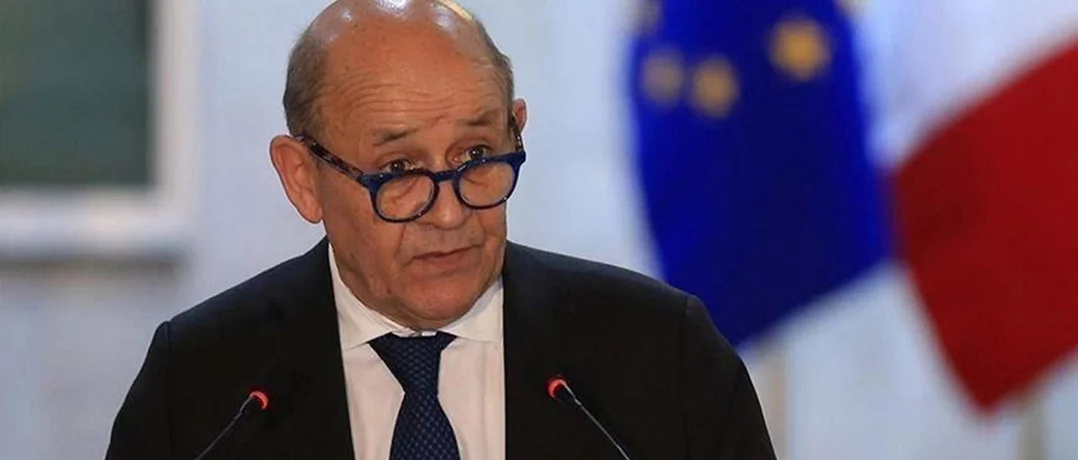
The visit of the French presidential envoy, Jean-Yves Le Drian, to Beirut comes at an extremely sensitive time for Lebanon: ongoing Israeli violations, fears of the outbreak of a new war, and an army attempting to devise a plan to implement the second phase of withdrawing the weapons of armed groups (foremost among them Hezbollah) despite all obstacles, most notably shortages in manpower and equipment.
Le Drian began his meetings with an audience with Lebanese President Joseph Aoun, followed by meetings with Prime Minister Nawaf Salam, Speaker of Parliament Nabih Berri, and Army Commander General Rodolphe Haykal.
The meetings during this visit were marked by their coincidence with a visit by the Saudi envoy to Lebanon, Prince Yazid bin Farhan, who was present at Le Drian’s meetings alongside the ambassadors of the United States, Qatar, and Egypt. This reflects a convergence of priorities among key international actors.
Although the main headline of the visit is support for the Lebanese Armed Forces, Le Drian’s meetings with Lebanese officials reveal a broader and more complex agenda. This agenda seeks to synchronize urgent military support with political clarity and economic reforms within an integrated framework viewed as essential to achieving stability and shielding Lebanon from the growing repercussions of regional conflicts.
From this perspective, Le Drian carries a clear message from Paris: the window for international assistance remains open, but it is reserved only for those willing to act within strict and clearly defined timelines.
Supporting the Lebanese Army as a strategic priority
The Lebanese Army stands at the core of Le Drian’s mission, as France regards it as the backbone of the state and a vital instrument for confronting internal disorder and regional spillovers.
Paris has strongly pushed for the convening of a conference to support the military institution, announced today for 5 March in Paris, to secure the financial and logistical assistance required not only for the army but also for the Internal Security Forces (ISF). French President Emmanuel Macron is expected to open the conference, which represents a major diplomatic effort to mobilize support from influential international actors, such as the United States and the Kingdom of Saudi Arabia.
According to available information, Paris has praised the Lebanese Army’s recent performance south of the Litani River, particularly its role in implementing the first phase of the plan to extend state authority across all Lebanese territory and to reduce armed presence outside official institutions, as outlined in its latest report submitted to the Council of Ministers on January 8, 2026. This assessment underscores France’s conviction that strengthening the army is essential to maintaining stability along the southern border and preventing the expansion of Israeli violations and operations.
Moreover, while the Lebanese Army focuses on border security and strategic defense, there is growing international consensus on the need for the ISF to gradually reclaim their role in domestic policing. This shift is necessary to end the long-standing situation in which the army has served as the primary local policing force, and thus to ensure the establishment of a healthy and effective state.
Two key issues at the forefront
1) Establishing the state’s monopoly over weapons and setting strict, clear timelines
French support for Lebanon and its army is subject to stringent conditions. Le Drian is expected to push for the more ambitious second phase north of the Litani River. The Élysée’s vision is unequivocal: the state must hold the exclusive monopoly over the use of force.
International donors are seeking a decisive timetable for the collection of all illegal weapons in Lebanon. While Paris acknowledges the internal balance and its complexities, it is increasingly concerned by ambiguity and open-ended commitments.
In this context, the US ambassador noted that “timelines are everything,” pointing to the international community’s fatigue with Lebanese ambiguity, which could undermine the credibility of the upcoming support conference. For France to succeed in rallying donors for the conference scheduled for March, Beirut must demonstrate complete clarity on this file. Vague promises of future, open-ended plans are no longer sufficient and represent a gamble Lebanon cannot afford. Accordingly, setting clear timelines has become a fundamental condition for maintaining international momentum.
This effort is coupled with the need for a negotiated settlement that favors diplomatic solutions to border tensions, regardless of the differing domestic political positions. France has coordinated with the United States, Saudi Arabia, and members of the “Quintet Committee” to strengthen the ceasefire framework and reduce the risk of miscalculation.
2) Advancing long-delayed structural economic reforms
Alongside the security file, the economy occupies a central place on Le Drian’s agenda.
The Financial Order Law remains a major burden in the French envoy’s discussions, as Paris considers it the cornerstone for restoring transparency in public finances and opening the door to negotiations with the International Monetary Fund (IMF).
The Lebanese economy cannot breathe without international liquidity, and such liquidity is tied to transparency, accountability, and reform. Le Drian is therefore pressing officials to finalize a strategy for addressing the financial gap before the spring. Without tangible reform, Paris has made clear that no financial support and no reconstruction assistance can be achieved or sustained. Thus, the message to Lebanese officials has become unmistakable: military support, economic recovery, and international confidence are interconnected, and progress in one area cannot compensate for stagnation in another.
A Long-awaited, but conditional conference
Since the election of President Joseph Aoun, there has been talk of organizing a French-sponsored conference to support the army. There has also been discussion of a conference to support the economy and reconstruction, but that issue remains postponed.
The conference to support the Lebanese Army in March 2026 represents a lifeline for the army and the ISF the only institutions currently preventing the complete collapse of the state. If the government fails to set clear timelines for weapons control and financial reform, it risks losing the support of key allies in Paris and major capitals around the world. Will Le Drian’s message yield the hoped-for results?
-
-

-
The Beiruter
-
