



Breast cancer survivors share how surgery, hair loss and lasting physical changes reshape their body image, identity and lives long after treatment ends.
Learning to live in a changed body

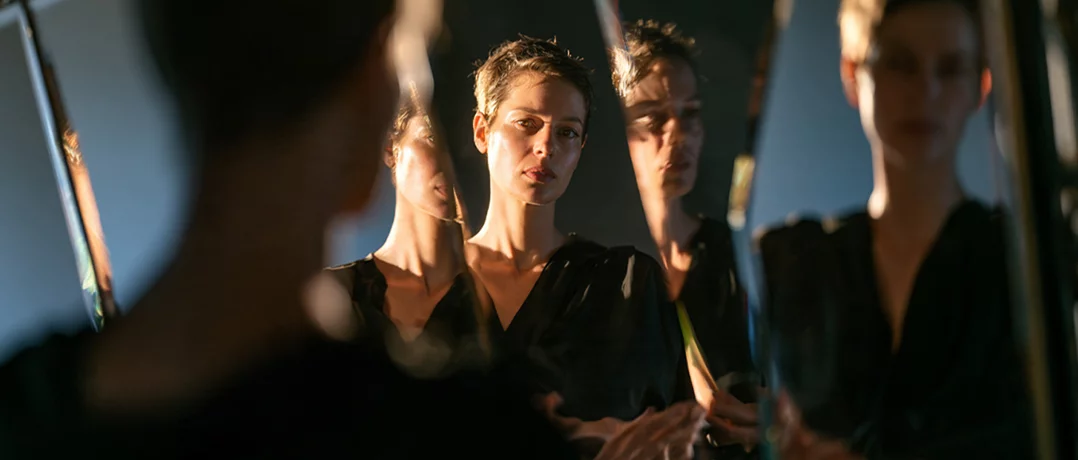
Breast cancer is the most commonly diagnosed cancer among women worldwide. Thanks to earlier detection and better treatment, survival rates have climbed, so more women now face a question that medicine rarely answers, what comes after?
Treatment often means mastectomy or lumpectomy, chemotherapy, radiation, and hormone therapy, each of which can alter the body in lasting ways. Studies consistently link these changes to body-image distress and a feeling of being a stranger in one’s own skin.
The scar in the mirror
Marwa, 43, underwent a double mastectomy followed by reconstruction. She had expected relief. “I imagined I would wake up cured and grateful,” she told The Beiruter. “Instead I stood in front of the mirror for weeks without looking down.”
Her reconstruction involved tissue expanders, temporary implants that gradually stretch the skin, followed by a second operation. “Nobody warned me the in-between stage would feel so foreign. My chest was hard and numb, like wearing armor that belonged to someone else.” Nerve damage from surgery often leaves the area without sensation, a loss many patients find harder than the scars themselves. “I couldn’t feel a hug. My children would wrap their arms around me and I only knew it from watching. That was a grief I hadn’t prepared for.” Even getting dressed became a problem. “I avoided fitted shirts for a year. I wore loose layers in summer heat so no one could guess what was underneath.”
The turning point was small. “My surgeon called it a record of what my body survived. I hated that line for a month, then started believing it.” Months later she chose nipple tattooing to complete the reconstruction. “It was about regaining some control and choosing how I wanted to look next.”
Losing a piece of you
Rania, 36, a mother of two, chemotherapy took what surgery could not hide. “Losing my hair was the moment the illness became visible to everyone,” she told The Beiruter. “Whether at the supermarket or at my kids’ school, people lowered their voices and looked at me with pity.”
Hair loss, known medically as chemotherapy-induced alopecia, affects most patients receiving certain regimens. Some try scalp-cooling caps to limit it, though results vary. Rania did not have that option. “On day sixteen, my hair came out in my hands in the shower. I sat on the tiled floor and cried until the water ran cold.” Her eyebrows and lashes followed. “Without them my face looked blank, like a sketch someone had erased.”
“I stopped recognizing the woman in family photos. I felt like I was disappearing a little more every week, and I was scared my kids would remember me that way.” She tried a wig briefly. “It itched, it slipped, and it felt like wearing a costume. I wanted to look like myself, and the wig only reminded me how far I was from that.”
Her daughter softened the blow. “She drew eyebrows on me with a makeup pencil and announced that I looked like a superhero. I laughed for the first time in weeks.” Rania wore scarves in public and kept her head bare at home.
“At home I didn’t have to hide. My son would rub my head before school, and it became our little ritual.” “When my hair grew back curly and gray at the edges, I almost mourned the old version.” Now, she keeps the curls. “I booked my first haircut months later and my hands were shaking. It was just a trim, but it was my world changing back.”
The pressure to be okay
Wadad, 57, found that the hardest part of recovery began after the congratulations ended. “Everyone kept telling me I was a fighter and that I should be grateful,” she remembered. “I smiled and nodded. Inside I kept thinking, survival was supposed to feel better than this.”
Her body had changed in ways that were easy to overlook. After surgery, lymph nodes were removed from her underarm, which left her with lymphedema, a swelling of the arm caused by fluid that can no longer drain properly. “My right arm felt heavy and tight, like it belonged to someone else. I couldn’t carry groceries or lift my grandson.” Fatigue followed, along with what many patients call chemo brain, a fog of forgotten words and misplaced thoughts that can linger for months. “I had run my household for thirty years. Suddenly I couldn’t remember why I’d walked into a room.”
The harder shift was in how people treated her. “My family had become protective, almost too much. My daughter wouldn’t let me cook. My husband hovered. They meant well, but I felt like a patient in my own home instead of the woman who held everything together.”
Healing from breast cancer extends well past the operating room, and the questions of identity and self-recognition deserve as much attention as the tumor itself.
-
-

-
The Beiruter
-
