



In Lebanon, coffee is never just coffee. As restaurants are urged to rename “Turkish coffee” as “Lebanese coffee,” a familiar cup becomes a conversation about identity, heritage and who gets to name what we live every day.
Lebanese coffee: A cultural shift, a national statement
Lebanese coffee: A cultural shift, a national statement
By The Beiruter | February 12, 2026

Reading time: 3 min
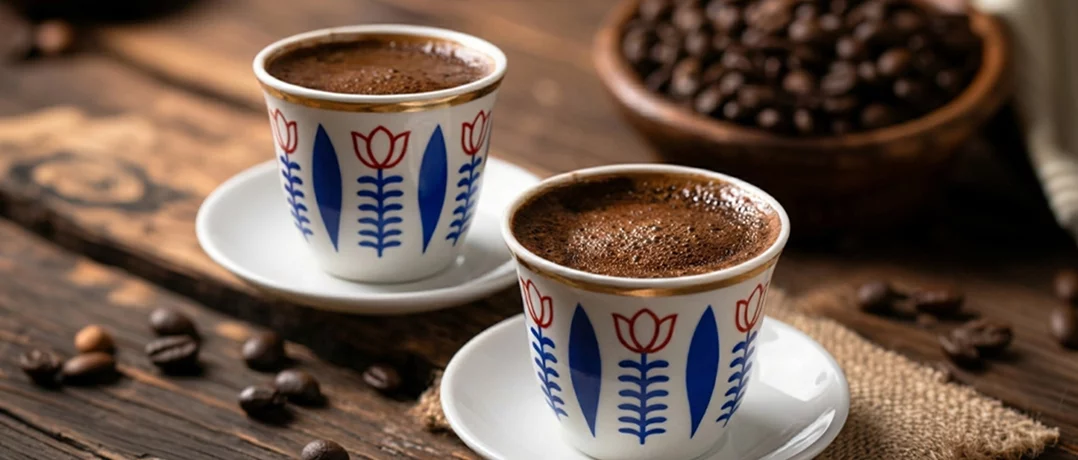
The Syndicate of Restaurant Owners in Lebanon has called on tourism establishments across the country to replace the term “Turkish coffee” with “Lebanese coffee” on menus, advertisements, and promotional materials. In a statement, the syndicate urged owners to instruct staff to use the new term when speaking to customers, framing the move as a matter of national identity.
“Out of concern for preserving Lebanese identity, especially in the tourism and restaurant sector, which represents Lebanon’s cultural and civilizational face, we urge all tourism establishments, restaurants, and cafés to use the name ‘Lebanese Coffee’ instead of ‘Turkish Coffee,’” the statement read.
The story of our coffee
In Lebanon, coffee is never just coffee. It is the first thing offered to a guest. It is poured after funerals, served at engagements, shared after arguments. It marks reconciliation, negotiation, and hospitality. Refusing coffee can feel like refusing connection. Accepting it means stepping into a social contract, even if only for ten minutes. It rises from kitchens in the morning and lingers in offices in the afternoon. It sits beside political debates and family gossip. Coffee, in Lebanon, is intimacy.
Historically, what many call “Turkish coffee” refers to a method of preparation: finely ground coffee simmered in a small pot (rakweh or cezve) and served unfiltered.
The method spread throughout the Ottoman Empire, becoming embedded in cultures across the Levant, the Balkans, and North Africa. Today, the same preparation style is called Greek coffee in Greece, Arabic coffee in parts of the Arab world, Bosnian coffee in Bosnia, and Turkish coffee in Turkey.
In 2013, Turkey successfully registered “Turkish coffee” on UNESCO’s Intangible Cultural Heritage list, recognizing the tradition as part of its cultural practice. But in Lebanon, the name “Turkish” has long felt like a historical leftover rather than a cultural fit.
The politics of naming
Renaming “Turkish coffee” to “Lebanese coffee” is highly symbolic. Lebanon’s history with Ottoman rule remains layered and complex. Language, architecture, food, and administrative systems all carry its imprint. But in moments of heightened national consciousness, there is often a push to reclaim and redefine cultural markers.
The syndicate’s call comes framed as a way to assert ownership over something that has become inseparable from Lebanese daily life.
Unifying the name, the statement argues, is “a key step in expressing pride in our national identity and Lebanese heritage.”
Coffee as a cultural mirror
If anything reveals Lebanon’s paradox, it is coffee. It is ancient and modern. Simple and ceremonial. Regional and intensely local. It is served in five-star hotels and in roadside kiosks. It is part of high-level political meetings and quiet morning rituals between grandparents. Even the reading of coffee grounds, tasseography, remains embedded in Lebanese folklore. “Shou 2aratilek el 2ahwe?” is both joke and prophecy.
In a country where identity is constantly negotiated, politically, culturally, economically, coffee remains one of the few constants. Perhaps that is why its name matters. In Lebanon, coffee is never simply about caffeine. It’s about who we are.
-
-

-
The Beiruter
-
