



Lebanese cuisine developed into a naturally healthy, plant-forward food culture centuries before modern nutrition science popularized the Mediterranean diet.
Lebanese cuisine: The blueprint for modern healthy eating
Lebanese cuisine: The blueprint for modern healthy eating
By The Beiruter | May 31, 2026

Reading time: 6 min
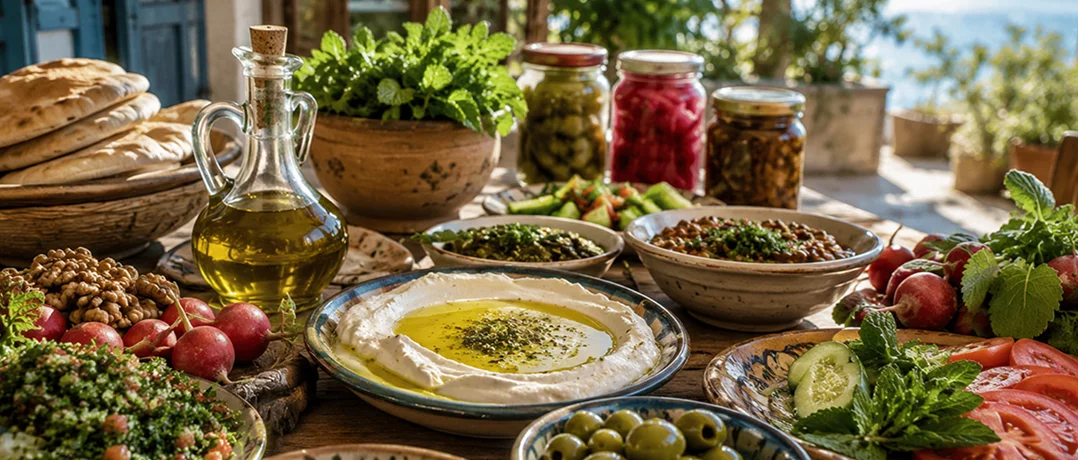
Lebanese cuisine is often described internationally as “Mediterranean,” but the reality is far more complex than a simple regional label. What the world today recognizes as Lebanese food is the result of thousands of years of agricultural evolution, trade networks, migration, geography, and cultural exchange layered onto one of the oldest continuously inhabited regions in human history.
Long before modern nutrition science promoted olive oil, fermented foods, legumes, whole grains, and fresh vegetables as ideal dietary foundations, these ingredients already formed the basis of everyday Lebanese cooking.
In many ways, Lebanese cuisine developed into a naturally balanced nutritional system centuries before the concept of “healthy eating” existed.
Today, researchers studying Mediterranean dietary models consistently identify traditional Lebanese food patterns as highly aligned with nutritional principles associated with cardiovascular health, metabolic balance, longevity, gut health, and reduced chronic disease risk. But to understand why Lebanese cuisine became globally respected both culturally and nutritionally, it is necessary to understand where it came from first.
A cuisine shaped by geography and civilization
Lebanon’s food culture developed at the crossroads of the Mediterranean basin, the Levant, and ancient trade routes connecting Europe, Asia, and North Africa. Over centuries, Phoenician, Roman, Arab, Ottoman, Persian, and later French influences all contributed ingredients, techniques, and culinary traditions that eventually merged into modern Lebanese cuisine.
The Phoenicians, whose maritime trade networks dominated much of the Mediterranean around 1200 BCE, played a major role in spreading products that remain central to Lebanese food today, particularly olive oil, wine, grains, and preserved foods. Archaeological evidence from the Levant shows olive cultivation and wine production in the region dating back several millennia.
Lebanon’s mountainous terrain also helped diversify the cuisine itself. Coastal cities historically depended more on seafood, citrus, and trade-based ingredients, while mountain villages developed preservation traditions necessary for surviving long winters. This gave rise to “mouneh,” a system of food preservation involving drying, fermenting, pickling, curing, and storing seasonal produce.
Even today, many Lebanese households continue preparing dried herbs, kishk, pickled vegetables, jams, olives, tomato paste, dried figs, preserved grapes, labneh balls stored in olive oil.
These traditions were not simply cultural habits. Historically, they were survival systems rooted in seasonal agriculture and nutritional sustainability.
Why Lebanese cuisine became naturally healthy
Modern nutritional science increasingly validates many of the core foundations of traditional Lebanese food.
The cuisine relies heavily on herbs, yogurt, fermented foods, grains, nuts, garlic, onions, citrus, low levels of heavily processed ingredients. This composition closely resembles the Mediterranean diet, which numerous long-term studies associate with lower risks of: cardiovascular disease, hypertension, type 2 diabetes, obesity, stroke, inflammatory diseases, cognitive decline.
One of the most important components is olive oil.
Extra virgin olive oil, central to Lebanese cooking, contains high levels of monounsaturated fats and polyphenols, compounds associated with reduced inflammation and improved cardiovascular function. Studies published in journals such as The New England Journal of Medicine have repeatedly linked Mediterranean olive-oil-based diets to lower heart disease risk.
In Lebanese cuisine, olive oil is not simply a garnish. It forms a structural foundation of the diet itself, drizzled over labneh, mixed into hummus, used in cooking vegetables, integrated into salads, preserved with herbs and cheeses, consumed daily with bread.
Unlike industrial seed oils common in highly processed diets, traditional olive oil consumption evolved within largely homemade food systems.
The science behind Lebanese ingredients
Many ingredients common in Lebanese households are now heavily studied for their nutritional properties.
Garlic
Garlic appears constantly in Lebanese cuisine, from toum and marinades to soups and meat dishes. Garlic contains sulfur compounds such as allicin, which researchers associate with antimicrobial properties, cardiovascular support, and potential blood pressure reduction.
Parsley
Tabbouleh, one of Lebanon’s most internationally recognized dishes, is built primarily around parsley rather than grains. Parsley contains high levels of vitamin K, antioxidants, and flavonoids associated with anti-inflammatory effects.
Chickpeas and legumes
Hummus, balila, lentil soups, foul, and numerous village dishes depend heavily on legumes. Chickpeas and lentils provide plant protein, fiber, iron, magnesium, and slow-digesting carbohydrates that support blood sugar regulation and digestive health.
Research increasingly links legume-rich diets to reduced cardiovascular disease risk and improved metabolic health.
Yogurt and labneh
Fermented dairy products such as yogurt and labneh contain probiotics beneficial for gut microbiome diversity. Lebanese cuisine historically incorporated fermented dairy long before probiotic science became commercially popularized.
Lemon and vinegar
Acidic ingredients dominate Lebanese flavor profiles. Lemon juice and vinegar are heavily used in salads, marinades, lentils, vegetables, and preservation systems. Beyond flavor, acidic ingredients help balance meals while reducing dependence on excessive sodium or processed sauces.
Fresh herbs
Mint, zaatar, thyme, oregano, cinnamon, sumac, and coriander contribute not only flavor but antioxidant and antimicrobial compounds studied extensively in nutritional science.
Sumac, commonly used in Lebanese cuisine, contains polyphenols and antioxidants increasingly researched for anti-inflammatory properties.
Lebanese cuisine was historically plant-forward
One of the least understood aspects of Lebanese cuisine internationally is that much of it is naturally plant-based without intentionally trying to be vegetarian.
Dishes like moujadara, lentil stews, stuffed grape leaves, fasolia, hindbeh, hummus, baba ghanouj, loubieh, vegetable stews and falafel formed the nutritional backbone of many Lebanese households for generations.
Meat often functioned as a complement rather than the center of every meal. This dietary structure unintentionally mirrors many modern nutritional recommendations encouraging lower processed meat consumption and higher fiber intake.
Mezze: more than small plates
The Lebanese mezze system itself reflects a sophisticated nutritional and social structure.
Rather than serving one oversized dish, mezze introduces multiple smaller dishes simultaneously. This creates dietary diversity within a single meal while encouraging slower communal eating.
Studies increasingly suggest that slower eating patterns and social dining environments contribute positively to digestion, satiety, and psychological well-being.
Mezze also naturally limits monotony. A single Lebanese meal may contain fiber, plant proteins, antioxidants, fresh produce, complex carbohydrates… all within one sitting.
The role of bread and grains
Lebanese cuisine also historically depended on grains with relatively low industrial processing compared to many modern Western diets.
Bulgur, used heavily in kibbeh and tabbouleh, is a whole grain rich in fiber, iron, magnesium, and B vitamins. Unlike refined white flour products, bulgur retains much of the grain’s nutritional structure.
Traditional Lebanese bread historically functioned as part of meals rather than processed snack consumption.
How Lebanese cuisine conquered the world
Lebanese cuisine became international primarily through migration.
The Lebanese diaspora, estimated in the millions globally, carried recipes and food traditions across Latin America, West Africa, Europe, North America, and Australia throughout the 19th and 20th centuries.
Unlike cuisines exported primarily through corporations or industrial chains, Lebanese food expanded through family businesses, bakeries, small restaurants, and immigrant communities.
Over time hummus became globally mainstream, shawarma, man’oushe, falafel, inspired international fast-food adaptations, tabbouleh entered supermarket shelves. Today, Lebanese cuisine is considered one of the world’s most recognizable Mediterranean food cultures.
Long before wellness trends, calorie tracking, and “clean eating” became global obsessions, Lebanese households were already built around the principles modern nutrition now promotes: fresh vegetables, olive oil, grains, legumes, herbs, fermented foods, seasonal ingredients, and meals made slowly at home. What the world today studies in laboratories and markets as the Mediterranean diet was, for generations, simply the Lebanese way of eating.
Perhaps that is why Lebanese cuisine continues to endure globally. It was never designed as a trend. It evolved naturally over centuries around balance, community, agriculture, and health itself.
-
-

-
The Beiruter
-
