International Farm Workers Day honors the resilience and dedication of Lebanon's farm workers, whose hands have cultivated the land for generations, despite growing challenges.




International Farm Workers Day honors the resilience and dedication of Lebanon's farm workers, whose hands have cultivated the land for generations, despite growing challenges.

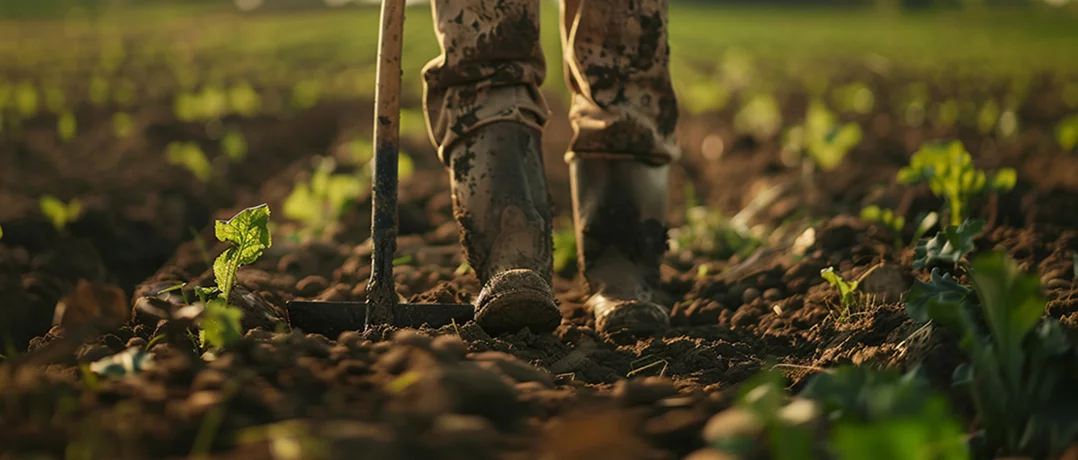
International Farm Workers Day is an invitation to pause and recognize what we so easily take for granted. Behind every vine-ripened tomato, every bunch of thyme, every sack of wheat is a human story, of early mornings, aching backs, seasonal uncertainty, and an almost stubborn love for the land.
Lebanon is a small country with an outsized agricultural heritage. The ancient Phoenicians exported cedar and traded in the produce of a fertile coastal plain. The Romans grew grain in the Bekaa. The Ottoman era bequeathed a tradition of terrace-building so sophisticated that Lebanon's stone agricultural terraces are now recognized as a landscape of global cultural significance. Generation after generation, farming communities have shaped this land as much as the land has shaped them.
This variety owes itself not to geography alone, but to the accumulated knowledge of farm workers who learned their craft from parents and grandparents, adapting ancient techniques to modern needs and stubbornly keeping traditions alive when the economics made it tempting to abandon them.
Zemerrod Chidiac, Bcharre
"Farming is a conversation with the land," Zemerrod Chidiac tells The Beiruter. She has been farming since her father Malek taught her when she was just six years old. "Many see the fields and the harvests, but they do not see the hours, the waiting, the listening. The land asks for patience, and it gives back."
As one of the few women cultivating these rugged terrains, Zemerrod speaks with a calm authority shaped by years of labor and observation. "Being a female farmer in Lebanon is a path both hard and sacred. People doubt your strength before they see your hands, but strength is not only in muscle, it is in knowing the seasons, understanding the soil, respecting the rain."
She pauses to pick a handful of freshly harvested apples, their skin glistening in the morning sun. "Each fruit tells a story. Some days, the storm destroys what we’ve nurtured. Other days, the sun blesses us with a harvest beyond hope. That is life on the farm”
Zemerrod reflects on the deeper meaning of her work. "I farm not only to feed others but to honor those who came before me, to remind everyone that our connection to this land is is spiritual. Every seed I plant carries the history of my family, of Bcharre."
George Imad, Der El Ahmar
"Farming is patience dressed in sweat," says George Imad, vegetable farmer in the fertile fields of Der El Ahmar. "Some mornings, the earth feels heavy, almost reluctant to give. But if you meet it with respect, it opens itself to you."
For George, farming is his identity. "I was born in these lands, my father before me, and his father before him. Every furrow I plow is a line in a story that has been told for generations. Farming teaches you humility. You are a caretaker."
He tells The Beiruter, "people often think it is easy to work the land, but every harvest is a risk, every season a test. Droughts, market prices… the land does not forgive carelessness. There is still joy in it, satisfaction." George reflects on what it means to be a farmer in Lebanon today. "This is a life that teaches patience. The work is hard, yes, but it is noble. We are nurturing the memory of our people."
Lebanese agriculture today faces pressures that would have seemed abstract to earlier generations. The economic collapse that began in 2019 has made inputs, seeds, fuel, fertilizer, prohibitively expensive for many smallholders. Climate change is altering the rainfall patterns and temperature ranges that generations of farmers learned to read. Rural depopulation, as younger people move to cities or emigrate, threatens to leave irreplaceable agricultural knowledge without anyone to inherit it.
And yet the farms continue to produce. The hands continue to work. There is a resilience in Lebanese agricultural communities that resists easy romanticism but deserves genuine respect, a refusal to surrender the land simply because the conditions have become harder. In a country that has endured so much disruption, the persistence of its farm workers is itself a form of patriotism.
On Farm Workers Day, attention is the simplest gift we can give. To seek out local produce. To honor the labor behind fair prices. To teach children that food does not appear on shelves, it is born from soil, sweat, and devotion. The hands that feed Lebanon rise before dawn, season after season, rain or shine, year after year. One day, surely, must belong to them, for the resilience they pour into the land that sustains us all.

