On World Poetry Day, Lebanon’s greatest poets remind us how words became a form of survival, identity, and resistance through decades of upheaval.


On World Poetry Day, Lebanon’s greatest poets remind us how words became a form of survival, identity, and resistance through decades of upheaval.

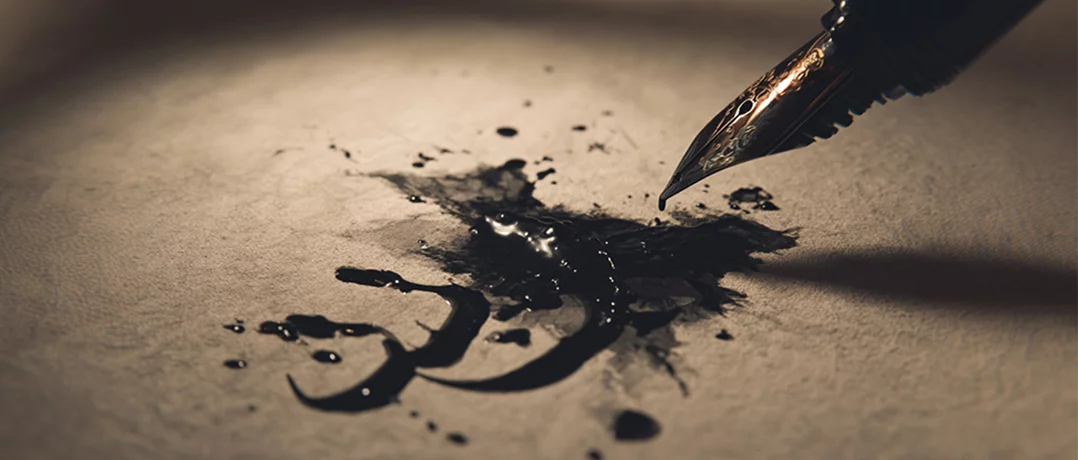
On World Poetry Day, a UNESCO-designated moment, we honor the spoken and written word. For many countries it is a pleasant occasion. For Lebanon, it is something closer to a reckoning. It is the form the country reaches for when it has no other language left.
In Lebanon, poetry has always been art, survival, resistance, and the most precise instrument available for recording what official history will later try to erase. The country's poets have written through civil war, through occupation, through waves of emigration that hollowed out villages and filled foreign cities with people carrying their homeland in their chests like a stone.
On this World Poetry Day, we remember them: the masters who gave Lebanon a voice the world recognized.
Gibran Khalil Gibran
1883 - 1931 · Bcharre, Mount Lebanon
No Lebanese poet has travelled further. Gibran emigrated to Boston as a child and spent his life writing in both Arabic and English, eventually producing The Prophet, one of the best-selling poetry collections in history, translated into more than a hundred languages. But it is his Arabic prose-poetry, raw with longing for a Lebanon he could only return to in letters, that carries the deeper wound. He was among the founders of the Mahjar literary movement, insisting that Arabic literature had to shed its rigid classical forms and speak plainly, beautifully, to the human condition. He remains the most-read Arab author and poet in the world.
Mikhail Naimy
1889 - 1988 · Baskinta, Mount Lebanon
A century of living, and almost all of it spent writing. Naimy was Gibran's closest literary companion in New York, co-founder of the Pen League (Ar-Rabita al-Qalamiyya), and one of the most searching philosophical voices in Arabic literature. He was interested in silence, in the soul, in the space between words. Naimy’s masterpiece, The Book of Mirdad, is a timeless meditation on love, wisdom, and the human soul. Its words continue to inspire readers around the world, offering guidance and reflection across generations. He eventually returned to his village in the Lebanese mountains, where he wrote and lived until the end of a life that felt almost mythically long.
Talal Haidar
1937 · Baalbeck
Talal Haidar is renowned for his poetry in Lebanese dialect, a deliberate choice to bring poetry closer to the people and reflect local culture authentically. His works have been performed by celebrated artists, including Fairouz, who sang his poem “Wahdon”, composed by Ziad Rahbani. Beyond poetry, he contributed to Lebanese theater, collaborating with Saïd Akl and the Caracalla troupe.
His poetry is celebrated for its ability to touch hearts and transcend linguistic and cultural barriers. Haïdar received the Said Akl Prize twice, cementing his place as an emblematic figure in Lebanese literature. His work reflects the richness and complexity of the human soul, carrying both local and international influences, and continues to inspire readers and audiences across generations.
Elia Abu Madi
1889 - 1957 · Mouhaidtha, Mount Lebanon
Abu Madi emigrated first to Egypt, then to the United States, where he founded the Arabic-language newspaper As-Samir. His poetry, warm and philosophically restless, asked the oldest questions: Why are we here? Where do we go? with a gentle wonder that made him enormously beloved across the Arab world. His poem Talaasim ("Enigmas") remains one of the most recited poems in Arabic, a long meditation on uncertainty that ends not in despair but in a kind of luminous acceptance.
"I came not knowing from whence, but I came. And I saw a path before me, and I walked."
Said Akl
1912 - 2014 · Zahle, Bekaa Valley
A poet of extraordinary longevity and singular controversy, Said Akl lived past one hundred and remained productive until nearly the end. He championed writing Lebanese Arabic in the Latin alphabet, a radical act that drew passionate followers and fierce opponents, and he wrote plays, love poetry, and philosophical verse that exalted the Lebanese identity as something distinct and ancient. His poem Ya Bayti became one of the most beloved songs in Lebanese music.
Unsi al-Hajj
1937 - 2014 · Shakhroub, Metn
His 1960 collection Lan ("No") introduced prose poetry, poetry without metre, without rhyme, without apology, to Arabic literature, scandalizing the establishment and liberating a generation of writers. His preface alone was a manifesto. Al-Hajj spent decades as a literary editor at An-Nahar newspaper, shaping Lebanese cultural life as much through his editorial eye as through his pen. He remains the father of Arabic free verse.
Lebanon is a small country that has produced a disproportionate share of the world's Arabic literature. This is the result of a particular pressure, the pressure of a society suspended between East and West, between the mountains and the sea, between memory and the need to forget. Poetry is what happens when that pressure finds no other release.
It matters that we read these poets, not only on World Poetry Day but throughout the year, not only in Lebanese homes but in the places where Lebanese people have carried their books in exile. Because in them is a Lebanon that no political crisis has managed to destroy, a Lebanon of language, of extraordinary beauty, of a refusal to be silenced that goes back further than the modern state and will outlast whatever comes next.
Words, as the poets always knew, survive. The cedars survive. And so does the voice of a nation that has never stopped speaking, even when it had every reason to go quiet.

