

Lebanon launches sweeping electricity reforms through forensic audits, stricter bill collection, and stronger governance to improve accountability, financial sustainability, and sector performance.
Lebanon’s power sector overhaul begins

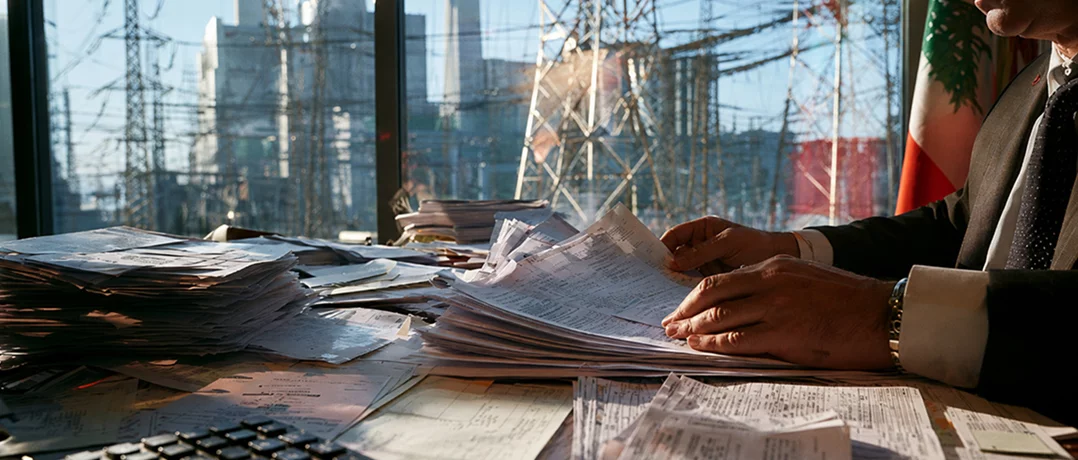
Lebanon’s electricity sector has entered a new phase of reform as authorities pursue greater financial accountability while attempting to stabilize the country’s struggling power system. In recent days, the Ministry of Energy and Water has launched a long-awaited forensic audit into the controversial power ship contracts and related fuel procurement deals, while Electricité du Liban (EDL) has begun cutting electricity to public institutions that failed to pay outstanding bills.
Although the two developments address different aspects of the sector, they reflect a common objective: strengthening governance, improving financial discipline, and reducing the burden that decades of losses and inefficiencies have placed on the Lebanese state.
Government launches forensic audit into power ship contracts
Minister of Energy and Water Joe Saddi announced the launch of a forensic audit covering the floating power plant contracts signed between 2012 and 2017, together with the fuel supply agreements associated with them. The initiative implements the current government’s ministerial policy statement, which commits to conducting forensic and financial audits across ministries, public institutions, and government agencies.
The power ships were initially introduced in 2012 as an emergency solution to Lebanon’s electricity shortages. While intended as a temporary measure, the contracts remained in place for several years and were extended multiple times, prompting repeated allegations concerning procurement procedures, transparency, commissions, and the overall cost to the Lebanese treasury.
Speaking during a press conference attended by EDL Director General Kamal Hayek and Acting Director General of Investment Fadia Hayek, Saddi stressed that the audit is intended to remove the issue from political disputes and establish the facts through an independent legal process.
The Lebanese people have the right to know how their money was spent and whether there was any waste or corruption.
Procurement process follows public procurement law
The Ministry detailed the steps that led to the launch of the tender.
The draft terms of reference were first submitted to the Public Procurement Authority on 18 February 2026, before being revised following the Authority’s comments. The Authority subsequently requested that the audit cover, at a minimum, all power ship contracts signed between 2012 and 2017, together with the related fuel procurement agreements.
Cabinet approved the necessary funding in April 2026, followed by a budget transfer decree in July and approval of the international arbitration clause in August.
On 21 August, the Ministry officially launched the tender by publishing the specifications on the Public Procurement Authority’s electronic platform. The deadline for opening bids has been set for 15 October 2026.
Saddi also announced that the government has launched a separate forensic audit tender covering the Jannah Dam project, describing both initiatives as part of a broader commitment to transparency, accountability, and good governance.
Renewed debate over electricity generation costs
The announcement also revived long-standing political debate surrounding the financial performance of the floating power plants.
Responding to previous claims that electricity generated by the power ships cost around 14 cents per kilowatt-hour, Saddi argued that documented figures from EDL show considerably higher production costs.
According to the ministry, electricity generated by the power ships cost approximately 19.71 cents per kilowatt-hour in 2014, compared with 17.51 cents at Deir Ammar and 17.02 cents at Zahrani. In 2015, production costs stood at 13 cents for the power ships, compared with 10.51 cents at Deir Ammar and 11.10 cents at Zahrani.
The minister further stated that leasing the power ships for several years ultimately exceeded the cost of purchasing them outright, while noting that comparisons between production costs and consumer electricity tariffs are misleading because tariffs also include transmission, distribution, and system losses.
He concluded that further discussion should now be left to the forensic audit process.
EDL adopts stricter measures against unpaid public institutions
Alongside the government’s accountability drive, EDL has adopted tougher enforcement measures aimed at improving its financial position.
After granting government entities a 5-working-day deadline to settle outstanding electricity bills, EDL has begun disconnecting electricity from ministries, public institutions, municipalities, and other public bodies that failed to make payments or reach repayment agreements.
The utility stressed that the objective is not simply to disconnect electricity but to recover public funds owed to the company and ensure equal treatment among all consumers. Nevertheless, government hospitals were exempted from the measure on humanitarian grounds.
In this context, several public institutions responded to the warning by settling their dues before enforcement began. The Lebanese Armed Forces (LAF) paid their outstanding electricity bills, while the Beirut and Mount Lebanon Water Establishment also complied with the payment request.
Electricity was nevertheless disconnected from several government entities that remained in default, including the Ministry of Public Works and Transport, land registry offices, the Cadastre Department, the National Social Security Fund, the Lebanese Agricultural Research Institute, the Camille Chamoun Sports City, and the National Council for Scientific Research.
Authorities are also seeking a separate solution for the South Lebanon Water Establishment, whose financial position has been affected after residents in war-affected southern areas were exempted from certain taxes following the conflict with Israel.
Outstanding debts continue to weigh on the electricity sector
EDL says unpaid bills from public institutions represent a major financial challenge at a time when fuel costs have increased significantly. The largest unpaid balances belong to Lebanon’s four regional water establishments, whose combined arrears total approximately $135.6 million.
Among government ministries, the Ministry of Telecommunications records the highest outstanding balance at roughly $8.5 million, followed by the Ministry of Finance, the Ministry of Education, the Ministry of Public Works and Transport, the Ministry of Justice, and the Ministry of Public Health.
Other significant debts include approximately $29.4 million owed by the Directorate General of Civil Aviation, $11.8 million by the LAF prior to payment, $4.6 million by the Internal Security Forces (ISF), $4.4 million by Rafik Hariri University Hospital, and approximately $800,000 by the Lebanese University (LU).
In addition to stricter collection efforts, EDL has announced plans to intensify campaigns against electricity theft, improve bill collection, reduce technical and non-technical losses, and adjust electricity supply according to collection rates in different regions.
Therefore, the launch of the forensic audit and EDL’s stricter approach to collecting unpaid electricity bills represent two complementary pillars of the government’s broader effort to reform Lebanon’s electricity sector. Together, these initiatives signal an attempt to address both the legacy of past governance failures and the immediate financial pressures threatening Lebanon’s already fragile electricity system.
-
-

-
The Beiruter
-
