



Lebanon is portrayed as a country clinging to its past while enduring a collapsing present and an uncertain future.
Lebanon.. A past that feels like a collective exile
Lebanon.. A past that feels like a collective exile
By Omar Harkous | November 28, 2025

Reading time: 5 min
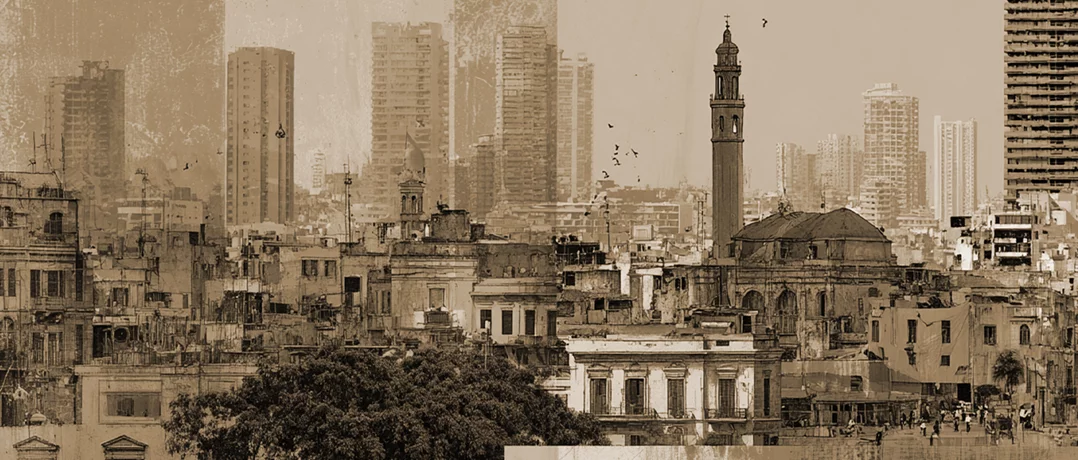
In most countries, progress is measured by what people accomplish today and what they plan for tomorrow. Nations are built on forward-looking visions, and societies are judged by their ability to dream about what comes next, except in Lebanon. Here, the past overshadows both the present and the future, becoming a psychological and collective refuge to which Lebanese escape whenever daily life tightens, the economy stumbles, or the political system fails.
Lebanon, once a laboratory for Arab modernity, has become one of the region’s most deeply immersed societies in perpetual nostalgia. The past is summoned every time hope recedes and every time state institutions inch closer to collapse.
Lebanese people recall the 1950s and 1960s as if they were chapters from a perfect novel, “the golden age”, as it is often described, marked by economic prosperity, press freedom, social openness, and the emergence of a modern state. Much of this progress began taking shape after independence, gaining momentum during the presidencies of Camille Chamoun and Fouad Chehab, and even extending into the better years of later administrations.
It was the era of dam construction, nationwide highways, public infrastructure, telephone networks, power plants, and oil refineries in Zahrani and Tripoli. The airport was built, the port expanded, and public administrative and planning institutions took form. The founding of the Lebanese University, alongside the American University of Beirut and Saint Joseph University, helped shape a generation that contributed to national development. It was not a perfect country, but one steadily moving toward a viable model of statehood.
War.. Mourning a country that once was
When war erupted in 1975, Lebanese society plunged into the darkest chapter of its modern history. Violence pushed people into longing for the lives they once lived, or imagined their parents lived. The brutality of war fixated their gaze on the past, which always appeared better than a collapsing present.
As hotels and cinemas burned in downtown Beirut, people remembered the days when foreign and Arab films were shot in the city's streets and remote villages, when movie theaters ran screenings day and night, and when modern and traditional architecture coexisted in a city of life, complete with international beauty pageants and fashion shows on Baalbek’s ancient stages.
When electricity was cut during the war, they recalled the early days when power first reached remote villages, when the state-owned utility actually generated annual surpluses. And when militias looted banks, including the British Bank, their memory leapt back to the era of Intra Bank, its pivotal role in shaping modern finance, and the state’s innovative interventions after its collapse.
With the war’s end in 1990 came new hope. The “country is moving” era began under the Taif Agreement and the arrival of Rafik Hariri, seen by many as a continuation of the earlier state-building momentum, despite Syrian tutelage, political obstacles, and the persistent corruption of former militia leaders now entrenched in power.
Beirut was rebuilt in vibrant colors, downtown reopened, global economic links were restored, and electricity returned 24/7. These achievements revived memories of the “golden” decades and linked Lebanon’s recent history to a deeper past. Yet they failed to rebuild a state capable of confronting armed parallel forces, and the entrenched corruption was protected in the name of “sectarian rights” rather than national interest.
2005.. A new era of loss
The 2005 assassination of Hariri marked a decisive turning point. Instead of opening a new chapter, it triggered a collective mourning for the years of relative peace, economic stability, and the dream of a modern state.
As conflict with Hezbollah over its weapons and regional role intensified, sovereignists believed they could distance the group from regional axes. Instead, Lebanon slid into a slow, unending decline.
With every new crisis, nostalgia grew sharper. The memories of the 1950s, 1960s, 1990s, and early 2000s fused into a single idealized past, one enriched with dreams, some real and others imagined.
After the Doha Agreement, the relationship with militias became formalized, and armed groups emerged as the ultimate decision-makers. Lebanon no longer experienced intermittent crises; it entered a trajectory of comprehensive collapse. Electricity gradually disappeared despite enormous allocated budgets. Financial stability eroded amid growing international sanctions against entities linked to terrorism and narcotics. Public debt doubled, institutions decayed, and political leaders became partners in every project, devouring the country through a corruption system protected by the dominant armed force under the slogan: “Army, People, Resistance”.
The Beirut Port explosion was not merely the most enormous non-nuclear blast in history; it was a condensed symbol of decades of corruption, neglect, and institutional collapse, intertwined with militia involvement in the Syrian war. It detonated what remained of Lebanese trust in a paralyzed state that could no longer even belong to the nation’s aspirations. Instead of opening the door to accountability and reconstruction, it opened a door to mass emigration.
The aftermath strengthened the sense that the past was brighter and the present unbearably bleak. The future became so uncertain that many Lebanese could no longer imagine it.
Meanwhile… Elsewhere
In contrast, much of the Arab region is moving forward. People elsewhere feel their present is better than their past. They believe the future will taste different.
In Saudi Arabia, major investment projects are accelerating, new cities are rising, economic diversification is advancing rapidly, AI production hubs are expanding, and a clear national vision fuels a collective optimism.
In the UAE, the post-oil era is unfolding, with initiatives becoming part of daily life for residents from around the world.
Despite challenges, Jordanians maintain hope, with a cohesive state and a society that views tomorrow as a potential opportunity.
In Egypt, large-scale infrastructure projects continue in every direction to reshape an economy suited to the country’s sheer size.
Even in Syria, despite the complexity and the unresolved crises, the civil war has ended or nearly so, and people speak of a “return to life". That alone signals a future.
The past cannot build a state
Iraq, Syria, Yemen, and Lebanon represent a losing quartet, countries where Iran-backed militias dominate, and national decision-making is absent. Dreams fade, people search for better lives elsewhere, and the future hangs suspended between a beautiful past and a suffocating present. With no state project, no new social contract, and no capable ruling class, societies survive on memories that no longer resemble reality.
Lebanon’s nostalgia is not a crime, but it is not a solution. The past is beautiful, but it cannot light a home without electricity, restore people’s deposits, halt economic collapse, combat corruption, or defend sovereignty. What Lebanon needs is not a return to yesterday’s legends but a new state-building project. Nostalgia may offer comfort, but it will not save a collapsing nation.
A future will not be born from memory, but from political courage, from recovering state authority, and from a clear national decision that restores Lebanon’s ability to dream, not merely to mourn.
Without such a shift, the Lebanese will remain stuck in the traffic of their own history, remembering the “golden age” while losing the real time that matters.
