

Lebanon could make history with a 170-hour nonstop Christmas recital, a record-breaking celebration of faith, joy, and unshakable resilience.
Lebanon aims for Guinness record with seven-day Christmas recital
Lebanon aims for Guinness record with seven-day Christmas recital
By The Beiruter | October 23, 2025

Reading time: 4 min
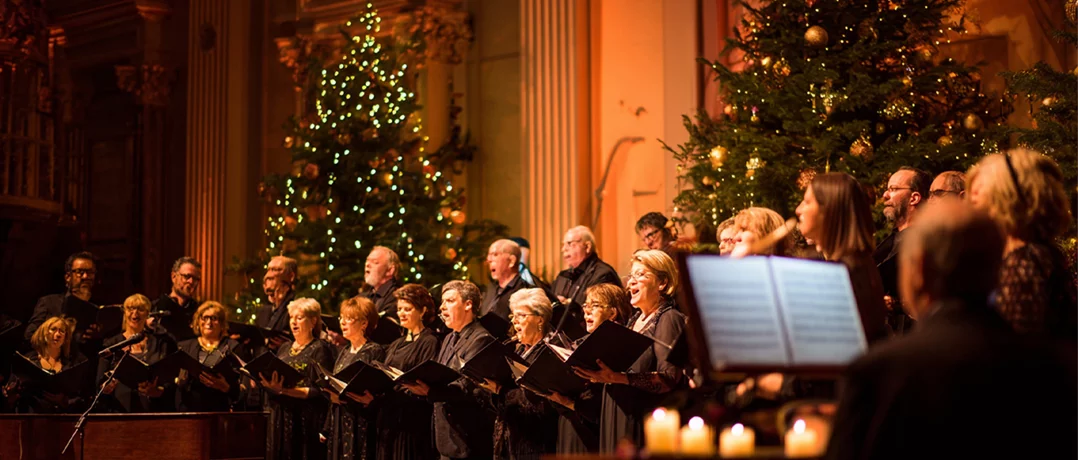
Lebanon is preparing to make history this December. From the 16th to the 21st, the Sacred Hearts School in Kfardebian will host a continuous Christmas recital lasting an unprecedented 170 hours. If successful, it will enter the Guinness World Records as the longest recital ever held a musical and spiritual marathon spanning seven days and nights.
The initiative, organised by the school, was born of what teacher and organiser Sandra Akiki describes as divine inspiration.
“The idea for the recital honestly came from divine inspiration,” she says. “Through persistence and prayer, we eventually reached the point where we could apply to Guinness and gain approval for what will be the longest Christmas recital in the world 170 hours non-stop.”
But for Akiki, the event is about far more than a world record.
“We’re not just breaking a record; we’re creating a new one,” she says with conviction.
In doing so, we’re shedding light on Lebanon’s true identity, Lebanon the artistic, Lebanon the message, as Saint John Paul II described it: Lebanon of diversity, of art, of joy, of life.
A continuous symphony of faith and resilience
Unlike a typical concert or festival, the Kfardebian recital will feature no breaks, no readings, and no pauses for reflection, only pure, uninterrupted Christian music and carols.
“The recital will include soloists, choirs, artists, and anyone who loves to sing for God,” Akiki explains.
It’s all about praise and Christmas hymns, no poetry, no speeches, no mix of art forms, just singing.
The event will remain open to the public throughout, with organisers encouraging visitors to come and witness history at any time of day or night.
“We actually need at least 12 audience members present at all times for Guinness to validate the record,” she says. “So, during the early morning hours especially, we’re counting on people to be there, supporting us and keeping the energy alive.”
Strict Guinness rules and timing
The recital will follow strict Guinness World Record standards. Each performance, whether by a soloist or a choir, must last at least two minutes ideally up to two and a half.
“Between each piece, we can only take a 20-second break,” Akiki explains.
So, the transitions have to be precise; in practice, not longer than 18 seconds.
Choirs are meticulously coordinated: soloists may perform while the rest of the group rotates offstage to save time, and a single band or accompanist will provide consistent support throughout. Pre-recorded backing tracks (“minus one” versions) can be used if needed.
“All pieces must be submitted ahead of time to Guinness for approval,” Akiki adds. “Every four hours we may repeat select pieces, but everything is under careful oversight to make sure the recital runs seamlessly and continuously.”
Months of preparation and international oversight
Securing approval from Guinness was a lengthy and demanding process.
“When we started the journey with Guinness, we had to submit an official application and pay a fee,” Akiki recalls. “It took around six to seven months to receive approval and all the detailed guidelines.”
Guinness representatives will monitor the event in real time.
“We’ll be in live communication with the company for the entire 170 hours, from the first minute to the last,” she says. “And during the final days, official representatives will be present in person to verify the record.”
To meet the organisation’s requirements, strict regulations govern every detail.
“Between each performer, we can only take a 20-second break no more,” Akiki explains.
There are no long intermissions, no pauses. The recital must continue seamlessly.
That level of precision demands intense preparation and discipline, especially for the large choirs involved.
“We’re working hard on coordination and organisation so that the schedule runs perfectly,” she says. “Our organising committee must make sure every moment counts, that every rule is respected. It’s a challenge but a beautiful one.”
Lebanon’s message through music
While the logistical feat is impressive, the recital’s deeper resonance lies in its message. In a country enduring economic hardship and political stagnation, a 170-hour hymn of faith becomes more than a concert it becomes a statement of endurance.
“We want to remind the world who we are,” Akiki says.
We’re not just a country of wars and divisions. We are a country of message, of art, of joy a country that knows how to live.
Beyond breaking records, the recital aims to celebrate emerging talents, uniting professionals, students, and communities through shared faith and music. It also reflects the creativity and strength that Lebanese schools continue to nurture, even amid uncertainty.
As December approaches, the halls of Sacred Hearts School are already filled with rehearsals, harmonies, and anticipation. If successful, the seven-day recital will not only set a world record it will stand as a symbol of Lebanon’s unbroken rhythm, its enduring melody of faith, art, and hope.
-
-

-
The Beiruter
-
