



Lebanon returns to the Venice Biennale with Nabil Nahas’ immersive installation “Don’t Get Me Wrong,” affirming the country’s creative vitality and cultural presence on the global stage.
Lebanon at Venice biennale arte 2026

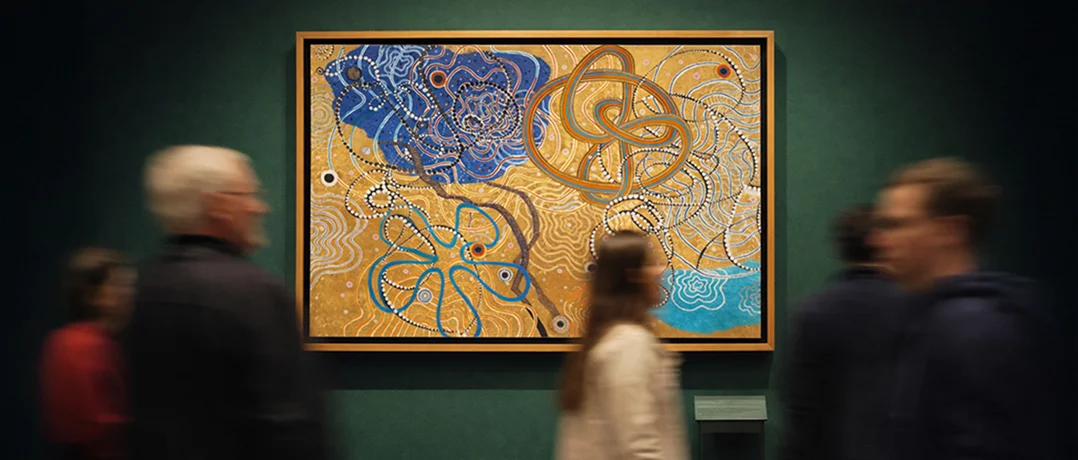
Lebanon is officially returning to one of the world’s most prestigious art stages. The Pavilion of Lebanon at the 61st International Art Exhibition - La Biennale di Venezia will present “Don’t Get Me Wrong,” an immersive installation by Lebanese-American artist Nabil Nahas, curated by Dr. Nada Ghandour. The scenography of the Pavilion is conceived by Charles Kettaneh and Nicolas Fayad - EAST Architecture Studio.
The Beiruter was present during a press conference at the Lebanese National Library, in the presence of Minister of Culture Dr. Ghassan Salamé, marking a powerful statement about Lebanon’s cultural presence.
Minister Salamé on Lebanon’s presence at the Venice biennale
The minister of culture expressed, “This choice does not concern Nabil alone; it also reflects an appreciation of Lebanese creators who move between inside and outside the country, while their attachment to their homeland remains steadfast. Today, we are in a phase of rebuilding the world’s trust in Lebanon, and I believe that creators play a fundamental role in restoring this confidence, also by highlighting one of Lebanon’s essential qualities: being an inexhaustible source of creativity, innovation, and achievement.”
He ended his speech stating that “the ministry considers it its duty, within its capabilities, to contribute to reinforcing and strengthening confidence in the Lebanese state and nation also comes through enhancing Lebanon’s image abroad.”
Dr. Nada Ghandour to The Beiruter: “art has the ability to create bonds”
In an exclusive with The Beiruter, Dr. Nada Ghandour the Commissioner and Curator of the Pavilion of Lebanon, explains, “We want to convey to Lebanese artists that we are working with them, hand in hand, even though we create art abroad, our goal is to shine a light on them, to highlight Lebanon, and to create opportunities for all Lebanese artists so they can live from their work. This is the most important thing. When people visit the Lebanese Pavilion and see our work, many tell us they want to discover more Lebanese artists and even visit Lebanon, about 75% respond that way. That connection, that visibility, is what truly matters.”
Dr Ghandour continues, “In 2026, the Pavilion of Lebanon will stand as a celebration of creativity and fraternity. At a time of global uncertainty and instability, it is essential that nations promote voices other than violence. Space must be given to the imaginative and conciliatory power of artists who express a shared, open and free language, because art has the ability to create bonds that transcend geographical, cultural, historical, and ideological boundaries".
An immersive cosmos at the arsenale
Spanning 45 linear meters inside the Arsenale, Nahas’ installation consists of 26 monumental acrylic-on-canvas panels, each rising three meters high. Arranged side by side, they form a continuous visual frieze that visitors walk through rather than merely observe.
The visual language merges geometric abstraction drawn from Islamic and Western traditions with figuration and fractal patterns. Spirals, rooted in Sufi symbolism, suggest infinity and inward reflection. Trees, a recurring motif in Nahas’ decades-long practice, reference biblical species including the cedar and the olive, emblems of endurance, rootedness, and life.
The result is both cosmic and intimate: a meditation on humanity’s place within a vast, ordered universe. The installation draws on Lebanon’s layered heritage, Greco-Roman, Byzantine, Judeo-Christian, and Islamic as intersecting currents. In that sense, the work mirrors Lebanon’s fluid identity: plural, contradictory, yet continuously evolving.
Lebanon’s pavilion at Biennale Arte 2026, arrives at a moment when the country is actively redefining its global image. Venice offers a narrative continuity, artistic depth, and cultural resilience.
-
-

-
The Beiruter
-
