

Lebanon’s government has banned IRGC activities and intensified crackdowns on unauthorized weapons to assert state sovereignty amid rising regional tensions.
Lebanon cracks down on IRGC and Hezbollah activities
Lebanon cracks down on IRGC and Hezbollah activities
By The Beiruter | March 07, 2026

Reading time: 4 min
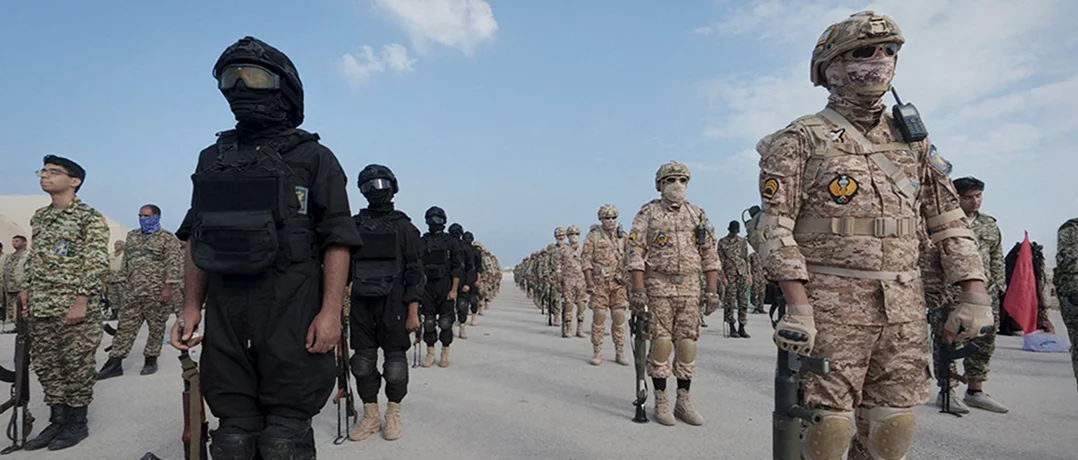
Lebanon’s government has taken a major step aimed at reshaping the country’s security landscape by banning all activity by Iran’s Islamic Revolutionary Guard Corps (IRGC) on Lebanese territory. The decision also includes measures to detain and deport members of the Iranian force if found operating in the country.
The move comes amid heightened regional tensions and follows a broader Lebanese government decision to prohibit military activities by Hezbollah. As security forces begin enforcing the policy, arrests related to weapons possession and transport have increased significantly across Lebanon, reflecting a new official approach toward armed groups and unauthorized weapons.
Government decision targets Iranian military presence
The cabinet decision marks one of the most explicit attempts by the Lebanese state to curb Iran’s direct influence within its borders. The government resolved to “prevent any activity” that members of the IRGC might carry out from Lebanese territory.
Authorities have also instructed security and judicial bodies to detain any IRGC members discovered operating in Lebanon and to initiate deportation procedures through the appropriate legal channels. In parallel, the government announced that Iranian nationals would now require visas to enter Lebanon, tightening border controls and limiting Tehran’s ability to maintain a presence in the country.
The IRGC has long been considered one of Hezbollah’s most important military and financial backers, providing training, weapons, and strategic guidance since the group’s emergence in the early 1980s. Lebanese officials say the new measures aim to reinforce state sovereignty and ensure that military decisions affecting the country are no longer made by external actors.
Security forces intensify crackdown on illegal weapons
The policy shift has been accompanied by an intensified security campaign targeting the transport and possession of unauthorized arms. According to judicial sources, security agencies have arrested at least 23 individuals so far, including Hezbollah members and civilians, after weapons were discovered in their possession during movements between southern Lebanon, Beirut, Mount Lebanon, and the Bekaa Valley.
The arrests highlight a significant change in the state’s enforcement strategy. Previously, authorities often confiscated illegal weapons but released the individuals carrying them after questioning or after they signed pledges not to repeat the offense. Under the new policy, however, both the weapons and their carriers are treated as criminal cases, regardless of the individual’s political affiliation. This new approach reflects a clear determination by the government to enforce its decisions without exceptions, including for members of Hezbollah.
Challenges and existing gaps
Despite the intensified crackdown, security agencies have not yet identified the individuals responsible for launching rockets and drones toward Israel in recent days. These attacks are viewed by authorities as a direct violation of the cabinet’s decision banning military actions outside the control of the Lebanese state. While investigations are ongoing and intelligence units are conducting extensive surveillance and field inquiries to determine the identities of those responsible, no arrests related to the rocket or drone launches have been announced so far.
Moreover, reports claimed that the possibility of Lebanese passports being given to leading members of Hezbollah under aliases to facilitate their travel have been raised again, as well as whether these passports are still valid.
Additionally, while many called for a diplomatic break between Beirut and Tehran, the latter’s ambassador to Lebanon was not recalled (measures taken by various Gulf states as well as Azerbaijan) and diplomatic relations with Iran were not significantly severed.
Lebanon’s decision to ban activity by IRGC and crack down on unauthorized weapons represents a significant shift in the country’s security policy. By targeting external military influence and tightening enforcement against armed actors, the government is signaling a renewed effort to assert state authority over matters of war and peace.
However, the success of this policy will depend on consistent enforcement and the ability of security agencies to dismantle networks involved in weapons transport and unauthorized military operations. As regional tensions remain high and Lebanon continues to navigate internal political sensitivities, the coming weeks will likely test the government’s capacity to maintain control and stabilize the country’s fragile security environment.
-
-

-
The Beiruter
-
