

Israeli strikes in southern Lebanon have reignited tensions and tested a fragile ceasefire with Hezbollah, as Beirut pushes a disarmament plan, seeks an international security presence, and faces growing regional pressure.
Lebanon faces a defining security test

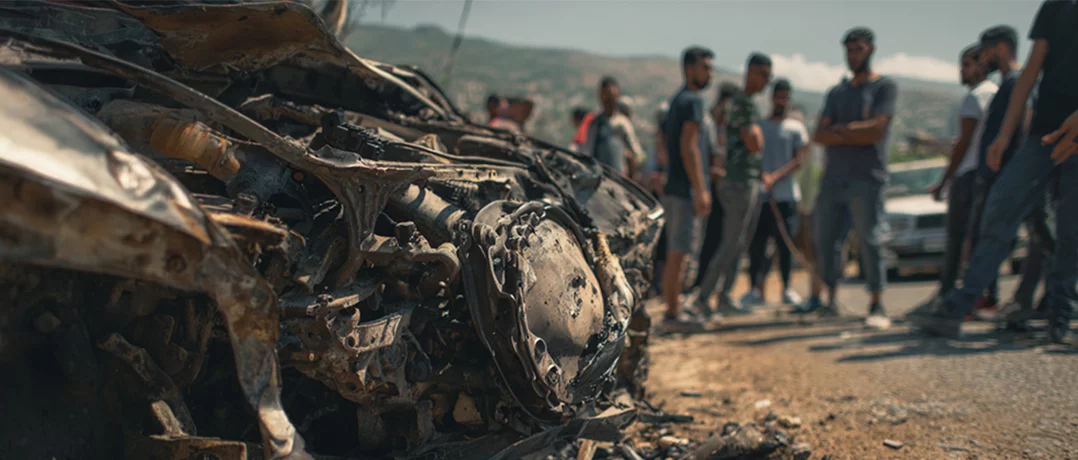
Lebanon has witnessed a renewed spike in tension following an Israeli strike in the country’s south that killed one person and wounded another, according to the Lebanese Ministry of Public Health (MoPH).
The incident underscores the fragility of the November 2024 ceasefire between Israel and Hezbollah, as Israeli military operations continue alongside intensified political and diplomatic efforts to redefine security arrangements in southern Lebanon and beyond.
Recent Israeli strikes and conflicting narratives
An Israel Defense Forces (IDF) attack near Khirbet Selm in southern Lebanon targeted a hangar, resulting in 1 fatality and 1 injury. The Israeli military, for its part, claimed that it targeted a Hezbollah weapons manufacturing site, claiming it had identified “terrorist activity” by Hezbollah operatives. Additional Israeli strikes were reported in the eastern Bekaa region, targeting mountainous areas near Nabi Sheet, where the IDF claimed it hit Hezbollah military infrastructure.
Israeli officials have repeatedly argued that such operations are necessary to prevent Hezbollah from rebuilding its military capabilities, accusing the group of violating the ceasefire understandings.
Ceasefire under pressure and the disarmament file
The strikes come as Lebanon’s army claims progress in its plan to dismantle Hezbollah’s armed presence south of the Litani River. The Lebanese Armed Forces (LAF) announced earlier this month that it had completed the first phase of this plan. Israel, however, has criticized the Lebanese army’s efforts as insufficient, while Hezbollah has firmly rejected any calls to surrender its weapons.
Subsequently, Prime Minister Nawaf Salam confirmed that a second phase of disarmament began 2 weeks ago, extending northward between the Litani and Awali rivers (an area where Hezbollah maintains significant influence). Salam acknowledged that this phase presents greater political and security challenges, noting that Hezbollah’s rhetoric has grown increasingly confrontational. Nonetheless, he stressed that the government would not retreat from its commitment to restoring state authority, affirming that “we will not back down.”
Calls for an international security presence
Against this backdrop, PM Salam said Lebanon would require an international force after the scheduled withdrawal of the United Nations Interim Force in Lebanon (UNIFIL) in 2027. Speaking during a visit to Paris, he argued that an international, preferably UN-led, presence remains essential given Lebanon’s history of conflict with Israel.
UNIFIL, which currently deploys over 10,000 peacekeepers, has played a central role in monitoring the ceasefire in coordination with the LAF. Under a resolution passed last year, the force will begin its withdrawal at the end of 2026, a move pushed by the United States (US) and Israel. Salam suggested that any future force would need a mix of observers and peacekeepers to help maintain stability in the south.
Political deadlock and mounting external pressure
Internally, Lebanese officials insist on adhering to the ceasefire mechanism, officially called the “Military Technical Committee for Lebanon” (MTC4L), and have called for its committee to convene urgently. Former Ambassador Simon Karam, head of the Lebanese delegation to the ceasefire mechanism, revealed an alarming statement, saying that Hezbollah has not provided the LAF with information regarding its weapons or military installations. He reiterated that only the Lebanese army has the authority to dismantle Hezbollah’s military infrastructure, while simultaneously demanding the return of displaced southerners to their households and properties.
As February approaches, Lebanon faces critical milestones, including a visit by LAF Commander General Rodolphe Haykal to Washington and the presentation of a comprehensive army plan to the cabinet aimed at restricting weapons north of the Litani River. President Joseph Aoun and Prime Minister Salam remain aligned on pushing forward with this strategy, backed by a parliamentary majority, sovereign political forces, and international partners. In this regard, intelligence assessments reportedly point to weapons factories, drone assembly facilities and an estimated 300 precision-guided missiles hidden in the eastern mountain range of the Bekaa Valley. From here, Israel has intensified strikes in the Hermel and Baalbek areas, believing these weapons are concealed there.
However, Hezbollah continues to resist disarmament beyond the south, arguing that UN Security Council (UNSC) Resolution 1701 and the November 2024 agreement apply only south of the Litani. The group insists it will not relinquish what it considers strategic deterrent capabilities.
In conclusion, as Hezbollah’s weapons remain a central point of contention (entangled with broader Iranian calculations) Lebanon finds itself at a decisive crossroads. The coming weeks will test whether diplomatic engagement, military planning and international support can avert a wider conflict, or whether the fragile ceasefire will give way to another phase of escalation with profound consequences for Lebanon and the region.
-
-

-
The Beiruter
-
