



Iran’s ambassador-designate reaches a critical deadline as Lebanon refuses recognition, while Tehran continues to defy Beirut’s sovereign decision by keeping its unrecognized envoy in the country.
Lebanon holds its ground against Iran’s unwanted envoy
Lebanon holds its ground against Iran’s unwanted envoy
By The Beiruter | August 24, 2026

Reading time: 4 min
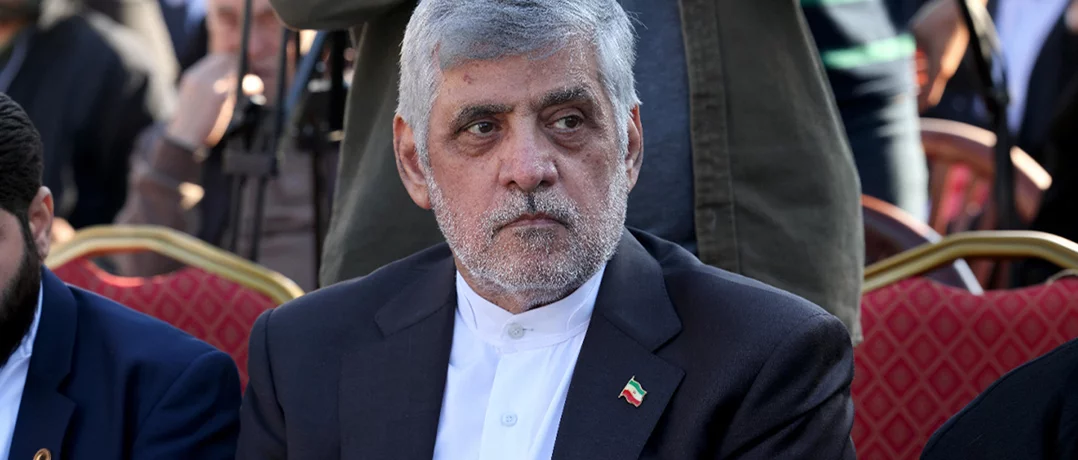
The diplomatic standoff between Lebanon and Iran has entered a new stage as the residency permit of Iran’s ambassador-designate, Mohammad Reza Sheibani, expired today, 24 August 2026. The deadline has once again drawn attention to a dispute that has remained unresolved since March, when the Lebanese government refused to accept Sheibani’s credentials as Iran’s ambassador to Beirut due to his outright interference in Lebanon’s internal affairs and Tehran’s defiance of the country’s governmental decision.
Although the Lebanese authorities were expected to expel Sheibani in accordance with established diplomatic norms, they instead opted to renew his residency permit as an ordinary resident, marking a surprising and unexpected departure from standard diplomatic practice.
No path to residency renewal
Official correspondence sent by the Iranian Embassy to Lebanon’s General Security Directorate continues to be signed by the Iranian consul rather than Sheibani himself, reflecting the fact that he has not been officially recognized by Lebanon as the embassy’s ambassador.
Lebanese Minister of Foreign Affairs and Emigrants Youssef Raggi explicitly asserted in an X post that “the expiry of Iranian Ambassador’s visa is not open to interpretation.” He added that “his designation as persona non grata requires him to leave Lebanon and rules out any renewal of his visa or residency under international law.”
This should have left no room for the unrecognized Iranian ambassador to bypass the government’s decision, since his continued presence would be “in direct violation of a final and binding sovereign decision by the Lebanese state,” as Raggi explained. Thus, he believed that “normal relations with the Iranian mission in Lebanon can only resume once Tehran complies with the Lebanese state’s decision.”
Nevertheless, Lebanese authorities extended Sheibani’s residency, who defied the country’s expulsion order earlier this year. Now viewed as a mere civilian without diplomatic duties, the authorities extended his stay by 6 months.
Beirut reaffirms its sovereign decision
Lebanese Foreign Minister (FM) Youssef Raggi reiterated the government’s position last week, stating that the continued presence of Iran’s ambassador-designate contradicts a sovereign decision taken by the Lebanese state.
It is inconsistent with a sovereign decision that must be enforced and admits neither exceptions nor compromise.
According to Raggi, restoring normal diplomatic relations with the Iranian mission begins with Tehran’s compliance with Lebanon’s decision regarding diplomatic accreditation. He stressed that sovereign decisions are not subject to exceptions or negotiated compromises.
The foreign minister also called on Iranian officials to refrain from interfering in Lebanon’s internal affairs, referring to recent statements by senior Iranian officials that Beirut considered inappropriate.
His remarks underscore Lebanon’s position that the dispute is fundamentally about respecting Lebanese sovereignty and diplomatic procedures rather than simply resolving an administrative residency issue.
How the crisis began
The diplomatic dispute dates back to March, when Lebanon withdrew its approval for Sheibani’s accreditation shortly after Iran announced his appointment.
The Lebanese government declared him an unacceptable representative before he could formally assume ambassadorial duties, one of the strongest diplomatic measures available to a receiving state. The Lebanese Ministry of Foreign Affairs and Emigrants (MOFA) justified the move by citing what it described as “diplomatic violations,” most notably interference in internal affairs in violation of Article 41 of the Convention, in addition to holding meetings outside official frameworks. At the same time, Beirut recalled its ambassador to Tehran for consultations, highlighting the seriousness of the deterioration in bilateral relations.
These were part of a series of measures that the Lebanese authorities took to expel members of the Islamic Revolutionary Guard Corps (IRGC) from the country as well as reduce ties with Tehran, in an effort to curb and eliminate Iranian influence and interference in Beirut.
Although Sheibani was never officially accredited, Lebanon’s decision effectively prevented him from becoming Iran’s recognized ambassador. Since then, the Iranian Embassy has continued its work in Beirut without an accredited ambassador, while relations between the two governments have remained strained.
The dispute persists because Tehran continues to defy the Lebanese government’s decision; something which the latter vehemently rejects. Indeed, Iran has declined to nominate another ambassador, resorting to keeping the current one instead. Therefore, no immediate solution appears to be on the horizon and the diplomatic crisis itself will remain unresolved for the foreseeable future.
Hence, until Tehran revises its position and complies with the Lebanese government’s decision, diplomatic relations between Lebanon and Iran are expected to continue under an exceptional arrangement in which Iran’s designated ambassador remains in Lebanon without official diplomatic recognition.
-
-

-
The Beiruter
-
