



Drawing on exclusive figures and insights from the Lebanese Order of Nurses, The Beiruter investigates the growing strain inside Lebanon’s hospitals as understaffing, burnout, and migration push the country’s healthcare workforce closer to its breaking point.
Lebanon is quietly running out of nurses

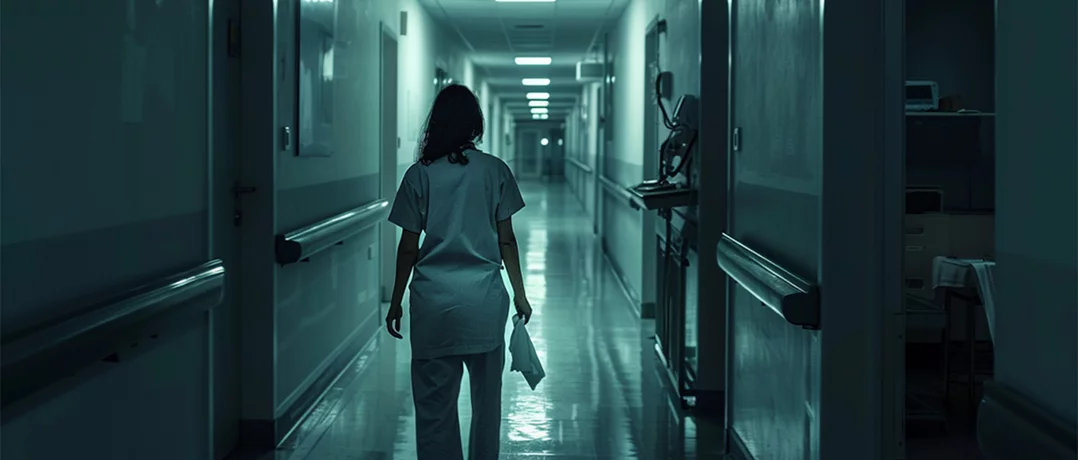
The monitors continue beeping. Families wait outside emergency rooms. Intensive care units remain operational. Lebanon’s healthcare system still appears functional, from the outside.
Inside many hospitals, however, another reality is unfolding quietly.
For years, discussions surrounding the collapse of Lebanon’s healthcare sector focused on medicine shortages, failing infrastructure, fuel crises, and hospital finances. Far less attention was paid to the workers absorbing the full weight of those collapses from inside overcrowded wards and understaffed departments.
Now, the consequences are becoming impossible to ignore.
According to WHO-linked healthcare workforce data, Lebanon has approximately 1.67 nurses and midwives per 1,000 people, one of the lowest ratios in the region and far below the global average of roughly 9 per 1,000. At the same time, nurses constitute the majority of the healthcare workforce sustaining hospitals on a daily basis.
Unlike collapsing buildings or empty pharmacy shelves, the erosion of a healthcare workforce happens quietly. Hospitals do not suddenly shut down. Instead, the system stretches itself further each year. Fewer nurses take on more patients. Longer shifts become normalized. Burnout becomes part of the job.
By the time the public recognizes the shortage, many of the people holding the system together have already left.
The Profession Carrying the Weight of Collapse
In an exclusive interview with The Beiruter, Abir Kurdi Alameh, President of the Lebanese Order of Nurses, revealed that Lebanon currently has around 23,000 registered nurses, a number she says remains insufficient to meet the country’s healthcare needs.
“We are definitely still below the international threshold,” Alameh says.
The crisis, however, extends far beyond Lebanon alone. According to figures cited by Alameh, the world could require between 4.5 and 6 million additional nurses by 2030, while global demand continues to outpace supply despite a workforce of roughly 30 million nurses worldwide.
“The world itself is competing for nurses,” she says, warning that Lebanon is now struggling to retain healthcare workers in an increasingly aggressive international recruitment market.
What has made the situation particularly dangerous in Lebanon is not only the scale of the pressure, but its duration. Years of continuous crisis transformed emergency conditions into everyday reality inside hospitals. What was once considered temporary overload gradually became the normal functioning model of the healthcare system.
Unlike many professions disrupted by the collapse, nursing could not stop. Hospitals still needed staff overnight. Intensive care units still required monitoring. Emergencies still arrived every hour.
Nursing is not only a profession that requires education. It requires emotional intelligence, communication skills, and endurance because this profession carries enormous stress.
Hospital shifts operate around the clock, often under relentless pressure. Yet according to Alameh, the profession remains deeply undervalued both financially and socially.
“The financial and moral appreciation nurses receive is far lower than the amount they give,” she says.
A system running on exhaustion
Inside hospitals, the consequences of understaffing are no longer abstract.
Nurses increasingly describe environments shaped by chronic overload, psychological exhaustion, and impossible patient volumes.
The shortage itself is now producing further shortages.
Fewer nurses force heavier workloads on those who remain. Heavier workloads accelerate burnout. Burnout pushes more nurses to resign or emigrate.
According to Alameh, staffing ratios in many hospitals have moved far beyond safe operational standards.
“The ideal ratio is one nurse for six to eight patients maximum,” says Abir Kurdi Alameh. “But in reality, nurses are often responsible for 10 patients, and during night shifts that number can reach 15 or even 20.”
As hospitals struggle under mounting pressure, nurses increasingly absorb public frustration directed at collapsing healthcare systems.
“Violence in the workplace is increasing,” Alameh says.
It is not always physical. Often it is verbal abuse directed at nurses because they cannot keep up with overwhelming patient loads.
The dynamic is especially brutal because many nurses are blamed for delays and institutional failures they did not create. Patients waiting longer for treatment often direct frustration toward the workers most visibly present inside hospitals, even as those workers themselves are operating under extreme shortages.
The financial collapse of nursing
Lebanon’s economic collapse devastated salaries across nearly every sector, but nursing faced a uniquely dangerous contradiction: the profession remained essential while its financial stability disintegrated.
According to the Lebanese Order of Nurses, around 40 to 50 percent of nurses in Lebanon still earn below $700 per month, including some with many years of experience.
“The Syndicate proposed a minimum salary between $850 and $900 for newly graduated nurses,” Alameh says, explaining that the proposal also included salary increases tied to experience and continuing education.
Yet many institutions still fail to properly recognize years of experience within salary structures.
The result is a profession increasingly unable to retain its workforce.
Many nurses graduate, work for two years, and then leave the country.
For many healthcare workers, migration is no longer viewed as professional advancement alone. It has become an exit from exhaustion, instability, and financial insecurity.
The great exit
Between 2020 and 2021 alone, approximately 3,000 nurses left Lebanon, according to the Lebanese Order of Nurses. Hundreds continue leaving every year.
“The migration has not stopped,” Alameh says. “Every year around 220 to 250 nurses continue emigrating.”
Unlike many Lebanese doctors who eventually return after years abroad, nurses often do not.
“Nurses work as employees inside institutions abroad and establish stable careers there,” the President explains. “They usually do not come back.”
Lebanon is now losing both ends of its healthcare workforce simultaneously: newly trained nurses with only a few years of experience, and highly experienced nurses with more than 25 years in the profession.
The country is not only losing personnel. It is losing institutional memory, accumulated expertise, and future healthcare capacity at the same time.
The irony is particularly stark because Lebanese nurses remain highly sought after internationally due to their multilingual education, training standards, and experience operating under pressure.
Lebanon continues producing nurses that increasingly sustain healthcare systems abroad while struggling to sustain its own.
More valuable than machines
One of the sharpest criticisms emerging from the Lebanese Order of Nurses concerns the way healthcare institutions themselves value nursing labor.
According to Alameh, many hospitals continue treating the shortage primarily as a staffing issue rather than a structural threat to healthcare quality and long-term stability.
“Some institutions think they are saving money,” she says. “But they are actually losing expertise and long-term stability.”
New nurses often require months before becoming fully productive, meaning hospitals trapped in constant turnover cycles repeatedly lose operational continuity and experience.
At the same time, experienced nurses directly reduce medical errors, stabilize departments, improve patient satisfaction, and strengthen overall care quality.
An experienced nurse can sometimes be more valuable than advanced medical equipment.
The statement reflects a broader reality increasingly visible inside Lebanon’s healthcare sector: human expertise itself has become one of the country’s most endangered forms of infrastructure.
The nurses excluded from healthcare power
Despite carrying much of the operational burden inside hospitals, nurses remain significantly underrepresented in healthcare leadership and policymaking structures.
The Lebanese Order of Nurses has been pushing for stronger nursing representation not only at the national level, but also inside hospitals themselves. The Syndicate has urged institutions to include nursing leadership within administrative structures and hospital boards, arguing that healthcare systems cannot be effectively managed while excluding the workers most directly involved in patient care.
“You cannot create healthcare plans without nurses,” Alameh says.
The criticism reflects a deeper structural imbalance inside Lebanon’s healthcare system. Nurses remain responsible for much of the daily interaction with patients, yet often hold limited influence over the decisions shaping working conditions, staffing structures, and healthcare policy itself.
At the same time, reforms aimed at improving conditions for nurses continue moving slowly through Lebanon’s political system.
According to Alameh, proposals related to retirement protections and financial support mechanisms for nurses have remained stalled inside parliamentary committees for years. One proposal aimed at increasing the resources of the nurses’ mutual fund, intended to provide retired nurses with at least a dignified pension, has reportedly remained stuck for more than three to four years inside the parliamentary Finance and Budget Committee.
“The problem in Lebanon is that laws take too much time,” Alameh says, explaining that legislation often remains trapped between parliamentary committees, the cabinet, and administrative procedures while the crisis itself continues deepening.
“The Syndicate can stay active and organized,” she says, “but that effort also needs to be matched by faster action from the state.”
Then comes the warning that may best summarize the crisis itself:
“Nursing cannot wait.”
The quiet erosion of a healthcare system
Lebanon’s hospitals have survived years of extraordinary pressure while operating under increasingly fragile conditions. But healthcare systems are not sustained by infrastructure alone. They depend on the people willing to continue showing up despite exhaustion, instability, and burnout.
The deeper loss is no longer only numerical. Lebanon is gradually losing the experience, continuity, and professional generations that once sustained its healthcare system from within.
“Nursing does not only sustain healthcare institutions,” Alameh says. “It sustains every individual in society.”
Lebanon’s hospitals are still standing. But increasingly, they are being held together by a shrinking workforce carrying pressures no healthcare system was designed to sustain indefinitely.
-
-

-
Michella RizkContent Manager/WriterFocusing on social affairs.
-
