



From wartime savings to everyday payments, Lebanon’s relationship with the dollar has lasted for decades. This article reveals how instability, banking crises, and loss of trust turned the US currency from a safety net into a permanent part of Lebanese life.
Lebanon learned to live in dollars, can it ever go back?
Lebanon learned to live in dollars, can it ever go back?
By Michella Rizk | September 03, 2026

Reading time: 7 min
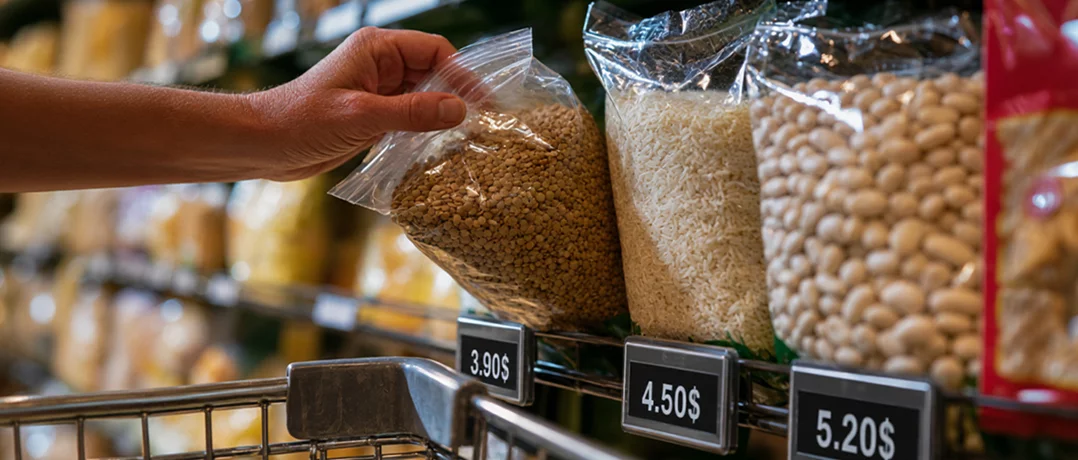
Lebanon today is an economy where the dollar is difficult to avoid. Prices are routinely quoted in dollars, businesses transact in the currency and many workers are paid partly or entirely in it. The collapse of the Lebanese pound (LBP) after 2019 may have made this dependence far more visible, but the country’s struggle to return to its own currency began decades earlier.
During the civil war, Lebanese depositors increasingly turned to foreign currency as the LBP lost value. Between the mid-1980s and 1987 alone, foreign-currency deposits rose from around 35% to 93% of deposits in the domestic banking system.
Fighting was intensifying, fiscal deficits were widening, the LBP was depreciating and confidence in the country’s political and economic future was deteriorating. For Lebanese households looking to protect their money, foreign currency became the safer option.
Then conditions changed.
The Taif Agreement laid the groundwork for the end of the war. A new parliament was elected, Rafik Hariri became prime minister and the Lebanese pound strengthened.
Yet the dollars did not simply disappear. Dollarization declined but remained remarkably high even as the conditions that had driven its rise began to recede.
Why the dollars stayed
In 1994, an International Monetary Fund (IMF) working paper titled Dollarization in Lebanon tried to understand why.
Looking at Lebanon’s experience between 1971 and 1993, the researchers found that the move into foreign currency did not work equally in both directions. Dollarization rose rapidly when the LBP depreciated and uncertainty increased, but it did not fall at the same pace once those pressures eased.
The IMF described this as a “ratchet effect”: periods of instability could push the economy further toward foreign currency, while subsequent periods of stability might only partially reverse the shift.
By the end of 1993, the difference was already visible. The share of foreign-currency deposits in Lebanese banks had fallen from its wartime peak but still stood at around 68%. Under the IMF’s broader measure, which also included foreign-currency deposits held by Lebanese residents abroad, it was around 82%.
This was despite a significant recovery in the Lebanese pound, with the exchange rate strengthening from LL2,420 to LL1,711 per dollar.
Expected depreciation remained an important reason for holding foreign currency. But it did not fully explain why dollarization remained so high once the LBP began to recover. The IMF found that years of instability had changed the way households managed their money, while the growing use of foreign currency had made the dollar increasingly embedded in the financial system itself.
When the dollar became more than savings
At first, dollars offered protection. As the Lebanese pound lost value, Lebanese households could move their savings into foreign currency and limit their exposure to depreciation.
Over time, however, the dollar became useful for more than savings.
By December 1993, around 80% of cheques cleared in Lebanon were denominated in dollars. Banque du Liban had already introduced a clearing system for dollar cheques in 1990, making foreign currency increasingly easy to use within the banking system.
Dollars were no longer simply sitting in accounts waiting out a period of instability. They could be used to make payments and conduct transactions.
Years of inflation and depreciation had also changed how households managed their money. Moving savings into dollars may initially have been a response to crisis, but once that habit became familiar, there was less reason to abandon it simply because the Lebanese pound was doing better.
The banking system was changing around those habits too. At the time, reserve requirements applied to Lebanese pound deposits but not to foreign-currency deposits, a difference the IMF said could allow banks to offer more attractive terms on dollar accounts.
By the early 1990s, the dollar had acquired a place in Lebanon that went beyond protection from a falling pound. People were saving in it, banks were facilitating transactions in it and much of the infrastructure needed to use it was already in place.
A recovering exchange rate could address one reason people had moved into dollars. It could not, on its own, undo everything that had developed around them.
The long years of stability
By the end of the 1990s, Lebanon had entered a very different monetary period.
After years of sharp swings in the exchange rate, Banque du Liban began intervening in October 1999 to keep the Lebanese pound around LL1,507.5 to the dollar, within a narrow band. The rate would become one of the most familiar numbers in Lebanon, remaining effectively unchanged for roughly two decades.
But a stable exchange rate did not mean the economy stopped using dollars.
The two currencies continued to exist side by side. The LBP remained the national currency, while dollars were still widely held within the banking system. What had taken root during years of instability was not simply undone by the stability that followed.
Lebanon had succeeded in stabilizing the exchange rate, but dollarization remained deeply embedded in its financial system.
For nearly two decades, LL1,507.5 came to represent that stability. Then came 2019.
When the system began to unravel
As Lebanon’s financial crisis deepened, access to dollars became increasingly restricted and a parallel exchange rate emerged. The official rate of LL1,507.5 remained in place, but it increasingly bore little relation to the rate at which dollars were actually being bought and sold.
The Lebanese pound’s decline accelerated over the following years. According to the IMF, by mid-March 2023 the parallel-market rate had reached around LL140,000 to the dollar. The official rate, meanwhile, was only adjusted in February 2023, when it was raised from LL1,507.5 to LL15,000.
Dollarization accelerated alongside the currency’s collapse. By 2023, the IMF noted that hotels, restaurants and supermarkets were increasingly pricing goods and services in dollars, while a growing share of private-sector contracts and wages were also being denominated in foreign currency.
But this time, the crisis was not only about confidence in the pound. It had also reached the banks.
As banks restricted withdrawals and transfers, depositors found themselves unable to freely access the dollars held in their accounts. A new term entered the Lebanese financial vocabulary: the “lollar.”
Short for “Lebanese dollar,” the term “lollar” came to refer to foreign-currency deposits caught under the withdrawal restrictions imposed after the crisis, particularly deposits that had existed before October 17, 2019. They remained recorded in dollars, but could no longer be accessed or transferred like freely available dollar funds.
By contrast, “fresh dollars” referred to foreign-currency deposits and international transfers received after October 17, 2019 that were not subject to the same restrictions.
This marked an important difference from the dollarization of the civil-war period. Then, Lebanese households had largely responded to the LBP’s depreciation by moving their savings into foreign-currency deposits. After 2019, confidence had deteriorated in both the national currency and the banking system that held those deposits.
A dollar economy moves into cash
The consequences soon became measurable.
By 2022, the World Bank estimated Lebanon’s dollarized cash economy at around $9.9 billion, equivalent to 45.7% of GDP. It attributed its expansion to the collapse of the banking system and the national currency, describing the shift as evidence of a loss of confidence in both.
The scale of the cash economy created a new set of problems. The World Bank warned that it could further weaken the effectiveness of fiscal and monetary policy, increase informality and tax evasion, and heighten money-laundering risks.
Lebanon had therefore arrived at a different form of dollarization from the one examined in the early 1990s. The dollar was no longer primarily entrenched through deposits and the banking system. A significant part of economic activity was now taking place in dollar cash outside the banking system.
What would it take to go back?
Three decades separate the Lebanon studied by the IMF from the country that emerged from the 2019 financial collapse. The circumstances are different, but the question remains familiar: once an economy becomes accustomed to operating in dollars, how easily can it go back?
The 1994 IMF study found no simple route to de-dollarization. Stabilizing the exchange rate was not enough, while attempts elsewhere to force people out of foreign currency sometimes drove money outside the formal financial system. Lasting de-dollarization, it argued, depended on stability, low inflation, sound public finances and confidence in government policy.
Today, the dollar is used not only for savings, but for prices, wages and everyday transactions, much of which takes place in cash.
So what would persuade Lebanese households and businesses to return to the Lebanese pound? Can confidence in the currency return without confidence in the banking system? And after decades of learning to live in dollars, would Lebanese people choose to go back at all?
-
-

-
Michella RizkContent Manager/WriterFocusing on social affairs.
-
