



Lebanon has become central to U.S. Middle East policy as the second round of Lebanon-Israel talks, held at the White House, yielded a 3-week extension of the ceasefire.
Lebanon moves to the forefront of U.S. Middle East policy
Lebanon moves to the forefront of U.S. Middle East policy
By The Beiruter | April 24, 2026

Reading time: 4 min
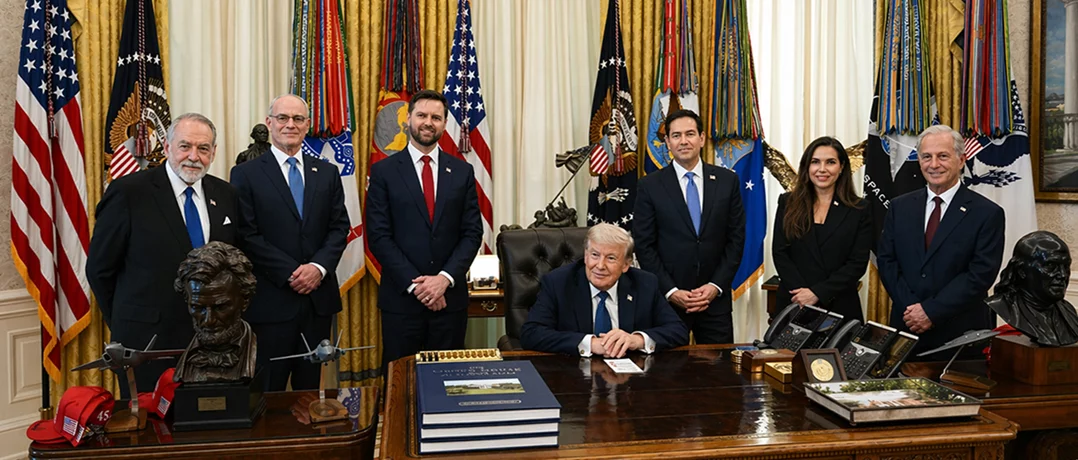
The extension of the ceasefire between Israel and Lebanon for an additional 3 weeks marks a fragile but significant pause in the conflict.
Brokered at the White House under the auspices of United States (U.S.) President Donald Trump, the agreement reflects a dual-track strategy: stabilizing the volatile Lebanese-Israeli front while setting the ground for a more ambitious diplomatic objective (reaching a long-term agreement between Lebanon and Israel). Yet, despite the diplomatic progress, persistent violence on the ground and escalating rhetoric from all sides underscore the precariousness of the moment.
From the State Department to the White House: A shift in priority
One of the most striking aspects of the latest round of talks was not only their outcome, but their setting. Initially scheduled to take place at the U.S. Department of State, the meeting was ultimately moved to the White House and conducted under the direct supervision of President Trump himself. This shift was far from procedural; it carried clear strategic symbolism.
By elevating the meeting’s location, the Trump administration signaled that the Lebanese file is no longer a secondary diplomatic track but has moved to the forefront of U.S. foreign policy in the Middle East. Indeed, the decision to host Lebanese and Israeli representatives at the White House signals a deliberate elevation of U.S. engagement.
The personal involvement of Trump, alongside senior officials such as Secretary of State Marco Rubio and Vice President JD Vance, reflects a recalibration in Washington’s priorities, where Lebanon is increasingly viewed through the prism of regional stability and potential normalization dynamics with Israel. President Trump has sought to inject momentum into a process that had previously unfolded at lower diplomatic levels. This direct involvement also reinforces the perception that Washington is not merely mediating but actively shaping the trajectory of the conflict.
A ceasefire under strain and escalation risks
The renewed ceasefire between Israel and Lebanon follows weeks of intense hostilities involving Israeli forces and Hezbollah. While the truce has reduced large-scale violence, it remains fragile, with continued Israeli targeted strikes and limited Hezbollah retaliatory actions sustaining a low-level cycle of confrontation.
This partial calm underscores a key structural problem. Although the Lebanese government participates in U.S.-mediated talks, its ability to enforce or guarantee compliance remains limited, raising doubts about the sustainability of any agreement that does not directly address non-state armed influence within Lebanon.
At the same time, escalation risks remain significant. Israeli officials have indicated readiness to expand military operations if politically supported by Washington, framing such positioning as part of a broader pressure strategy rather than mere rhetoric. On the U.S. side, President Donald Trump has combined deterrent messaging with diplomatic signaling, including reaffirming Israel’s “right to defend itself.” This dual approach reflects an attempt to balance escalation control with negotiation leverage, leaving the situation in a volatile and uncertain equilibrium.
Lebanon’s delicate position
Caught between competing powers, Lebanon finds itself navigating a particularly delicate phase. The government has sought to prioritize immediate sovereignty, humanitarian, and security concerns, including halting Israeli strikes and preventing further destruction in border regions. At the same time, it faces increasing external pressure to address the issue of Hezbollah’s arms.
The U.S. has indicated a willingness to support Lebanon in strengthening its state institutions, particularly the Lebanese Armed Forces (LAF). However, any attempt to disarm Hezbollah remains fraught with political and social sensitivities, given the group’s entrenched role within the Lebanese system.
Prospects for a broader settlement
The extension of the ceasefire provides a narrow window for diplomatic progress, but significant obstacles remain. The separation, or potential linkage, of the Lebanese and Iranian tracks will be a key determinant of future developments. While U.S., Lebanese, and Israeli officials have suggested that the two files are distinct, the reality on the ground indicates a high degree of interdependence; especially as both Iran and Hezbollah maintain high coordination and remain committed to linking all of the region’s fronts with one another.
Ultimately, the 3-week extension of the Israel-Lebanon ceasefire represents both an opportunity and a test. It offers a temporary respite from violence and a launchpad for continued dialogue, but it also exposes the deep structural challenges that underpin the conflict. The relocation of negotiations from the State Department to the White House itself encapsulates this moment: Lebanon is no longer a peripheral concern but a central file within Washington’s Middle East strategy. As the U.S. pursues a broader agreement with Iran, the success of its approach will depend on its ability to translate high-level engagement into sustainable outcomes on the ground.
-
-

-
The Beiruter
-
