



Lebanon marks a medical first with the implantation of a self-expanding pulmonary valve, highlighting the resilience of its advanced cardiology sector despite ongoing economic and workforce pressures.
Lebanon performs first pulmonary valve without open-heart surgery
Lebanon performs first pulmonary valve without open-heart surgery
By The Beiruter | February 27, 2026

Reading time: 5 min
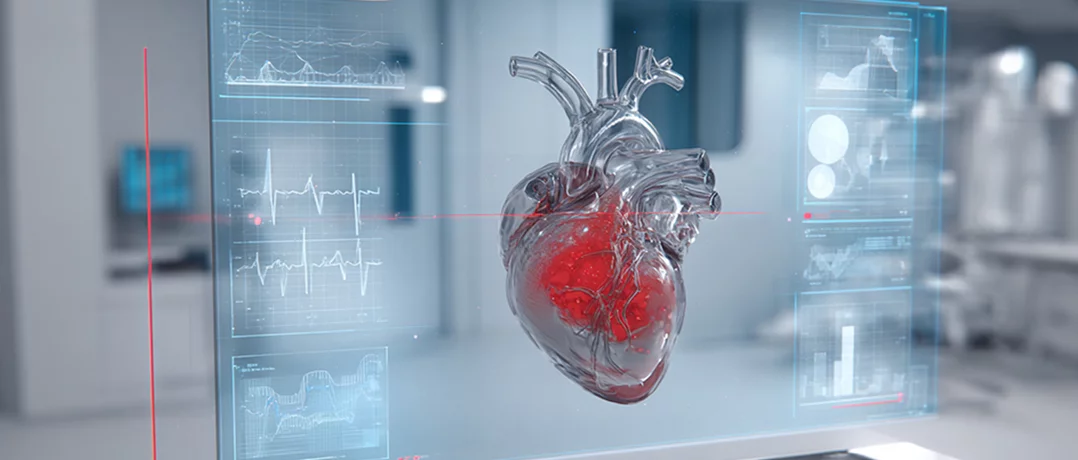
When physicians in Beirut discharged a patient less than 48 hours after replacing a pulmonary valve without opening the chest, the procedure marked a first for Lebanon. The intervention, performed by congenital cardiologist Dr. Zakhia Saliba, relied on a self-expanding pulmonary valve, offering a minimally invasive solution to patients who historically had no alternative to repeat open-heart surgery.
Impressive as a medical achievement, the success also reflects a broader pattern: despite prolonged economic and political instability, segments of Lebanon’s medical sector continue to deliver advanced, high-complexity care. The explanation extends beyond a single catheterization laboratory to the system that sustains it.
The breakthrough
For more than a decade, Lebanese cardiology centers have used balloon-expandable pulmonary valves to treat select cases of pulmonary regurgitation a condition in which the pulmonary valve fails to close properly, allowing blood to leak backward into the right ventricle. That method, however, was limited to patients with a narrow and suitable landing zone for valve placement. Many adults with congenital heart disease did not meet those anatomical criteria and faced the prospect of repeat open-heart operations.
“The breakthrough last week was the implantation of a self-expanding valve made of Nitinol,” Dr. Saliba told The Beiruter. “Until now, these patients had no option other than another heavy open-heart surgery.”
The new device significantly broadens eligibility for minimally invasive treatment. Instead of undergoing a full sternotomy and a week-long hospital recovery, patients can typically return home within 24 to 48 hours. Future valve replacements, when needed, can be performed via catheter avoiding another chest opening.
“It is a success story of modern medicine,” Dr. Saliba said. “These children survive and thrive thanks to early surgery, but the valve starts to leak as they grow. Our goal is to intervene before that heart muscle damage becomes irreversible.” “It changes the entire experience,” he added. “And the next time the valve wears out, we can place a new one inside the old one. We may never need to open that chest again.”
The ecosystem behind the innovation
Lebanon’s capacity to perform a first-in-country valve implantation is not incidental. It is rooted in a medical infrastructure that, while strained, has retained significant depth.
According to the Lebanese Order of Physicians (2023), the country has more than 15,000 registered physicians, nearly 70 percent of whom are specialists a distribution that has historically supported advanced cardiology, oncology and surgical services. Before 2019, Ministry of Tourism data show that more than 200,000 medical tourists sought treatment in Lebanon each year, particularly in Beirut’s leading private hospitals.
Even today, estimates from the World Bank and World Health Organization place physician density at 2.5 to 3 per 1,000 people among the highest ratios in the Middle East and comparable to parts of Southern Europe.
That system, however, has been reshaped by significant workforce losses. A 2023 study in Frontiers in Public Health documented the departure of 2,000 to 3,000 physicians since the onset of the crisis. The Order of Nurses reports that more than 40 percent of the nursing workforce has left. Yet major hospitals have preserved the technical capabilities necessary for high-complexity procedures, allowing interventions such as the one performed by Dr. Saliba to proceed.
For Saliba, the strength of Lebanon’s system lies less in scale than in continuity.
“It isn’t about being the best,” he said. “It’s about reliability. Despite our challenges, we can still offer our patients the same level of care found in developed countries.”
His own trajectory illustrates how Lebanon’s medical ecosystem can translate global innovation into local practice. In 2000, Saliba trained in Paris during the world’s first catheter-based pulmonary valve implantation under Professor Philipp Bonhoeffer. Two decades later, he now oversees the introduction of a new-generation device in Beirut.
“It is a full-circle moment,” he said. “Seeing this technology evolve from a global ‘first’ to something we can now offer here is deeply rewarding.” Still, he stressed that sustaining progress depends on people rather than devices. “We don’t need miracles to keep young professionals,” he said. “We need a supportive environment and a solid team. When we work together as a ‘Heart Team’ of doctors, nurses and technicians, we create a professional community people want to be part of.”
Lebanon’s medical education system and the international training of many physicians reinforce that structure, he added. “Our system continues to encourage clinical research, allowing us to stay connected to global progress.”
A measure of medical strength
Lebanon’s first implantation of a self-expanding pulmonary valve stands as a clinical milestone. More broadly, it underscores the resilience of a medical ecosystem sustained by highly trained teams and institutions capable of managing complex interventions even under strain.
The future of high-technology medicine in Lebanon will depend on maintaining that foundation.
As Saliba put it: “It is simply our duty to keep the doors of innovation open and to remain a dependable center for the region.”
-
-

-
The Beiruter
-
