Lebanon and the Levant have achieved a major medical milestone with the region’s first atrial fibrillation ablation using Abbott’s groundbreaking VOLT technology.




Lebanon and the Levant have achieved a major medical milestone with the region’s first atrial fibrillation ablation using Abbott’s groundbreaking VOLT technology.

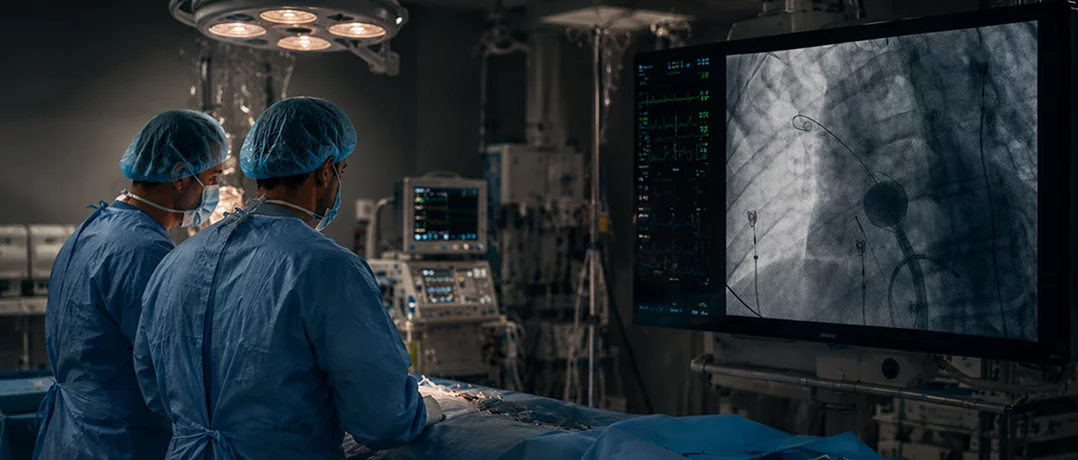
Lebanon and the Levant have entered a new chapter in cardiac care with the successful completion of a first-of-its-kind atrial fibrillation (AF) ablation using Abbott’s advanced VOLT technology. Led by Dr. Johnny Abboud alongside a highly skilled Cath Lab and anesthesia team, the procedure reflects a growing commitment to precision medicine, innovation, and improved patient outcomes. The Beiruter spoke with Dr Abboud for further insight on the groundbreaking advancement.
Despite affecting millions worldwide, atrial fibrillation, commonly known as AFib, remains poorly understood by the general public. Dr. Abboud was quick to clarify.
“Atrial fibrillation is a disorder that affects the electrical activity of the heart. It happens when the heart beats very fast and irregularly, even while at rest. Patients often feel their heart racing or fluttering.”
But the danger goes well beyond discomfort. As Dr. Abboud explained, “the real danger of atrial fibrillation is that it can eventually lead to heart failure, weakening of the heart muscle, and cerebrovascular accidents, meaning strokes or blood clots in the brain. That is why atrial fibrillation is such an important condition to treat.”
For years, AFib was managed primarily through medications. Dr. Abboud, whose subspecialty in cardiology focuses on rhythm disorders, describes those earlier approaches as imperfect at best.
“These medications are often not very effective and can have significant side effects,” he said. “For more than ten years in Lebanon, we have been treating atrial fibrillation through minimally invasive interventions rather than surgery.”
The earlier interventional approach relied on thermal energy, burning the tissue responsible for abnormal electrical signals using thin catheter wires inserted into the heart. While effective in some cases, this method carried notable risks and yielded inconsistent results.
The game-changer is a technology called pulsed field ablation, and specifically Abbott’s Volt system, the newest platform of its kind. Rather than using heat, it delivers high-voltage electrical pulses that create microscopic openings in the membranes of problematic cells, selectively targeting abnormal tissue while sparing surrounding structures.
“The procedure involves inserting a balloon catheter into the heart through the femoral vein in the leg using only a very small puncture, there is no surgery and no incision,” Dr. Abboud explained. “The success rate exceeds 80%, while the complication rate is extremely low,under 1%. That’s why this technology is considered revolutionary in the field of ablation.”
For patients, the experience is remarkably straightforward. “They are admitted the same day, undergo the intervention, and are usually discharged the following day. In many cases, there is no longer a need for long-term medications that may carry their own side effects,” he added.
The LAU Medical Center - Rizk Hospital is the first institution in the Levant to perform it. And the timing is striking.
“This technology is still extremely new even in the United States, it has only been available there for a matter of weeks or months,” Dr. Abboud noted. “The same intervention being performed in leading centers in the United States can now be done here in Lebanon with the same standards and results. In other words, a patient could undergo this procedure here and receive the same level of treatment they would get in America.”
For Lebanon, the achievement carries particular weight: proof that Lebanon’s medical community continues to operate at the frontier of global healthcare, offering its patients access to treatments that are, quite literally, state of the art.

