



Lebanon regains regional financial prominence after BDL Governor Karim Saeed’s election to lead the Arab Monetary Fund’s Board of Governors.
Lebanon returns to Arab financial leadership

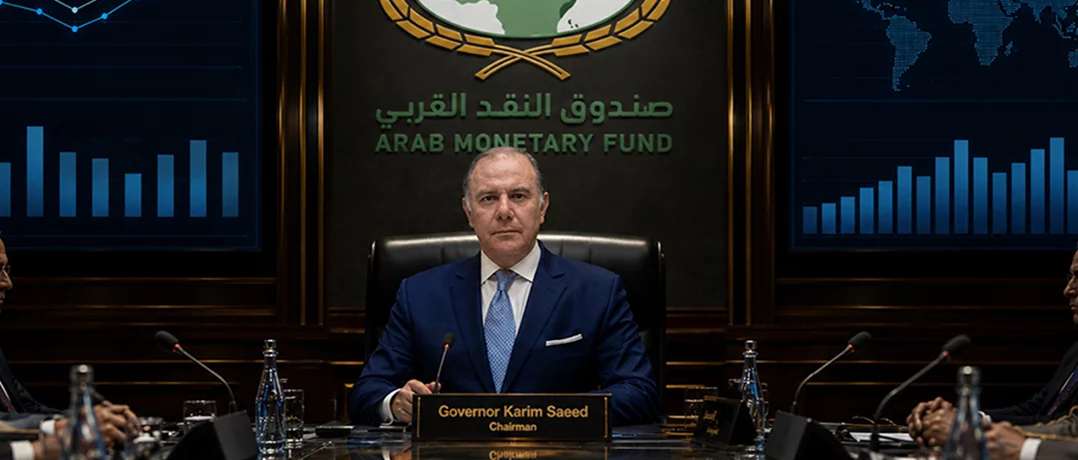
In a development widely regarded as a significant financial and institutional achievement for Lebanon, Banque du Liban (BDL) Governor Karim Saeed was elected Chairman of the Board of Governors of the Arab Monetary Fund for the coming year during the institution’s forty-ninth annual meeting.
The election comes at a particularly sensitive moment for Lebanon, which continues to grapple with one of the most severe economic and financial crises in its modern history. Despite these domestic challenges, Lebanon’s appointment to lead one of the Arab world’s most prominent financial institutions reflects the continued confidence of Arab states in Lebanese expertise in banking, monetary policy, and financial governance.
A symbolic victory for Lebanon
Karim Saeed’s election carries political and economic symbolism that extends beyond the technical framework of the Arab Monetary Fund. Lebanon’s financial sector has suffered profound setbacks since the economic collapse that began in 2019, including currency depreciation, banking restrictions, declining foreign reserves, and a prolonged institutional crisis. Therefore, Lebanon’s assumption of the chairmanship of the Board of Governors is viewed as a message that the country remains an active participant in Arab financial institutions despite its internal difficulties.
The election also highlights the enduring reputation of Lebanese financial professionals within the Arab world. Historically, Lebanon played a major role in regional banking and financial services, with Beirut once serving as a leading financial center in the Middle East. Although the country’s economic crisis significantly weakened that role, Lebanese expertise in monetary policy, banking regulation, and financial governance continues to maintain regional recognition.
Observers consider Saeed’s appointment an opportunity for Lebanon to reinforce its engagement with Arab economic institutions and potentially rebuild confidence with regional partners. At a time when Beirut seeks renewed Arab and international support for economic recovery and reform, the election represents an important diplomatic and institutional development.
The role and importance of the Arab monetary fund
Established in 1976 and headquartered in Abu Dhabi, the Arab Monetary Fund is one of the most influential financial institutions in the Arab world. It was created to support monetary stability, strengthen financial cooperation among Arab states, and provide financial assistance to member countries facing balance-of-payments difficulties.
The Fund plays a crucial role in financing economic reform programs, developing Arab capital markets, modernizing banking systems, and promoting regional financial integration. It also contributes to policy coordination among Arab governments and central banks in areas related to monetary stability, fiscal reform, and financial regulation.
The institution has gained increasing importance in recent years as Arab economies confront multiple challenges, including inflationary pressures, fluctuations in energy markets, rising debt burdens, geopolitical tensions, and the impact of global economic slowdowns. In this context, the Arab Monetary Fund has become a vital platform for coordination and consultation among Arab monetary authorities.
The Board of Governors and its functions
The Board of Governors represents the highest authority within the Arab Monetary Fund. It is composed of finance ministers and central bank governors from member states and is responsible for setting the institution’s strategic direction and approving major policy decisions.
During the recent annual meeting, participants reviewed the Fund’s 2025 annual report and financial statements while discussing several administrative and organizational matters. Among the most notable topics were governance enhancement, the appointment of external auditors for 2026, and the follow-up work of the Fund’s audit, review, and risk committees.
The discussions reflected growing regional interest in improving institutional transparency and governance standards within Arab financial organizations. Such priorities have become increasingly important in light of international demands for stronger financial oversight and accountability.
The meeting was chaired by Kuwaiti Finance Minister Yaqoub Al-Rifai, while Lebanon was represented by Banque du Liban (BDL) Vice Governor and Arab Monetary Fund Board member Makram Bou Nassar.
Arab financial coordination amid regional challenges
A major focus of the meeting centered on enhancing Arab monetary and financial cooperation in response to evolving regional and international economic conditions. Arab economies continue to face common challenges related to inflation, public debt, food security, energy market volatility, and the global economic repercussions of geopolitical conflicts; notably the Iran-U.S.-Israel war.
In his intervention during the meeting, Makram Bou Nassar highlighted the necessity of sustained Arab coordination to confront these economic and financial pressures. He stressed the Arab Monetary Fund’s central role as a platform supporting financial stability and economic development throughout the Arab world. Bou Nassar also highlighted the importance of the Fund’s audit and risk committees in strengthening transparency, governance, and institutional accountability.
Such discussions underscore a broader recognition among Arab policymakers that economic cooperation is becoming increasingly necessary in a rapidly changing global economy. Financial coordination allows Arab states to exchange expertise, harmonize policies, and collectively address external shocks that could threaten regional stability.
Historical development of the council
The origins of cooperation among Arab central banks date back to 1972, when Arab monetary authorities began holding periodic meetings at the governor level. The first meeting took place in Cairo in September 1972, followed by meetings in Baghdad in 1975 and Amman in 1978.
During the Amman meeting, participants agreed to institutionalize these gatherings through the establishment of the Council of Arab Central Banks and Monetary Authorities Governors under the umbrella of the League of Arab States (LAS). In 1980, procedural rules governing the Council’s operations were formally adopted during a meeting in Riyadh.
Over the decades, the Council expanded its activities to include specialized committees focused on banking supervision, payment and settlement systems, and financial inclusion. These initiatives reflected growing awareness of the need for regional coordination in modern banking regulation and financial technology development.
The Council also plays a significant role in preparing the unified Arab position presented annually at meetings of the International Monetary Fund and the World Bank. Additionally, it oversees the preparation of the Unified Arab Economic Report, which analyzes economic developments across Arab countries.
To conclude, for Lebanon, the election of Karim Saeed offers a rare positive development in a period dominated by economic hardship. It serves as a reminder that, despite the country’s ongoing crisis, Lebanese expertise and institutional participation continue to hold value and credibility within the Arab financial landscape.
-
-

-
The Beiruter
-
